Subject-To + Seller Leasebacks: The Secret Playbook Canadians Need for Passive U.S. Real Estate


🎧Podcast: The U.S. Real Estate Strategy No One Is Talking About in Canada

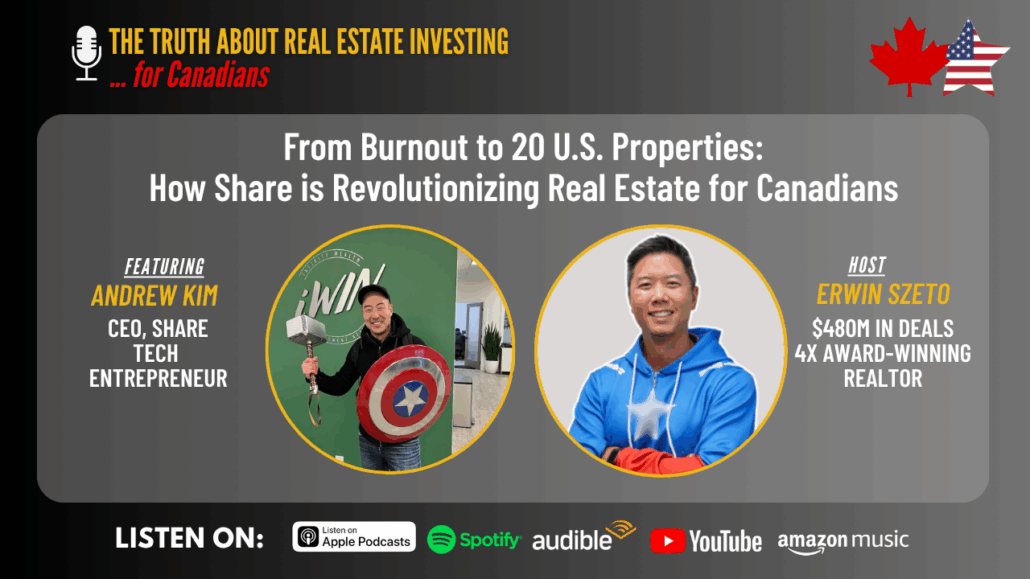
Featuring the Andrew Kims – The Secret Playbook

🎙️ [Listen to the episode here — https://youtu.be/DyvEbYkl6hg?si=bel1ldCGIiEnKmX5]

Back on the podcast for his third appearance is my friend and U.S. business partner, Andrew Kim. And let me tell you—this episode hits different.

Why?

Because we’re dropping fresh, high-impact knowledge on a U.S. real estate strategy that I’ve never seen used in Canada but is gaining serious traction across the States.

 What the Heck Is “Subject-To”?

In simple terms, a subject-to deal lets you take over a seller’s mortgage, without going through traditional financing. That means:

  • No banks
  • Lower interest rates
  • Faster closings
  • Tens of thousands in savings

Now combine that with a seller leaseback—where the seller becomes the tenant—and you’ve got a win-win for cash flow, control, and freedom.

Andrew’s Portfolio: 20+ Properties, 4 States, 0 Headaches

Andrew is not just talking theory. He’s living proof that Canadians can invest across the border without lifting a finger. With his company, SHARE, he manages over 20 properties in four U.S. states.

How?

By blending:

  • Silicon Valley-grade tech
  • Institutional property management
  • Creative deal structures

It’s real estate that runs like a tech company—and it’s built for freedom-seeking Canadians who want passive income and full ownership.

Inside This Week’s Episode: Here’s What You’ll Learn

Subject-To + Leasebacks = Passive Cash Flow

How these creative deals work in real life and why they’re perfect for Canadians entering the U.S. market.

Why Big Property Managers Say “No” to Some Deals

Understand what institutional managers avoid—and how that unlocks hidden gems for you.

Breaking Down the Big Fears for Canadians

We tackle the biggest objections:

  • “What about taxes?”
  • “What if the dollar shifts?”
  • “Isn’t U.S. investing risky?”

Andrew clears the air with real facts, plus how SHARE simplifies every step.

Want the Full Playbook?

 Grab your free guide:
How Canadians can invest in U.S. real estate passively with full ownership and no headaches.
👉 www.sharesfr.com

Final Word: Wealth Is More Than Money

This episode isn’t just about real estate.

It’s about using what we know to:

  • Build freedom
  • Live intentionally
  • And retire earlier than anyone told us was possible

If that’s what you’re after, then hit play and let this be your blueprint.


📞 Ready to build wealth with purpose? Book a call with me: https://iwin.sharesfr.com/

To Listen:

On Spotify: 

On YouTube: 

On Apple Podcasts: 

📜 Click to read the full transcript (Andrew Kim – U.S. Real Estate for Canadians)

How Canadians Are Investing in U.S. Real Estate With Institutional Tools — Featuring Andrew Kim of Share

From Frustration to Innovation: Why Share Was Born

Andrew Kim began his journey in U.S. real estate in 2011, buying properties in Florida. But as his portfolio grew, he noticed a gap: property managers were reactive, not growth-oriented. That insight led him to create Share, a tech-powered platform that helps Canadians invest passively in U.S. properties.

“I needed someone to build my portfolio, not just maintain it. So we built Share to act as an asset manager for everyday investors,” says Andrew.

How Andrew Grew to 20 Properties With Kids at Home

Managing properties across four U.S. states while raising three kids sounds impossible—but Andrew uses Share himself. The platform handles everything: sourcing, due diligence, tax planning, and even leasing and maintenance. Investors get scale and ease with minimal effort.

“I get my monthly report, see positive cash flow, and that’s it. It’s the best real estate experience I’ve had.”

AI and Data Are Changing the Investment Game

Share leverages big data and AI to give clients institutional-level insights and operations. From crime rates and school rankings to lease renewal schedules and franchise tax filings—everything is automated or monitored with precision.

  • Connects to national service providers that normally only serve billion-dollar firms
  • Uses AI to manage filings, taxes, and compliance across multiple states
  • Enables one person to oversee 1,000+ properties with tech-assisted workflows

Investing With $100K and Accessing Low-Interest Mortgages

Worried about 7%+ mortgage rates in the U.S.? Share helps clients secure “subject-to” deals, where they take over the seller’s existing low-rate mortgage—often with the seller staying on as a tenant.

With as little as $100,000 CAD, Canadians can invest in cash-flowing U.S. homes with built-in tenants, deferred renovation costs, and strong rental demand.

Why Now Is the Time

Despite high interest rates, rent demand in the U.S. remains strong. With home appreciation slowing, now is the window to buy before prices rise again.

“In the U.S., we’re still seeing low double-digit IRRs. The same can’t be said for most of Canada.”

Why the U.S. Is Better for Passive Real Estate Investing

  • Institutional property managers handle thousands of units with standard processes
  • Lease renewals are enforced annually—no indefinite tenants like in Ontario
  • States like Texas and Georgia remain landlord-friendly
  • U.S. properties often cost half or less per square foot compared to Canadian counterparts

“Where else can you buy a new single-family home for $245,000 USD next to a $65B Samsung chip plant?”

Don’t Wait on FX—You’ll Lose More to Appreciation

Many Canadians hesitate over the exchange rate. But Andrew advises acting now. “Waiting for a better FX rate might save 6%, but rising U.S. property values can easily outpace that in a few months.”

Want to Learn More?

👉 Visit: sharestates.com

👉 Book a free consult: Talk to Share

If you’re looking for hands-off U.S. real estate investing with institutional quality—this is your moment.

BEFORE YOU GO…

Before you go, if you’re interested in what kind of properties I am looking at in the landlord friendly states of the USA please go to iwin.sharesfr.com for what I consider the best investment for most Canadians, most of the time.

I’ve been investing in Ontario since 2005 and while it’s been a great, great run. I started out buying properties in the 100,000s and now it’s $800,000 to $1,000,000.  How much higher can it go? I don’t know

To me, the remaining potential for appreciation does not match the risk hence I’m advising my clients to look to where one can find rental properties that are affordable range of $150,000 to $350,000 US$, with rents that range from $1,400 to 2,600/month plus utilities.   As many Canadians recognize, these numbers will be positive cash flow and are night and day compared to anything locally. Plus the landlord has all of the rights, no rent control, and income is US dollars which are better than Canadian dollars.

If you don’t believe me, US dollars are better than Canadian dollars, go ask 100 non-Canadians which currency they prefer to be paid in.

So to regain control of your retirement planning.  Go to iwin.sharesfr.com and check out what great cash flow properties are available in the USA.  

The best part is, my US investments will be much more passive compared to by local investments as I’m hiring an asset manager called SHARE to hand hold me through the entire process.  As their client and shareholder, Share will source me quality income properties, help me with legal structure and taxes, they manage the property manager and insurance provider while passing down to me preferred rates so I save both time and money.  

Share will even tell me when to strategically refinance or sell.  SHARE can even support investors all over the country for proper diversification hence my plan is to own in Tennessee, Georgia, and Texas.  Share is like my joint venture partner but I only have to pay them fees while I keep 100% ownership and control.

If your goal in investing is to increase cash flow, I don’t know of a better strategy for most Canadians most of the time.  One last time that’s iwin.sharesfr.com to see what boring, cash flowing real estate investing can look like on your path towards financial peace.

This is how I’m going to make real estate investing great again for my family and hope you choose the same.  Till next time!

Sponsored by:

This episode is brought to you by me! We don’t have sponsors for this show. I only share with you services owned by my wife Cherry and me.  Real estate investing is a staple in my life and allowed me to build wealth and, more importantly, achieve financial peace about the future, knowing our retirement is taken care of and my kids will be able to afford a home when they grow up.  If you, too, are interested in my systematic strategy to implement the #1 investment strategy, the same one pretty much all my guests are doing themselves, then go visit www.infinitywealth.ca/events and register for our next event.

Till next time, just do it because I believe in you.

Erwin

W: erwinszeto.com
FB: https://www.facebook.com/erwin.szeto
IG: https://www.instagram.com/erwinszeto/

Disclaimer:
As a committed advocate for transparent and responsible real estate investment, I want to openly share my involvement with SHARE SFR (Single Family Rental) as an Advisor. I hold an equity position in this company and receive a referral commission for clients I introduce to their services. My endorsement of their business model – focusing on direct ownership of positive cash flow income properties – is consistent with my own personal investing since 2005, is based not only on a professional assessment but also on my personal experience and belief in their approach. Please note that while I stand behind my recommendations, it is crucial for each individual to conduct their own due diligence and consider their unique circumstances before making any investment decisions. As always, my priority is to provide you with honest, insightful, and practical real estate investment education.

From Contaminated Land to a 15% Return: Investing With Purpose (and Profit)


🎧 Podcast: From Environmental Law To Impact Real Estate

Featuring the Rodney Wilts –  the real estate game changer for Canadians

🎙️ [Listen to the episode here — https://youtu.be/DyvEbYkl6hg?si=bel1ldCGIiEnKmX5]

Nearly half of Canadians say they’re losing sleep over retirement — and honestly, they should be. Between high interest rates, rent control, and tenant protections stacked against landlords, traditional investing in Ontario is getting harder by the day. Just ask Guelph landlord John Esposito. He rented out a unit in 2022, only to be stuck with non-paying tenants for two full years, racking up over $135,000 in losses from unpaid rent and damage. Ontario’s Landlord and Tenant Board finally approved the eviction — but far too late.
👉 Read the full story

The Better Way: Purpose-Driven Real Estate That Actually Pays

Now contrast that with Rodney Wilts, my latest guest on The Truth About Real Estate Investing for Canadians.

A former environmental lawyer, Rodney co-founded Theia Partners, where he led the redevelopment of a 34-acre polluted industrial site into Zibi — one of the world’s only zero-carbon communities.

Built in partnership with Indigenous organizations and faith groups, Zibi is:

  • 100% powered by renewable energy
  • Mixed-use, mixed-income, and socially inclusive
  • Winner of global planning and sustainability awards
  • Delivering strong, double-digit returns

It’s proof that sustainability, impact, and profitability can coexist — and scale.

“

Safer, Smarter Investing With Less Risk

c

At our June iWIN meetup, we also heard from:

  • Scott Dillingham (LendCity) on CMHC’s MLI Select — a game-changer for multifamily projects
  • Andrew Kim (SHARE) on how Canadians are investing in U.S. real estate with:
    • Lower rates & down payments
    • No lender fees
    • Faster evictions
    • Better cash flow
    • Off-market “Subject-To” deals and seller leasebacks

I used this strategy myself last year in Texas — no vacancy, no upfront renos, and strong USD cash flow from Day 1.

C

Final Thoughts from Erwin

Real estate is changing. Ontario’s model is broken for most investors. But with the right partnerships and strategies — from ESG-driven developments like Zibi to turnkey U.S. rental portfolios — it’s still possible to build wealth and make a difference.

👉 Learn more about investing in U.S. rentals through SHARE: https://iwin.sharesfr.com/


📞 Ready to build wealth with purpose? Book a call with me: https://iwin.sharesfr.com/

I

To Listen:

On Spotify: 

Youtube: 

📜 Click to read the full edited transcript (Rodney Wilts)

From Lawyer to Developer: How Rodney Wilts Is Building Zero-Carbon Communities With 15% Returns

A New Path From Environmental Law to Real Estate

I started my career in environmental law, advocating for green communities and working with architects and code officials to eliminate barriers to sustainable building. But I’ll never forget the day I visited Harold Kal—a pioneer in eco-friendly development. His office was buzzing with purpose, packed with giant drawings, energy. It hit me hard: this is what I want to do.

Eventually, I made the jump into real estate. It wasn’t easy, but I knew I wanted to use development as a tool for environmental and social change.

How a Derelict Factory Site Became Zibi

One day, commuting across Ottawa’s Shoal Air Bridge, I passed a boarded-up, barbed-wired industrial wasteland—just 800 meters from Parliament Hill. The site had sat untouched for years. I pitched the idea to my partners: “What if we transformed this into something great?”

We acquired the 34-acre contaminated site from Domtar and created Zibi: a master-planned, zero-carbon, mixed-use community straddling Ontario and Quebec. We:

  • Built 4 million square feet of offices, condos, rentals, plazas, and parkland
  • Created Canada’s first zero-carbon district energy system
  • Won global awards for public consultation and urban planning
  • Partnered with Dream and other stakeholders to deliver it all

Zibi is now home to residents, businesses, public spaces, and even the world’s only interprovincial zipline.

Solving Housing Affordability Beyond New Builds

Zibi was expensive: new apartments cost about $450,000 per unit to build. Meanwhile, we saw nearby 1970s buildings going for $175,000 a door. So we launched a strategy: buy older stock, upgrade it for energy efficiency, and keep it affordable.

These projects don’t make magazine covers, but they serve people—and deliver low double-digit IRRs.

Turning Parking Lots Into Housing With Purpose

Through Zibi, we gained recognition and were approached by First Unitarian of Ottawa. They had a 7-acre site—mostly unused parking—and wanted to align it with their values. Together with Ontario Aboriginal Housing Services, we’re building:

  • A 16-storey rental building (CMHC-backed)
  • A 6-storey non-profit building for Indigenous tenants
  • Directly on Ottawa’s LRT line, near the river

Despite legal challenges from affluent neighbors (which cost us $100,000 in appeals), we won at the Ontario Land Tribunal and expect to break ground next spring.

The deal is structured as a corporation to accommodate the church’s tax-exempt status, and they’re contributing land as equity. Their vacant lot will now generate recurring revenue—while delivering on their mission.

Why We Do This

We could have played it safe. But we’re driven by impact. And we believe real estate can deliver strong returns and meaningful social outcomes.

  • We’ve built award-winning communities
  • We’ve cleaned up 200 years of contamination
  • We’re delivering housing across the affordability spectrum
  • We’re still targeting 15% IRRs on projects like the Sherbourne LRT site

Want to Learn More?

👉 Visit: theiapartners.com

👉 Tour Zibi: zibi.ca

And if you’re interested in impact-driven investing that works — let’s connect.

BEFORE YOU GO…

Before you go, if you’re interested in what kind of properties I am looking at in the landlord friendly states of the USA please go to iwin.sharesfr.com for what I consider the best investment for most Canadians, most of the time.

I’ve been investing in Ontario since 2005 and while it’s been a great, great run. I started out buying properties in the 100,000s and now it’s $800,000 to $1,000,000.  How much higher can it go? I don’t know

To me, the remaining potential for appreciation does not match the risk hence I’m advising my clients to look to where one can find rental properties that are affordable range of $150,000 to $350,000 US$, with rents that range from $1,400 to 2,600/month plus utilities.   As many Canadians recognize, these numbers will be positive cash flow and are night and day compared to anything locally. Plus the landlord has all of the rights, no rent control, and income is US dollars which are better than Canadian dollars.

If you don’t believe me, US dollars are better than Canadian dollars, go ask 100 non-Canadians which currency they prefer to be paid in.

So to regain control of your retirement planning.  Go to iwin.sharesfr.com and check out what great cash flow properties are available in the USA.  

The best part is, my US investments will be much more passive compared to by local investments as I’m hiring an asset manager called SHARE to hand hold me through the entire process.  As their client and shareholder, Share will source me quality income properties, help me with legal structure and taxes, they manage the property manager and insurance provider while passing down to me preferred rates so I save both time and money.  

Share will even tell me when to strategically refinance or sell.  SHARE can even support investors all over the country for proper diversification hence my plan is to own in Tennessee, Georgia, and Texas.  Share is like my joint venture partner but I only have to pay them fees while I keep 100% ownership and control.

If your goal in investing is to increase cash flow, I don’t know of a better strategy for most Canadians most of the time.  One last time that’s iwin.sharesfr.com to see what boring, cash flowing real estate investing can look like on your path towards financial peace.

This is how I’m going to make real estate investing great again for my family and hope you choose the same.  Till next time!

Sponsored by:

This episode is brought to you by me! We don’t have sponsors for this show. I only share with you services owned by my wife Cherry and me.  Real estate investing is a staple in my life and allowed me to build wealth and, more importantly, achieve financial peace about the future, knowing our retirement is taken care of and my kids will be able to afford a home when they grow up.  If you, too, are interested in my systematic strategy to implement the #1 investment strategy, the same one pretty much all my guests are doing themselves, then go visit www.infinitywealth.ca/events and register for our next event.

Till next time, just do it because I believe in you.

Erwin

W: erwinszeto.com
FB: https://www.facebook.com/erwin.szeto
IG: https://www.instagram.com/erwinszeto/

Disclaimer:
As a committed advocate for transparent and responsible real estate investment, I want to openly share my involvement with SHARE SFR (Single Family Rental) as an Advisor. I hold an equity position in this company and receive a referral commission for clients I introduce to their services. My endorsement of their business model – focusing on direct ownership of positive cash flow income properties – is consistent with my own personal investing since 2005, is based not only on a professional assessment but also on my personal experience and belief in their approach. Please note that while I stand behind my recommendations, it is crucial for each individual to conduct their own due diligence and consider their unique circumstances before making any investment decisions. As always, my priority is to provide you with honest, insightful, and practical real estate investment education.

From Local Financial Planner to U.S. Landlord: Why Carlos Rodrigues Left Canadian Real Estate


🎧 Podcast: The Truth About Real Estate Investing for Canadians

Featuring Carlos Rodrigues – Financial Planner Turned U.S. Real Estate Investor

🎙️ [Listen to the episode here — https://youtu.be/DyvEbYkl6hg?si=bel1ldCGIiEnKmX5]

Why Carlos Left Ontario Real Estate (and Financial Planning)

After 20 years as a financial advisor—including running his own independent financial and mortgage brokerage—Carlos Rodrigues hit a wall. Like many Canadian investors, he found himself boxed in by tighter lending rules, rising compliance costs, and poor scalability in the Ontario market.

“My most successful year ever—and the bank told me the only mortgage I qualified for was one designed for seniors… A reverse mortgage!”
— Carlos

In 2019, Carlos sold everything: his financial planning practice, his mortgage book, and his real estate portfolio. He exited near the peak, netting a massive gain on a duplex he’d renovated himself. Then he moved his entire strategy south—to Cleveland, Ohio.

Building a Team in the U.S. Was Brutal

Carlos doesn’t sugarcoat the early days. His first Ohio property manager stole $30,000 and vanished. Despite being a licensed financial professional used to due diligence, Carlos says:

“This guy had supposed errors & omissions insurance, government contracts… he still pulled the wool over my eyes.”

He later discovered that dozens of investors—including doctors, lawyers, and even a police officer—had also been scammed. That manager is now reportedly on the run.

Eventually, Carlos rebuilt his team through referrals. He now has a highly responsive, proactive property manager who handles leasing, inspections, and tenant relationships—including navigating the complexities of subsidized housing.

“In Cleveland, they’re either incredibly bad… or phenomenal. There’s no in-between.”

Lead Paint Certifications: A Hidden Risk for Canadian Investors

Cleveland has strict lead-safe regulations, especially for older properties. Carlos learned this the hard way during an attempted eviction:

“You can’t even evict a tenant unless your property is lead-safe certified… and 80% of rental homes older than 1970 aren’t certified.”

A non-compliant property meant months of delays, expensive locksmith visits, and multiple failed inspections. In markets like Cleveland, hyper-local knowledge is essential—something Carlos now brings to his mentorship clients and joint venture partners.

Evictions: Ohio vs. Ontario

Carlos compares Ohio’s eviction process to Ontario’s—and the difference is staggering.

  • Ohio: Evictions are done via the courts, not a tribunal. Typical turnaround? 3 weeks.
  • Ontario: Professional landlords report 7–8 months, often more for “mom and pop” investors.

“Ohio is a red state. If you’re out of lease, and the landlord wants you out, you’re leaving—one way or another.”

Carlos emphasizes how U.S. systems better balance landlord and tenant rights, making them far more scalable for investors who want predictable cash flow.

Section 8: Why Carlos Welcomes Government-Subsidized Tenants

Carlos specializes in renting to Section 8 tenants—U.S. residents receiving government rent subsidies. While some investors are wary, he says it’s been a major win:

  • Rents are 20–30% above market in many zip codes
  • Rent is paid directly from the government (tenants can’t intercept it)
  • Tenants risk permanently losing their voucher if they’re evicted

“If we ever have another pandemic or recession, my Section 8 rents are still coming in.”

There is red tape—inspections and delays—but Carlos says the stability and returns are worth it.

What Carlos Offers Canadian Investors

Carlos now offers:

  • Mentorship programs for Canadians wanting to invest in the U.S.
  • Joint venture opportunities for hands-free partners
  • Property tours in Cleveland, including visits to turnkey rentals, BRRRRs, and properties under rehab

He helps investors:

  • Set up proper U.S. legal entities
  • Navigate DSCR financing (no personal income needed)
  • Avoid the painful mistakes he made early on

Want to Learn More?

Grab Carlos’s book Property Profits on Amazon:
👉 Property Profits by Carlos Rodrigues

Follow him on Instagram:
👉 @cashflowcarlos

Final Thoughts from Erwin

If you’ve been wondering whether to diversify outside Canada, this episode pulls back the curtain on what it really takes—and why it might be worth it.

“This is why I love doing the podcast. You get the truth—no sugarcoating. Just real investors, sharing real lessons.”

To Listen:

📜 Click to read the full edited transcript

Carlos Rodrigues on Leaving Canadian Real Estate and Going All-In on U.S. Investing

From Financial Planning to Real Estate

I began my career in 2003 as a financial planner with Freedom 55. A decade later, I launched my own brokerage, Magellan Wealth Management. Going independent felt liberating—I was no longer tied to pushing products from just one or two companies. I could finally offer clients what I truly believed was best for them.

That’s when I started looking seriously at real estate.

By the end of my 10-year run, I was frustrated. Despite helping clients manage portfolios of mutual and segregated funds, I found real estate offered more attractive long-term returns, greater control, and significantly better tax advantages.

But the final straw? Even during my most profitable year, I couldn’t qualify for a standard mortgage to refinance my rental portfolio. That was it. In 2019, I sold my practice, exited my Canadian properties, and published Property Profits, a book that shares everything I learned along the way. Then, I went all-in on U.S. real estate.

Why I Chose Ohio and the U.S. Midwest

The U.S. checked every box: better affordability, more landlord-friendly legislation, and strong upside potential. Cities like Cleveland and Toledo reminded me of Ontario 15 years ago—but with better cash flow.

For example, I had purchased a duplex in Ontario for $385,000, spent $60,000 legalizing it, and sold it for $1.1 million. I took those proceeds and started investing across the Midwest. In Ohio, I’ve bought single-family homes for $41,000 to $45,000 and rented them out for $1,100 to $1,200 a month.

Let me be clear: U.S. real estate isn’t “easy”—but it is logical if you do the work.

The Power of DSCR Loans

One of the biggest game changers for me has been DSCR loans—Debt Service Coverage Ratio loans. Unlike traditional mortgages in Canada, DSCR loans don’t rely on your personal income.

There’s:

  • No need for tax returns
  • No employment verification
  • No GDS/TDS calculations

If the property cash flows at a 1.25x ratio or better, you qualify. This alone made it possible for me to scale after hitting a financing wall in Canada.

The Brutal Reality of Team Building

Not everything went smoothly.

My first property manager in Ohio stole $30,000 from me. And I wasn’t new to real estate—I had insurance, contracts, and thought I had done the proper due diligence. This guy even scammed a Cleveland police officer. He’s now on the run.

Eventually, I found a trustworthy property manager through a mortgage broker I trust. She’s become my right hand—proactive, great at communication, and makes sure our Section 8 units are always up to code.

What You Need to Know About Lead Paint Laws in Cleveland

If you’re buying in Cleveland, pay attention to lead safety laws. Any property built before 1978 must be “lead-safe certified.” Without that certification:

  • You can’t legally evict tenants
  • You risk city fines
  • You may face major renovation delays

I once purchased a property where the tenant refused to leave. We couldn’t even start renovations—or begin eviction—until we passed all lead remediation protocols. My advice: buy newer when possible or budget for lead abatement costs upfront.

Evictions: U.S. vs. Canada

Landlord-tenant laws in the U.S.—especially in red states like Ohio—are completely different from those in Ontario.

Here’s how it works in Ohio:

  • Serve a 30-day notice
  • Follow with a 3-day notice
  • Go to court if there’s no resolution

In most cases, you can have a court-ordered eviction in under three weeks. Compare that to Ontario, where professional landlords often wait 7–8 months (or longer) to enforce an eviction.

Why I Embrace Section 8 Tenants

Section 8 housing has a bad reputation, but it’s been a solid strategy for me.

Here’s why I like it:

  • Rents are often 20–30% above market
  • The government pays you directly
  • Tenants can’t just stop paying rent
  • Lease violations can mean losing their voucher permanently

Of course, there’s red tape. Inspections can delay move-ins by weeks or even months. But once you’re set up, Section 8 income is consistent—even during economic downturns.

Helping Canadians Invest in the U.S.

Most Canadians have no idea how to get started with U.S. real estate. That’s where I come in.

I offer:

  • Mentorship programs to walk investors through their first deal
  • Joint venture partnerships where I manage the U.S. side
  • Weekend property tours in Cleveland (we typically visit 12–14 homes, analyze them on-site, and finish off with a seafood boil)

I also help clients:

  • Set up LLCs and the right U.S. legal structures
  • Navigate cross-border tax planning to avoid double taxation
  • Build reliable “power teams” on the ground

Want to Learn More?

📘 Check out my book: Property Profits on Amazon

📲 Follow me on Instagram: @cashflowcarlos

BEFORE YOU GO…

Before you go, if you’re interested in what kind of properties I am looking at in the landlord friendly states of the USA please go to iwin.sharesfr.com for what I consider the best investment for most Canadians, most of the time.

I’ve been investing in Ontario since 2005 and while it’s been a great, great run. I started out buying properties in the 100,000s and now it’s $800,000 to $1,000,000.  How much higher can it go? I don’t know

To me, the remaining potential for appreciation does not match the risk hence I’m advising my clients to look to where one can find rental properties that are affordable range of $150,000 to $350,000 US$, with rents that range from $1,400 to 2,600/month plus utilities.   As many Canadians recognize, these numbers will be positive cash flow and are night and day compared to anything locally. Plus the landlord has all of the rights, no rent control, and income is US dollars which are better than Canadian dollars.

If you don’t believe me, US dollars are better than Canadian dollars, go ask 100 non-Canadians which currency they prefer to be paid in.

So to regain control of your retirement planning.  Go to iwin.sharesfr.com and check out what great cash flow properties are available in the USA.  

The best part is, my US investments will be much more passive compared to by local investments as I’m hiring an asset manager called SHARE to hand hold me through the entire process.  As their client and shareholder, Share will source me quality income properties, help me with legal structure and taxes, they manage the property manager and insurance provider while passing down to me preferred rates so I save both time and money.  

Share will even tell me when to strategically refinance or sell.  SHARE can even support investors all over the country for proper diversification hence my plan is to own in Tennessee, Georgia, and Texas.  Share is like my joint venture partner but I only have to pay them fees while I keep 100% ownership and control.

If your goal in investing is to increase cash flow, I don’t know of a better strategy for most Canadians most of the time.  One last time that’s iwin.sharesfr.com to see what boring, cash flowing real estate investing can look like on your path towards financial peace.

This is how I’m going to make real estate investing great again for my family and hope you choose the same.  Till next time!

Sponsored by:

This episode is brought to you by me! We don’t have sponsors for this show. I only share with you services owned by my wife Cherry and me.  Real estate investing is a staple in my life and allowed me to build wealth and, more importantly, achieve financial peace about the future, knowing our retirement is taken care of and my kids will be able to afford a home when they grow up.  If you, too, are interested in my systematic strategy to implement the #1 investment strategy, the same one pretty much all my guests are doing themselves, then go visit www.infinitywealth.ca/events and register for our next event.

Till next time, just do it because I believe in you.

Erwin

W: erwinszeto.com
FB: https://www.facebook.com/erwin.szeto
IG: https://www.instagram.com/erwinszeto/

Disclaimer:
As a committed advocate for transparent and responsible real estate investment, I want to openly share my involvement with SHARE SFR (Single Family Rental) as an Advisor. I hold an equity position in this company and receive a referral commission for clients I introduce to their services. My endorsement of their business model – focusing on direct ownership of positive cash flow income properties – is consistent with my own personal investing since 2005, is based not only on a professional assessment but also on my personal experience and belief in their approach. Please note that while I stand behind my recommendations, it is crucial for each individual to conduct their own due diligence and consider their unique circumstances before making any investment decisions. As always, my priority is to provide you with honest, insightful, and practical real estate investment education.

An American Virtual Wholesaling From Canada

wholesalingThis week on The Truth About Real Estate Investing for Canadians, we’re joined by Nathan Payne, a full-time virtual real estate wholesaler and founder of Painless Flipping. Originally from Atlanta and most recently Utah, Nathan now calls small-town Ontario home—but that hasn’t slowed him down. In fact, he’s built a thriving real estate wholesaling business that operates 100% virtually across major U.S. markets like Florida, Texas, and Utah.
Nathan is the creator of a hands-on real estate apprenticeship program where he partners with aspiring investors to close real-world deals, offering a practical, no-fluff alternative to traditional coaching. We dig into how he generates leads by hiring a Marketing company, something anyone can do and I’m hearing about for the first time ever.  His pivot to nationwide wholesaling during COVID, why he prefers U.S. markets over Canadian ones, and how his faith and values shape the way he does business.

We also talk squatter stories, wholesaling fees by market, creative ways he finds buyers and what new investors get wrong. If you’re tired of “guru” fluff and want the real talk on building an ethical, scalable real estate wholesaling business, this is the episode for you.

💻 Book a free call with Nathan: www.painlessflipping.com
🎥 Free YouTube trainings: Search “Nathan Payne Painless Flipping”

Instagram: https://www.instagram.com/nathanpayneofficial

Facebook group: https://www.facebook.com/groups/payneless


To Listen:

HELP US OUT!

Please help us reach new listeners on iTunes by leaving us a rating and review!
 

BEFORE YOU GO…

Before you go, if you’re interested in what kind of properties I am looking at in the landlord friendly states of the USA please go to iwin.sharesfr.com for what I consider the best investment for most Canadians, most of the time.

I’ve been investing in Ontario since 2005 and while it’s been a great, great run. I started out buying properties in the 100,000s and now it’s $800,000 to $1,000,000.  How much higher can it go? I don’t know

To me, the remaining potential for appreciation does not match the risk hence I’m advising my clients to look to where one can find rental properties that are affordable range of $150,000 to $350,000 US$, with rents that range from $1,400 to 2,600/month plus utilities.   As many Canadians recognize, these numbers will be positive cash flow and are night and day compared to anything locally. Plus the landlord has all of the rights, no rent control, and income is US dollars which are better than Canadian dollars.

If you don’t believe me, US dollars are better than Canadian dollars, go ask 100 non-Canadians which currency they prefer to be paid in.

So to regain control of your retirement planning.  Go to iwin.sharesfr.com and check out what great cash flow properties are available in the USA.  

The best part is, my US investments will be much more passive compared to by local investments as I’m hiring an asset manager called SHARE to hand hold me through the entire process.  As their client and shareholder, Share will source me quality income properties, help me with legal structure and taxes, they manage the property manager and insurance provider while passing down to me preferred rates so I save both time and money.  

Share will even tell me when to strategically refinance or sell.  SHARE can even support investors all over the country for proper diversification hence my plan is to own in Tennessee, Georgia, and Texas.  Share is like my joint venture partner but I only have to pay them fees while I keep 100% ownership and control.

If your goal in investing is to increase cash flow, I don’t know of a better strategy for most Canadians most of the time.  One last time that’s iwin.sharesfr.com to see what boring, cash flowing real estate investing can look like on your path towards financial peace.

This is how I’m going to make real estate investing great again for my family and hope you choose the same.  Till next time!

Sponsored by:

This episode is brought to you by me! We don’t have sponsors for this show. I only share with you services owned by my wife Cherry and me.  Real estate investing is a staple in my life and allowed me to build wealth and, more importantly, achieve financial peace about the future, knowing our retirement is taken care of and my kids will be able to afford a home when they grow up.  If you, too, are interested in my systematic strategy to implement the #1 investment strategy, the same one pretty much all my guests are doing themselves, then go visit www.infinitywealth.ca/events and register for our next event.

Till next time, just do it because I believe in you.

Erwin

W: erwinszeto.com
FB: https://www.facebook.com/erwin.szeto
IG: https://www.instagram.com/erwinszeto/

Disclaimer:
As a committed advocate for transparent and responsible real estate investment, I want to openly share my involvement with SHARE SFR (Single Family Rental) as an Advisor. I hold an equity position in this company and receive a referral commission for clients I introduce to their services. My endorsement of their business model – focusing on direct ownership of positive cash flow income properties – is consistent with my own personal investing since 2005, is based not only on a professional assessment but also on my personal experience and belief in their approach. Please note that while I stand behind my recommendations, it is crucial for each individual to conduct their own due diligence and consider their unique circumstances before making any investment decisions. As always, my priority is to provide you with honest, insightful, and practical real estate investment education.

Who’s Fighting for Landlords? Canada’s Biggest Landlord Advocate Speaks Out

Landlords

Welcome back to The Truth About Real Estate Investing for Canadians! I’m your host, Erwin Szeto, and today we’re diving into one of the most important conversations for landlords and real estate investors—who’s actually fighting for us?

Between rising costs, rent control, landlord-tenant board delays, and policy changes that make it harder to operate rental properties, it’s no surprise that many landlords feel like they’re being left behind. But there are people advocating for us, working behind the scenes to shape fair policies and ensure that rental housing remains a viable investment.

That’s why I’m thrilled to have Tony Irwin on the show today. Tony is the President and CEO of both the Canadian Federation of Apartment Associations (CFAA) and the Federation of Rental Housing Providers of Ontario (FRPO)—two of the largest organizations advocating for landlords and rental housing providers at the provincial and national levels.

With years of experience in policy, government relations, and housing advocacy, Tony is at the forefront of the fight to protect landlords, encourage rental supply, and push back against policies that make it harder to provide housing.

In this episode, we get into:
✅ The current state of Ontario and Canada’s rental markets
✅ Why rent control and landlord-tenant board delays are making investing more challenging
✅ What CFAA and FRPO are doing to push for fairer policies
✅ What landlords can do to get involved and protect their investments

If you own rental properties or are thinking about investing, this is a must-listen episode. The policies being decided today will impact your bottom line for years to come!

Tony’s contact information:

FRPO: https://frpo.org

CFAA: https://cfaa-fcapi.org

Instagram: @frpofacts

To Listen:

HELP US OUT!

Please help us reach new listeners on iTunes by leaving us a rating and review!
 

BEFORE YOU GO…

Before you go, if you’re interested in what kind of properties I am looking at in the landlord friendly states of the USA please go to iwin.sharesfr.com for what I consider the best investment for most Canadians, most of the time.

I’ve been investing in Ontario since 2005 and while it’s been a great, great run. I started out buying properties in the 100,000s and now it’s $800,000 to $1,000,000.  How much higher can it go? I don’t know

To me, the remaining potential for appreciation does not match the risk hence I’m advising my clients to look to where one can find rental properties that are affordable range of $150,000 to $350,000 US$, with rents that range from $1,400 to 2,600/month plus utilities.   As many Canadians recognize, these numbers will be positive cash flow and are night and day compared to anything locally. Plus the landlord has all of the rights, no rent control, and income is US dollars which are better than Canadian dollars.

If you don’t believe me, US dollars are better than Canadian dollars, go ask 100 non-Canadians which currency they prefer to be paid in.

So to regain control of your retirement planning.  Go to iwin.sharesfr.com and check out what great cash flow properties are available in the USA.  

The best part is, my US investments will be much more passive compared to by local investments as I’m hiring an asset manager called SHARE to hand hold me through the entire process.  As their client and shareholder, Share will source me quality income properties, help me with legal structure and taxes, they manage the property manager and insurance provider while passing down to me preferred rates so I save both time and money.  

Share will even tell me when to strategically refinance or sell.  SHARE can even support investors all over the country for proper diversification hence my plan is to own in Tennessee, Georgia, and Texas.  Share is like my joint venture partner but I only have to pay them fees while I keep 100% ownership and control.

If your goal in investing is to increase cash flow, I don’t know of a better strategy for most Canadians most of the time.  One last time that’s iwin.sharesfr.com to see what boring, cash flowing real estate investing can look like on your path towards financial peace.

This is how I’m going to make real estate investing great again for my family and hope you choose the same.  Till next time!

Sponsored by:

This episode is brought to you by me! We don’t have sponsors for this show. I only share with you services owned by my wife Cherry and me.  Real estate investing is a staple in my life and allowed me to build wealth and, more importantly, achieve financial peace about the future, knowing our retirement is taken care of and my kids will be able to afford a home when they grow up.  If you, too, are interested in my systematic strategy to implement the #1 investment strategy, the same one pretty much all my guests are doing themselves, then go visit www.infinitywealth.ca/events and register for our next event.

Till next time, just do it because I believe in you.

Erwin

W: erwinszeto.com
FB: https://www.facebook.com/erwin.szeto
IG: https://www.instagram.com/erwinszeto/

Disclaimer:
As a committed advocate for transparent and responsible real estate investment, I want to openly share my involvement with SHARE SFR (Single Family Rental) as an Advisor. I hold an equity position in this company and receive a referral commission for clients I introduce to their services. My endorsement of their business model – focusing on direct ownership of positive cash flow income properties – is consistent with my own personal investing since 2005, is based not only on a professional assessment but also on my personal experience and belief in their approach. Please note that while I stand behind my recommendations, it is crucial for each individual to conduct their own due diligence and consider their unique circumstances before making any investment decisions. As always, my priority is to provide you with honest, insightful, and practical real estate investment education.

From Housing Crash to Acquiring $2 Billion of Real Estate

Single Family RentalsHey friends, this is Erwin Szeto, and welcome to The Truth About Real Estate Investing for Canadians, where it’s my job to interview the top minds in real estate and business to uncover the strategies, mindsets, and habits that actually work—especially in today’s market.

In today’s episode, I’m joined by Ben Berry, a true industry heavyweight who’s successfully deployed over $2 billion into single-family rentals, build-to-rent, and commercial real estate assets. Ben’s journey began during the depths of the 2009 global financial crisis, where he carved out his path in commercial real estate before pioneering large-scale single-family home acquisitions during the U.S. housing recovery. His leadership helped operationalize the mass acquisition, rehab, and management of thousands of homes backed by major Wall Street and Canadian institutional investors.

Now, Ben is the Vice President of Acquisitions and Sales at SHARE, a platform revolutionizing real estate investing by making U.S. rental property ownership simple, passive, and accessible — even to everyday Canadian investors. With boots-on-the-ground expertise across over 20 markets — from Florida to Texas, Georgia, North Carolina, Ohio, etc… — Ben shares how institutional best practices are now being offered without the need to bring $50M to the table.

We also talk about why landlord-friendly states matter, how technology and data have transformed real estate investing, and how Canadians now invest just like the ultra wealthy and finally escape tenant friendly markets and find deals that actually make sense. If you’re serious about investing smarter in real estate, this episode is a must-listen.

If you’d like to connect with Ben you can go to iwin.sharesfr.com and click the “Schedule a call” 

Please enjoy the show!

To Listen:

** Transcript Auto-Generated**

0:00 – Hey friends, this is Erwin Szeto and
0:01 – welcome to the truth about real estate
0:02 – investing show for Canadians where it’s
0:05 – my job to interview the top minds in
0:06 – real estate and business to uncover the
0:08 – strategies, mindsets, and the habits
0:10 – that actually work, especially in
0:12 – today’s market. In today’s episode, I’m
0:15 – joined by Ben Barry, a true industry
0:17 – heavyweight who successfully deployed
0:19 – over $2 billion uh that’s US dollars
0:23 – into single family rentals, built to
0:25 – rent, and commercial real estate assets.
0:27 – Ben’s journey began during the depths of
0:29 – the 2009 finan global financial crisis
0:31 – where he carved out his path in
0:33 – commercial real estate before pioneering
0:35 – large-scale single family home
0:37 – acquisitions during the US housing
0:39 – recovery. His leadership helped
0:41 – operationalize the mass acquisition,
0:44 – rehab, and management of thousands of
0:46 – homes backed by major Wall Street and
0:48 – Canadian institutional investors. Now,
0:51 – Ben is the vice president of
0:52 – acquisitions and sales at Share, a
0:55 – platform revolutionizing the real estate
0:57 – investing by making US rental property
0:59 – ownership simple, passive, and
1:01 – accessible even to everyday Canadians.
1:03 – With boots on the ground and and
1:05 – expertise in over 20 markets from
1:06 – Florida to Texas, Georgia, North
1:08 – Carolina, Ohio, etc., Ben shares how
1:11 – institutional best practices are now
1:13 – being offered without the need to bring
1:15 – $50 million plus to the table. We also
1:18 – talk about why landlord friendly states
1:19 – matter, how technology and data have
1:21 – transformed real estate investing and
1:23 – how Canadians now invest just like the
1:25 – ultra wealthy and finally escape the the
1:28 – tenant friendly markets and find deals
1:29 – that actually make sense. If you’re
1:31 – serious about real estate investing,
1:33 – this episode is an absolute must listen.
1:35 – If you’d like to connect with Bend, you
1:37 – can go to
1:39 – iwin.sharesfr.com. Again, that’s
1:41 – iwin.sharesfr.com and click schedule a
1:44 – call. Please enjoy the show.
1:49 – [Music]
1:53 – But before we get to our guests, I want
1:55 – to take a quick second to share
1:56 – something valuable with you. If you’re
1:58 – serious about building wealth through
1:59 – real estate, but struggling to find
2:00 – profitable investments in Canada, I’ve
2:02 – got something that will help. I’ve put
2:04 – together a comprehensive guide to US
2:06 – real estate investing for Canadians,
2:08 – breaking down the best markets,
2:09 – financing strategies, tax
2:10 – considerations, and landlord friendly
2:12 – states where Canadians are getting
2:13 – better cash flow and long-term
2:14 – appreciation. It’s completely free. You
2:17 – can grab your copy at
2:20 – www.truthofaboutrealestateinvesting.ca.
2:21 – Just look for it on the right side of
2:22 – the page. Along with the guide, you’ll
2:24 – also get our weekly newsletter that goes
2:25 – out to over 10,000 Canadians at no
2:27 – charge. Since 2010. Yes, I’ve been
2:30 – sending for every week since 2010. We
2:32 – send new podcast episodes as they as
2:34 – they release so you never miss out on
2:36 – these expert insights, invites to
2:38 – exclusive inerson and online events with
2:41 – top real estate minds, actionable
2:43 – strategies to help you grow your
2:45 – portfolio and build wealth faster.
2:47 – Again, go to
2:49 – www.truthrealestate investing.ca and
2:51 – download your free guide today. Now,
2:53 – please enjoy the show. Hi, Ben. Welcome
2:54 – to the show. Can you share a bit about
2:56 – your background and how you got started
2:57 – in real estate investing?
3:00 – Sure. Yeah, I’ve been uh been in the
3:02 – business since uh since straight out of
3:04 – college. So I graduated university. I
3:07 – think believe it’s Canadians that refer
3:09 – to it. Um back in 2009, it was the
3:11 – middle of the global financial crisis. I
3:14 – had studied advertising and the time
3:16 – there were no advertising jobs out there
3:18 – for a for a young recent grad. And uh
3:21 – real estate had always been an interest
3:22 – of mine and I wound up connecting with a
3:24 – commercial real estate brokerage um
3:26 – hiring investment sales brokers and uh I
3:30 – didn’t know any better and started
3:31 – working as a commercial uh commercial
3:33 – real estate broker back then. Um it’s
3:35 – terrible time. The market was extremely
3:36 – down, one of the worst seen in in
3:38 – decades if not a century. But I didn’t
3:40 – know any better. Um, but I learned a lot
3:43 – and after a couple years of grinding
3:44 – that out and working commission only,
3:46 – realizing that, you know, it’s going to
3:48 – be a couple more years, if not more,
3:50 – till this really becomes a viable
3:51 – business as a broker here. So, uh, I’m
3:53 – going to go find a salary job. And, um,
3:55 – it led me to connect with um with a
3:58 – group that I I helped start up with um
4:00 – that was with one of the first housing
4:02 – funds that was starting to buy homes out
4:04 – of the the housing crisis. So a lot of
4:07 – the uh American homes were highly highly
4:09 – distressed foreclosures very high and it
4:12 – was a fund that was going in buying up
4:13 – houses turning them into rental
4:14 – properties at mass scale. Um and I
4:17 – started with them in acquisitions and
4:18 – help them starting to uh to buy homes
4:21 – and figure out how do we efficiently buy
4:23 – thousands of homes at scale basically.
4:26 – So helping set up the processes,
4:28 – procedures, um hiring, training,
4:31 – managing agents and opening up new
4:33 – markets and you know doing all those fun
4:34 – things and helping them grow. And that
4:36 – was really my my kickstart into um you
4:39 – know single family rental business.
4:43 – So here’s a here’s a question you won’t
4:44 – have the answer to, but I think it’s an
4:45 – interesting uh for the for listeners
4:47 – benefit. Uh do you want to hazard to
4:49 – guest guess so the largest rate in
4:52 – Canada that of a holder of single family
4:54 – homes? Do you want to guess how many
4:56 – houses they hold in their portfolio? So
4:57 – this is a, you know, so Canada, you
4:59 – know, almost 40 million population, lots
5:01 – of houses in there. The largest REIT in
5:03 – can largest holding by REIT of single
5:06 – family homes. How how big would you
5:07 – guess that portfolio is in terms of
5:08 – number of houses? 1,000.
5:12 – It’s under 600 houses.
5:16 – Versus you were trying to buy thousands
5:18 – at a time. Correct. Yeah. We were trying
5:21 – to build a machine that helped you buy
5:22 – oneoff houses and uh deploy a lot of
5:25 – capital very quickly to buy thousands of
5:27 – houses. Right. And do you remember the
5:29 – year you started? Because I and and
5:31 – because there there’s a really there’s a
5:33 – there’s a famous Warren Buffett
5:35 – interview when he was on CNBC where he
5:37 – said I’d buy hundreds of single family
5:40 – homes if I could if it was if it was uh
5:42 – if it was logistically feasible to do to
5:44 – I’m paraphrasing.
5:46 – That was 2012.
5:48 – firm in 2012. So, which is it was
5:51 – kickstarting was one of the first. There
5:53 – there were a number of other firms
5:54 – starting to do it, but yeah, it was, you
5:56 – know, Warren Buffett’s logic was
5:57 – famously kind of referred back to as
5:59 – because housing pricing was so depressed
6:02 – given where values were traditionally at
6:04 – that it makes sense to go buy thousands
6:06 – of them. But at the time, managing
6:08 – thousands of houses seemed just
6:09 – impossible.
6:11 – Well, it didn’t exist at the time,
6:13 – right? Correct. Yeah. I mean it’s even
6:16 – when we were building things out we were
6:17 – using your local regional property
6:20 – managers and trying to kind piece mail
6:21 – that together to manage these houses and
6:24 – eventually the business turned um into
6:26 – internalizing the property management
6:28 – functions um to manage that internally
6:30 – to manage you know the properties in
6:32 – house with that many houses. That’s
6:35 – interesting you mentioned regional uh
6:37 – property managers. We don’t have retail
6:39 – property managers in Canada that work
6:42 – with uh not that that work with retail
6:44 – investors, even folks with portfolio of
6:46 – like 10 10 houses, whatever doors,
6:49 – because generally they’re very they’re
6:50 – very um I guess we do have regional
6:52 – property managers, but they’re still
6:55 – maybe like three full-time
6:58 – staff, right? I mean, I’d say that time,
7:02 – you know, 10, 12 years ago, they weren’t
7:05 – what they are today. I mean now you do
7:06 – have third party managers that handle
7:08 – thousands and thousands of houses
7:13 – and can for context for the listeners
7:14 – benefit because appreciate like you know
7:16 – it’s really funny because uh I remember
7:18 – growing up I forget what shows watching
7:21 – like late night Canadian talk show host
7:23 – and they would tease Americans about how
7:25 – little they knew about Canada like um
7:28 – like name the president of Canada like
7:30 – trick questions like that stuff like
7:31 – that and then we Canadians would laugh
7:33 – like oh Americans don’t know nothing
7:35 – about Canada. In my own experience,
7:38 – Canadians don’t know much about US
7:40 – investing and you’re you’re learning
7:41 – about that yourself as you speak to
7:43 – Canadians. U can you can you speak to
7:46 – back in 2012 how much money
7:48 – institutional money big money was going
7:51 – pouring into real estate investing? Now
7:53 – again coming from the context of Canada
7:55 – the largest holding of single family
7:57 – homes is under 600 houses by the by
7:59 – that’s the largest holding by by a
8:00 – single uh by a single REIT. I believe
8:02 – someone in in Quebec might have 600 or
8:05 – 700, but still we’re talking like very
8:07 – very small compared to what you’re used
8:09 – to. So question so question is can can
8:12 – you paint a picture for the listener
8:13 – back in 2012 even what was the amount of
8:16 – investment and who was pouring money
8:19 – into into the the real estate market in
8:21 – the US?
8:23 – Well, I’ll speak uh kind of specifically
8:25 – to the single family rental space where
8:27 – I was kind of intimately involved with
8:29 – and you know there were a handful of
8:31 – funds all over a billion dollars to
8:34 – start out with of what they were going
8:35 – to start with a billion. Okay, got it.
8:39 – Well, then that got deployed and then we
8:41 – would recapitalize, you know, different
8:43 – kind of uh debt structures and credit
8:45 – structures that would expand and expand
8:47 – and those those groups have have grown
8:49 – and grown and have tens of thousands um
8:53 – of homes now.
8:55 – And you’re you’re backed by Wall Street
8:58 – money. Yeah, for the most part.
9:02 – And can you name the Canadian pension
9:04 – that was backing you as well?
9:07 – I’m not sure on specifics there. Okay.
9:09 – Okay. Okay. That’s okay. We won’t we
9:12 – won’t we’ll protect the innocent.
9:15 – So, this is from your bio. You
9:17 – successfully deployed over $2 billion
9:20 – into single family rentals, built to
9:22 – rent, and commercial real estate assets.
9:25 – So, what is it that drew you to this
9:27 – sector?
9:28 – Yeah, I mean I mentioned earlier I just
9:30 – was very interested in real estate and
9:33 – then you know going through that time
9:34 – out of college of just applying to lots
9:36 – and lots of different jobs and being
9:37 – like okay go sell payroll software or
9:40 – office equipment but didn’t really
9:42 – excite me. You know I love real estate.
9:44 – I love that you’re you’re working about
9:46 – a structure you know a building maybe
9:48 – land but it’s it’s just a large deal and
9:50 – I like kind of working on large projects
9:52 – and with the single family rental
9:54 – business really interested me because it
9:56 – was it was new. it was emerging asset
9:58 – class. Um you know it became a very
10:01 – institutional recognized asset class
10:03 – like you know office buildings or
10:05 – commercial or industrial are for a lot
10:07 – of groups. At the time single family
10:08 – building rentals were not and it was
10:10 – building something that would be
10:11 – recognized as a institutional level
10:13 – asset class.
10:16 – Now now tell us a bit about what it was
10:17 – like early days like how many how many
10:20 – were run the company when you started?
10:23 – Yeah, I think I was one of 12 in our
10:25 – office and we were kind of one of two
10:27 – offices. It was it was crazy. And then
10:31 – and then they grew pretty quick, right?
10:34 – Very quickly. Yeah. So, I mean, the way
10:35 – we work, we were relying on, you know,
10:37 – third party real estate agents and teams
10:40 – kind of in a market. So, if I was
10:41 – managing one market, I probably have
10:43 – three teams of agents that were going
10:44 – out, scouring the MLS, finding deals,
10:47 – underwriting them, finding comps,
10:49 – everything support, emailing me a
10:51 – proposal. then I’d you know review get
10:53 – an offer back to them and doing that as
10:55 – fast and as efficiently as we could.
10:57 – Eventually technology would come in and
10:59 – and help that work a lot more
11:00 – efficiently. Um but yeah it’s um it was
11:03 – it was rough in the beginning and kind
11:05 – of halfhazard but it was it was like
11:07 – many startups in many kind of fledgling
11:09 – industries but it’s grown and it’s a
11:12 – very interesting different place now.
11:14 – We’re also talking about exiting the
11:16 – financial crisis and uh I don’t know how
11:18 – geographically based you were because I
11:20 – know you’re in Florida which is kind of
11:22 – like the epicenter of the problems,
11:24 – right?
11:26 – Yeah. I mean a lot of the the real
11:27 – states I mean Florida amongst other
11:29 – markets you know Phoenix, Las Vegas uh I
11:34 – don’t know there are many markets immune
11:35 – to kind of the housing crisis. It was
11:38 – things shot up, things were built, and
11:39 – then kind of everything kind of plunged
11:41 – and fell. And then, you know, that’s
11:44 – kind of the opportunity where a lot of
11:45 – investors started buying houses out of
11:47 – foreclosure and REO and just short sales
11:50 – and and all those sorts of kind of
11:52 – distressed uh maneuvers to start buying.
11:55 – And that kind of quickly led a lot of
11:57 – those states out of that kind of
11:58 – financial crisis was the real estate was
12:00 – then being propped up again. you know,
12:01 – you had contractors going back to work,
12:03 – you had real estate agents transacting
12:05 – again, and you know, the industry
12:07 – started building back up. And you must
12:09 – been inundated with leads because who
12:12 – else was buying at that time? Well, it’s
12:15 – funny you say that because there was
12:17 – probably half a dozen groups like
12:18 – ourselves and so we’re basically
12:20 – ourselves. So, you probably had your
12:23 – local fix and flip investors going to
12:25 – the county courts to buy auction
12:28 – properties. um very familiar with that
12:30 – process. Um and then eventually these
12:33 – funds came in and started kind of
12:35 – pushing those those more regional and
12:36 – local guys out and then became funds
12:38 – versus kind of other funds buying
12:40 – houses.
12:42 – So how uh paint a picture for the
12:43 – listener like how big were these teams
12:45 – now that you’re running because you’re
12:47 – how many how many properties would would
12:48 – you say a week you were transacting on
12:50 – like acquiring?
12:52 – I’d say early days transacting now you
12:55 – know that I was one acquisition person.
12:57 – we probably had four or five and that
12:59 – team would grow and we would manage one
13:02 – to two markets and those markets would
13:03 – probably have two to four teams of real
13:05 – estate agents. Uh kind of context of
13:08 – there and deal flow, you know, we made a
13:11 – lot of offers. Some, you know, we were
13:13 – competitive, some, you know, we weren’t,
13:14 – but it was more kind of a game of
13:16 – getting offers out, getting offers out
13:17 – as quickly as possible.
13:21 – Docuign days. Oh, yeah. No, we had
13:24 – docuign. Thank Thank goodness that Oh,
13:26 – thank goodness.
13:27 – Yeah. But in terms of our I mean we are
13:29 – probably trying to do triple digits a
13:31 – month not more than that. So you know
13:33 – 100 plus a month.
13:36 – Yeah. So I think that so I as I was
13:39 – preparing you before the show like
13:40 – nobody has experience doing that
13:42 – acquiring 100 plus properties in a month
13:44 – let alone a year let alone a
13:48 – career. All right. So and now who were
13:52 – your clients? uh like you you’ve worked
13:54 – extensively with institutional
13:56 – investors, uh real estate investment
13:58 – trusts, hedge funds, even private equity
14:00 – firms, family offices, like and now
14:04 – you’re working for
14:06 – share. Uh first of all, tell us about
14:08 – working with like humongous money like
14:11 – for example, how much money would one of
14:13 – these clients, investors have to bring
14:15 – to the table to play?
14:18 – So the initial Wall Street funds were
14:19 – basically you know they raised the fund
14:21 – and essentially all that money was to
14:22 – deploy you know through them you know
14:24 – they were they’re investors but it
14:25 – wasn’t really kind of working with
14:27 – individual investors at that point the
14:30 – industry kind of evolved in the second
14:31 – place I went where we started working as
14:33 – the operating partner so we would work
14:36 – with more of your hedge funds private
14:38 – equity groups family office that want to
14:40 – at this point this is
14:42 – probably god probably five years after
14:46 – kind of that that initial 2012. So it’s
14:48 – probably 2017, right? Where now it was a
14:50 – lot more a bit more normal, right?
14:52 – There’s a lot more interest like, hey,
14:54 – this single family rental business is
14:56 – actually turned into something
14:57 – manageable. So that thing that warm up
14:59 – said, now it’s actually manageable and
15:00 – you can deploy it. So that attracted a
15:02 – lot more people to the space, but they
15:04 – weren’t going to go build a large
15:06 – operating like operating platform like a
15:08 – lot of the initial funds did. So it was
15:10 – like an operating partner like us where
15:12 – we would, you know, we kind of buy be
15:15 – like, hey, here’s where we should buy.
15:16 – user buy box. We go source the deals,
15:18 – acquire them, rehab and manage them. But
15:20 – they were essentially their their deals.
15:22 – They sat on their balance sheet. So we
15:24 – just operated for them. And that was
15:26 – kind of more of your smaller investor,
15:28 – but you know, still pretty sizable
15:30 – amounts. Um not the billions, but um
15:33 – still significant amount of capital. How
15:36 – much would how much would an investor
15:37 – have to come to the table with before
15:39 – you’d speak to them?
15:42 – um probably you know
15:45 – probably 50 80 uh million in equity.
15:49 – Okay. So pretty much half the
15:51 – listenership of this podcast. So
15:55 – um so 50 to80 million US dollars back in
15:59 – 2017 which is worth a lot more
16:03 – today. And then
16:05 – um and yeah I guess kind of bring it
16:07 – back to today now. How has this industry
16:09 – evolved?
16:12 – Yeah, I mean it’s it’s it’s interesting
16:14 – because it’s kind of it’s a lot more
16:17 – efficient. You know, I think you can get
16:19 – a lot more done with kind of fewer heads
16:21 – technologies taking huge leaps and in
16:24 – way we acquire way we can manage
16:27 – portfolios and properties.
16:30 – Can you can you um can you paint a
16:32 – picture of like who your property
16:34 – managers are because this is a a very
16:36 – common question I get among my Canadian
16:38 – clients is because they’re used to their
16:40 – context mom and pop you know often one
16:44 – entrepreneur one owner couple
16:47 – contractors right some part-time staff
16:50 – maybe two full-time staff like but
16:53 – that’s generally what the max is for
16:55 – property managers here you know enough
16:57 – about our local real estate how hard it
16:59 – to run these businesses. What what um so
17:02 – you now and then only largecale property
17:06 – managers generally only work for or
17:08 – inhouse. So they they’re in-house for
17:10 – the REIT, right? That’s then there’s
17:13 – very little in between uh in my
17:15 – experience. Uh now what what what was
17:18 – the property what were the property
17:19 – managers like that you were working
17:20 – with?
17:22 – Well, yeah, I mean there’s kind of
17:23 – twofold there. So some of the larger
17:26 – funds inhouse their own property
17:28 – management. So it was their property
17:29 – management company.
17:32 – There grew large scale property managers
17:33 – that would do the third party management
17:35 – for other groups that would kind of roll
17:37 – out smaller groups under their umbrella
17:39 – giving them more scale and efficiency. I
17:41 – mean in terms of of headcount I mean
17:43 – it’s you know probably could be hundreds
17:46 – you know it’s it’s you know a corporate
17:48 – business at that point. You know you do
17:49 – have your regional leasing agent
17:51 – maintenance people handling you know
17:53 – turns and maintenance. Um but it’s it’s
17:56 – scaled and it’s under your umbrella.
17:57 – What that does is creates more
17:58 – efficiency to get things done quicker,
18:00 – leveraging technology. You know, when
18:02 – your AC’s out and you’re in Florida, you
18:04 – want to get that fixed quickly. Um, and
18:07 – making sure you’ve got someone that’s
18:08 – taking your calls, someone that’s, you
18:09 – know, addressing that concern, you know,
18:11 – as quickly as possible. Not, you know,
18:13 – calling my local property manager,
18:15 – hoping they pick up, and then hoping
18:16 – they can get an AC guy on the line that
18:19 – can come out and fix my property. You
18:20 – know, it’s a lot more efficient, much
18:23 – better experience for the resident and
18:24 – tenants.
18:26 – Uh, so for my clients, I actually
18:28 – reviewed um some of their due diligence
18:30 – documents, including like u home
18:32 – inspections and then I’d always look at
18:34 – their contractor quotes as well. So here
18:38 – I’ve done volume. I’m doing air quotes
18:40 – for people listening. I’ve done volume
18:42 – as well. I send a lot of referrals being
18:44 – a being a realtor. Uh, so I’m used to
18:46 – like a two-page
18:48 – quote because, you know, and and my my
18:53 – contractors are often using some
18:54 – software, but I’m not getting a heck of
18:56 – a lot of a
18:57 – detail versus when I got my my um my my
19:01 – quote for my house in San Antonio, it
19:03 – was like 70
19:04 – pages, and there are pictures and there
19:06 – was a description, there’s a dollar
19:08 – amount next to it. So, I had I had never
19:11 – seen this level of of um transparency
19:14 – and granularity.
19:16 – Um and and again, this was this was like
19:20 – a culture shock to me because I’ve
19:21 – worked I’ve worked with contractors
19:23 – forever. Like my my ex had a had a
19:25 – contracting business. Uh they had a a
19:27 – bathroom kitchen renovation business.
19:28 – So, I was used to that, right? That was
19:30 – the world. One page, one two page
19:32 – quotes, that’s it. So this whole this
19:34 – whole like to see automation on this
19:36 – level, it was just a complete complete
19:38 – shock to me. Um can you can you add to
19:41 – that? Like um like you’re you’re
19:43 – learning about the Canadian market
19:45 – yourself. What what are some of these
19:47 – other differences that the the Canadian
19:48 – investors aren’t used to? Well, I mean
19:50 – that’s a perfect example of where I was
19:52 – mentioning technology has advanced the
19:54 – field so much because to buy at scale
19:57 – you have to still inspect the property
20:00 – and you know understand everything
20:01 – that’s going into it. So that’s why, you
20:03 – know, we get these scopes, you know,
20:06 – rehab bills back of saying, “Okay, what
20:07 – do we need to do to this property and
20:09 – understand without having to go walk it
20:10 – myself or go through it with an
20:12 – inspector or contractor, getting those
20:15 – things back to you to make an
20:16 – intelligent decision as an acquisition
20:18 – person, you know, help helped run the
20:20 – efficiencies and kind of what has grown
20:22 – out to why, you know, we can offer
20:23 – something like that to a share client
20:25 – that, you know, is buying one, two,
20:27 – three, four, five houses um and getting
20:29 – that level of detail and the efficiency
20:31 – in pricing is because they’re
20:34 – utilizing the same contractors or maybe
20:36 – paint suppliers or flooring suppliers
20:39 – across a number of houses that are
20:42 – bringing that pricing down giving you
20:43 – more efficient and effective pricing.
20:46 – So again, you’ve done you’ve done $2
20:48 – billion of acquisitions of houses. How
20:52 – many of them did you did somebody walk
20:55 – like actually like go site visit?
20:57 – because I’m I’m asking because uh
20:59 – Canadian investors ask, “Oh, uh do I do
21:02 – I go see the
21:03 – house?” What do you What do you say to
21:05 – that? Yeah, I mean, we we had boots on
21:08 – the ground. Somebody would walk and we
21:10 – generate an inspection report on every
21:12 – single house u that that was purchased.
21:14 – I personally did not walk all of them.
21:16 – There were a handful here and there. I’d
21:18 – be on a market tour and walk to some
21:20 – inspections, um, inspect neighborhoods
21:23 – and things like that. But no, I was not
21:25 – walking all of those houses personally,
21:27 – but relying on people that were doing
21:29 – inspections and building their scopes
21:31 – out.
21:33 – So again, you’ve worked for like Wall
21:34 – Streetbacked firms with with, you know,
21:38 – billion plus
21:40 – money. Now, you recently moved made the
21:43 – move to share and you’re now vice
21:44 – president of acquisitions and sales.
21:46 – What is it that attracted you to the
21:47 – role and to the company? Yeah, kind of I
21:50 – mentioned earlier I like kind of growing
21:52 – and kind of building out you know a new
21:55 – new kind of asset new company. So I like
21:57 – what Shar’s doing. You know they’re
21:59 – making real estate investment in the
22:01 – states very very effective and very
22:05 – efficient. You know you can do it
22:06 – remotely internationally very passively
22:09 – but still getting the effects and
22:11 – benefits of having a large scale
22:12 – operator behind you.
22:15 – Now, in your experience, like how much
22:17 – money do you do you have to bring to the
22:18 – table to get this type of service?
22:22 – Oh, I mean to leverage kind of what Shar
22:25 – is offering their clients, you have to a
22:28 – couple hundred homes if not more to
22:29 – really kind of get this level and the
22:31 – efficiencies that Shar’s offering.
22:34 – Great. And that’s what that’s what um
22:37 – when Andrew first when I first met
22:38 – Andrew, the CEO uh co-founder of this
22:40 – company, I’m like I’d never seen
22:42 – anything like this. in in Canada and
22:45 – then you make it available to an
22:47 – everyday
22:48 – investor and the everyday investor
22:50 – doesn’t have to give up any equity.
22:53 – Right. Right. Like u I don’t know how
22:56 – much you can go into it like when you me
22:57 – when you worked for an operating company
22:59 – in 2017 like what was the split between
23:02 – your company and the investor? Um I mean
23:05 – there’s a fee model there but the the
23:07 – the capital partners own the houses
23:10 – outright.
23:13 – And then can you talk to does the fee
23:15 – structure that different between that
23:17 – company and share? Uh I mean somewhat
23:19 – but I mean I think they all operate
23:21 – under similar pretense of you know the
23:23 – the money coming behind is buying the
23:25 – house and owning the house outright and
23:27 – then you know service fees and you know
23:29 – acquisition fees are tied to that for
23:31 – performance.
23:33 – Very cool. But again, you have to come
23:34 – to the table
23:36 – with minimum 100 hoses
23:40 – and a Yeah, I mean it’s I haven’t had
23:42 – specific conversations recently of how
23:44 – many doors you would need, but it’s it’s
23:45 – a big number. Well, I mean, it’s a big
23:47 – number if you want to get, you know,
23:48 – your your cost down because that’s where
23:51 – the efficiency comes from is having that
23:52 – scale. And again, so my first reaction
23:55 – was this is too good to be
23:57 – true. Are you getting that? I’ve gotten
24:00 – that. I gotten that a couple times. The
24:01 – funny part is when sometimes I say, “Oh,
24:02 – the fees are too high.” So, I’ve heard
24:04 – both. So, so being in the middle is so
24:07 – bad if we truly are in the middle. It’s
24:11 – it’s it’s an easy sale it feels like
24:13 – because it’s delivering something that
24:15 – hasn’t been offered to you, but should
24:16 – be, you know, it’s it’s it’s easy real
24:19 – estate investment and it’s open to you
24:21 – and you’re getting the benefits of large
24:23 – scale companies without having to be a
24:25 – large scale company. And it’s, you know,
24:28 – coming from an environment where maybe
24:29 – you can’t buy investment properties that
24:31 – easy or if you do, you can’t manage them
24:33 – efficiently. Um, if but with problematic
24:36 – tenants. So, you know, I think it’s a
24:39 – great opportunity to to open up to, you
24:41 – know, your client base to to utilize
24:43 – share their platform.
24:45 – I mentioned to you uh what what property
24:47 – management looks like in my experience
24:49 – and and where I am and and also I’ve had
24:52 – over 300 past guests on the show as
24:53 – well. So I’ve spoken to many people
24:54 – about their investment models and
24:56 – including like their structures and who
24:57 – manages for them what not and also
24:59 – before we were recording I mentioned to
25:01 – you
25:02 – uh I think every investor at least in
25:05 – Ontario needs to understand this before
25:06 – they decide to invest. So I’ve had the
25:08 – pres the largest lobbyist in Canada so
25:10 – the president of um uh federation of
25:13 – rental uh properties Ontario FURPO and
25:17 – he’s also the pres the the acting
25:18 – president for uh Canadian federation of
25:20 – apartment association. So he is the head
25:24 – of the two large two of the biggest uh
25:26 – lobby um lobbyist uh organizations
25:30 – representing apartment building owners.
25:32 – And a survey among apartment building
25:34 – owners in Ontario came back with uh if a
25:37 – dependent if a tenants pay you rent from
25:39 – the time you service them notice apply
25:42 – that they be evicted non-payment to
25:44 – enforcement as in like they’re removed
25:46 – from the property is 7 to 7 and a2
25:48 – months. Now again that’s that’s that’s
25:50 – largely institutional money. So this is
25:52 – this is like sophisticated professional
25:55 – uh investors, right? This isn’t mom and
25:57 – pop. So mom and pop would like going way
25:59 – beyond seven months for for enforcement
26:01 – of non-payment of rent. What do you say
26:03 – to that? How does that fit into your
26:05 – world? Blows my mind. I think it’d be
26:09 – very tough to operate and very tough to
26:11 – make a decent return.
26:15 – And have you seen anything like that
26:16 – before in your experience?
26:19 – No, I mean we we’ve always tended to
26:21 – operate in landlord friendly states just
26:23 – to make sure those things work more
26:24 – efficiently. You I run into some
26:26 – nightmare tenants here and there, but
26:28 – it’s never been that long of a of a
26:30 – process to to get them. So, let’s let’s
26:34 – take a vanilla non-payment of rent in in
26:36 – the markets that you’ve operated. Can
26:37 – you can you name some of the markets and
26:39 – then what is how what is the process to
26:41 – evict a non-paying tenant?
26:44 – believe it’s, you know, 30 day, I think
26:46 – 30-day notice and then 90 days post, you
26:49 – know, then you get the sheriff out to to
26:51 – evict and it’s going to vary a little
26:53 – bit and I’m not going to go through the
26:55 – process intimately to to give you
26:57 – further detail, but I mean it’s roughly,
26:59 – you know, a couple months they got
27:01 – somebody out maybe a few months.
27:05 – It’s just uh just culturally here in
27:07 – Ontario, it’s the tenants all know they
27:09 – have all the rights.
27:11 – That’s well and then uh I don’t know how
27:14 – much social media has influenced it too
27:16 – but you know we’ve seen people in the
27:17 – states that kind of promote you know
27:19 – ways to get around it and you know
27:21 – aggressively go after kind of those
27:23 – sorts of those tactics and you know
27:25 – protect ourselves against those. Mhm.
27:28 – So, for the listener’s benefit, what
27:29 – markets did you operate in that you felt
27:32 – were landlord friendly? And um I
27:34 – probably operated in, you know, over
27:36 – over two dozen markets throughout the
27:38 – time. You know, a lot of the Sunb Belt
27:40 – markets, Florida, um Atlanta, Georgia,
27:43 – Carolas,
27:45 – um
27:46 – Alabama, Tennessee, Texas, Kansas City,
27:50 – and then some Midwestern markets. Kansas
27:52 – City, Oklahoma City, Ohio, Pittsburgh,
27:56 – Indianapolis. Uh there’s probably a few
27:58 – more. Arkansas, but there’s a few others
28:01 – in there. I’m sure I’m forgetting. So,
28:03 – you’ve been around.
28:05 – Yep. You know, you do that much, you
28:07 – tend to hit a lot of different markets.
28:09 – And and that’s why I tell And um like in
28:12 – Canada, we’re not really used to that
28:13 – and and having multiple to have so many
28:17 – options for at least having even a
28:19 – mid-size city to invest in.
28:22 – Like for example, it was this big news
28:23 – yesterday that’s finalizing a massive
28:26 – bankruptcy. Uh this small group of
28:29 – gentlemen were trying to become the
28:31 – biggest institutional owner of real
28:32 – estate in Ontario. I think they got to
28:35 – 600, now they’re all
28:38 – bankrupt. Yeah. Uh understand like um
28:42 – because of because the affordability is
28:43 – the way it is here, it’s just so
28:45 – expensive. Um and also because we have
28:47 – basements in our houses because it’s
28:48 – cold. So we had to we had to build
28:50 – basements in order to compensate for
28:52 – frost lines so that the property doesn’t
28:54 – heave whatnot. So very common strategy
28:56 – at least in in Ontario and Alberta is
28:59 – that we put in we complete basements
29:01 – into apartments into a complete separate
29:04 – apartment. Uh when I first did mine it
29:06 – was like $33,000 to do the conversion.
29:09 – Today’s retail price is about
29:12 – 160,000. Uh so prices have gone way up.
29:14 – Uh it’s it’s an invasive renovation. Uh
29:17 – so it takes time and so we’ve had folks
29:21 – trying to do this on scale in small
29:23 – towns of like 50,000 population trying
29:25 – to do like a house 100 houses in a short
29:28 – amount of time. So unfortunately they
29:30 – since gone bankrupt I forget where I was
29:31 – going with this but what do you look for
29:34 – in a market? What do you look for market
29:36 – in a market before you decide that’s a
29:38 – good place to invest? Obviously friendly
29:41 – landlord laws um of course and then you
29:44 – know it’s a strong economy diverse kind
29:46 – of workforce and industry uh
29:49 – affordability positive growth um in
29:52 – rents and appreciation and population
29:54 – you know you want somewhere that people
29:56 – are moving to not moving away from and I
29:59 – think that’s you know good schools
30:00 – another one um you know I think those
30:03 – are the main drivers to really kind of
30:04 – get a green light for a market to go
30:06 – into
30:08 – now they give you and for the listeners
30:10 – benefit as well actually the New York
30:12 – posted an article about what hap what
30:14 – would happen if Canada became the 51st
30:16 – state again not getting into politics
30:19 – just just purely numbers if Canada was
30:22 – to become the 51st state I think we’d be
30:23 – the fifth poorest state in terms of
30:27 – income and based on housing we’d be the
30:29 – fourth most
30:31 – expensive as a country that’s we have
30:34 – that kind of disparity can you uh can
30:36 – you talk to affordability in your target
30:38 – markets like what kind of price points
30:40 – and rents are are you looking for when
30:43 – you’re thinking affordability?
30:45 – Yeah, I mean it’s it’s probably that two
30:48 – to 300,000 price point, maybe a little
30:51 – higher. And it depends because it’s just
30:54 – because that’s the median um price point
30:55 – in that area doesn’t mean we’re going to
30:57 – be paying that for that property. We’re
30:58 – going to be looking to where the rents
31:00 – make sense. So where the rents and the
31:02 – pricing makes sense to where the yield
31:04 – is attractive to an investor.
31:08 – making sure there’s enough supply and
31:09 – you can find a good area but you know it
31:11 – might be tough to buy and then you kind
31:13 – of can’t grow there. So it’s you want to
31:15 – find somewhere with enough supply um to
31:17 – meet your demands.
31:19 – In every city you’ve named I think they
31:21 – all have a professional sports team as
31:23 – well.
31:25 – That’s how I did my travel you know. Oh
31:28 – yeah. Yeah. But it is I think you do
31:32 – well I think you see that with with
31:33 – population size. Um, you know, I think
31:36 – there are some smaller markets. I think
31:37 – Birmingham, I don’t think um has a team,
31:41 – but that may be one of a few. Little
31:43 – Rock, I don’t think has a team. Those
31:45 – are good little markets. I don’t I say
31:47 – little markets, but there’s good markets
31:48 – that maybe you don’t hear in the
31:49 – headlines as much as you know Atlanta
31:51 – and Texas.
31:53 – Can you talk to deal sourcing? Um, how
31:56 – do you find properties?
31:59 – That’s secret. Can’t say that.
32:02 – No, that’s it’s really been my specialty
32:04 – over my career is is finding those
32:06 – special deals and finding those u those
32:09 – portfolios and such. And a lot of it
32:11 – it’s it’s from relationship building.
32:13 – It’s it’s putting yourself out there.
32:14 – It’s networking. It’s finding the
32:16 – strategic relationships with who has the
32:18 – inventory of what we’re trying to buy
32:19 – and where does it make sense.
32:23 – Yeah. You mentioned relationships. Are
32:25 – are these relationships with with
32:26 – individual homeowners or like portfolio
32:28 – owners?
32:30 – It’s a good question. So, it’s I mean it
32:32 – may be homeowners, but that homeowner is
32:34 – the portfolio homeowner. A lot of it is
32:36 – people, you know, wholesalers, brokers,
32:40 – um you know, kind of in in the states,
32:43 – you know, single family rentals have
32:44 – become such a kind of asset class that
32:46 – you have portfolio brokers that are
32:48 – specializing in buying and selling
32:50 – portfolios of single family rentals much
32:52 – like, you know, you probably have uh
32:54 – office building brokers or or something
32:56 – in in maybe Canada like we do in the
32:59 – States. you know, it’s it’s a it’s its
33:00 – own asset class. So, making sure that
33:02 – you’re top of mind when they’ve got a
33:04 – portfolio coming to market or maybe it’s
33:05 – offm market, making sure you’re in front
33:08 – of them and they know you and they work
33:09 – with you and know you’re easy to work
33:11 – with.
33:13 – It’s totally different up
33:16 – here. Like, for example, like
33:18 – wholesalers in the States, they do way
33:20 – more volume than ours do up here do.
33:25 – And then you actually built some of
33:26 – these teams yourself, did you not?
33:29 – Um not so much wholesaling. Well, yeah,
33:31 – for a little bit we did um it was an
33:33 – internal we did some direct marketing
33:35 – for a while. Um and then pivoted away
33:37 – from that. But but yeah, we did a little
33:39 – bit of wholesaling. And I think again it
33:41 – goes to kind of evolution of technology
33:44 – and being able to to reach multiple
33:46 – markets and handle handle leads and and
33:49 – business effectively and efficiently.
33:54 – you talked to some ways you’ve seen
33:55 – technology improve um improve real
33:58 – estate investing because again up here
34:01 – we’re we don’t I don’t see a ton of it.
34:04 – I don’t see a lot of use of technology.
34:07 – I mean a lot of it is you know how do
34:09 – you figure out what the rent’s going to
34:10 – be? um you know, utilizing technology
34:12 – that’s looking at, you know, past rental
34:14 – comps and kind of computing what what
34:17 – rent should be all the way to really
34:20 – going through large kind of tapes of of
34:22 – homes and kind of using technology to
34:25 – basically kind of underwrite and tell
34:27 – you which homes are are homes you should
34:29 – pursue or not pursue. Um, yeah, I mean
34:32 – that that’s a lot of a lot of the data
34:34 – providers because you know when you
34:35 – underwrite a home there’s a lot of
34:36 – things you need to account for taxes,
34:38 – insurance, rent, rehab values and making
34:42 – sure that all those data points are
34:44 – accurate and
34:48 – reliable feels so
34:51 – analog because for me it’ll be like I’ll
34:54 – call my property manager and what do you
34:57 – think the rents are? And again, like
34:59 – they’ll have a couple dozen properties
35:02 – under management in the city, maybe a
35:03 – hundred. Like you’re talking about
35:05 – property managers that have like a
35:07 – couple thousand houses under management
35:08 – in the city. So alone they’re data
35:11 – they’re you know um you know Google is a
35:14 – massive company because they’re a data
35:16 – company. Like the amount of data that’s
35:18 – available to your from your vendors is
35:19 – just this is why I feel analog. I feel
35:23 – like I’m coming from the dark ages.
35:25 – Hasn’t always been that way. I mean,
35:27 – going back to when we first started,
35:28 – rental data wasn’t tracked in every
35:30 – market. You know, a lot of the times,
35:32 – you know, we put on the MLS when a house
35:34 – was for sale, but not every market would
35:36 – want those. So, then it was kind of
35:38 – like, all right, how do we figure out
35:39 – the rent? And it was relying on property
35:41 – managers to kind of be like, what do you
35:42 – think this is? But then again, you’re
35:44 – kind of you’re slowing down the process
35:46 – a little bit and then you’re also kind
35:48 – of relying on one person’s opinion
35:50 – versus kind of looking at data to make
35:51 – that opinion to where now rental data in
35:54 – all markets is pretty pretty efficiently
35:56 – found.
35:58 – Wow. Wild. What are some of the biggest
36:01 – advantages for Canadian investors
36:03 – looking into getting into the US rental
36:04 – market through share? Um, I think
36:07 – affordability right now based on kind of
36:09 – what I’ve heard of finding deals that
36:12 – are affordable and then deals that
36:14 – pencil. And I think the big one we were
36:16 – just talking about is operating the
36:18 – property. You know, if you run into a
36:20 – bad tenant, you know, sounds like you’re
36:22 – kind of stuck with it for a while and
36:23 – your cash flow is gone. Whereas, you
36:25 – know, we’re investing in landlord
36:27 – friendly markets with with professional
36:29 – management that can handle, you know,
36:30 – any hiccups that happen. So, I think
36:32 – those are a few few of the initial uh
36:35 – biggest advantages.
36:38 – Yeah. I I think it’s kind of getting
36:40 – lost on Canadians, Canadian investors,
36:42 – how unaffordable it is here. Kind of
36:45 – like the analogy the example I gave if
36:47 – if we were if Canada was a 51st state,
36:49 – how we would rank for housing and
36:51 – incomes. Like it our rents are really
36:54 – unaffordable up here.
36:57 – Um yeah, it’s it’s just Yeah, it’s
36:59 – really sad. Uh so um let’s talk more
37:02 – about your what your plans are for
37:04 – share. So what’s your vision on the
37:05 – acquisition side for share? Are there
37:07 – any new strategies or markets you’re
37:08 – looking to explore?
37:10 – Yeah, I mean we’ve got a large scale
37:13 – coverage now the markets we’re in but I
37:15 – think there’s always room for expansion.
37:17 – I think as we’re looking at more data,
37:19 – figure out which ones we want to get
37:21 – into terms of strategy, you know, I
37:23 – bring a lot of a lot of sourcing
37:25 – connections, a lot of acquisition
37:27 – channels that we can tap into to really
37:29 – bring in a lot more inventory to give
37:31 – our clients more optionality, find
37:33 – better deals and more deals, you know,
37:35 – to help scale.
37:38 – Now I I mentioned how we have
37:40 – affordability issues up here and that’s
37:42 – why the whole um basement apartmenting
37:45 – strateing strategy became a thing around
37:48 – six eight years ago. When I started back
37:50 – in 2005 we were buying single family
37:52 – homes because we could cash flow a
37:53 – single family home. Uh and you mentioned
37:55 – that you like have you trans do you
37:58 – transact on anything besides single
38:00 – family homes ever?
38:02 – I’m not I
38:04 – mean working commercial real estate yes
38:06 – but I mean within the single family
38:08 – rental umbrella of operations it’s all
38:10 – pretty much single family detached so at
38:13 – different points we would do town homes
38:15 – but for the most part it’s it’s detached
38:17 – products so single family single lot has
38:20 – been the primary and the reason why yeah
38:23 – please yeah I mean the reason for that
38:25 – is you know housing is always a need you
38:28 – know it’s a necessity for people it’s
38:30 – not like an office where you have to go
38:32 – to the office to work as we’ve learned
38:33 – you know working from home you know can
38:35 – work as well but people need a place to
38:37 – live and you know as a renter class is
38:40 – kind of growing and growing you know
38:42 – grow you know family will grow out of an
38:44 – apartment you know apartment supply how
38:47 – many apartments over three bedrooms
38:49 – exists and it’s very minimal so you know
38:52 – when you have a family when you have a
38:53 – dog or an animal you know you want that
38:55 – backyard the fence of the yard for the
38:57 – kids and dogs to play you want to get in
38:59 – a good school zone
39:01 – school areas. So then your family stays.
39:04 – And that’s what’s created a resilient
39:05 – asset class is it’s a stickier tenant.
39:07 – They want to stay longer. They want to
39:09 – keep the kids in the schools. And that’s
39:10 – why it’s been resilient, why we’ve
39:12 – specifically gone after the single
39:14 – family, detached versus you doing duplex
39:16 – and triplexes and kind of the
39:18 – multifamily aspect, right? Because
39:21 – again, things have shifted here because
39:23 – I remember when I first started
39:24 – investing. Um, one of the lessons I
39:26 – remember way back when when looking at
39:28 – multif family, for example, was you you
39:30 – wanted as little or no bachelor units in
39:32 – your multif family as possible because
39:34 – that had the highest turnover.
39:37 – Fast forward to where we are today
39:38 – because of where we have rent
39:40 – control is Ontario landlords and
39:43 – probably BC landlords and Quebec City
39:44 – Quebec uh landlords, they want turnover
39:47 – in order so they can so then they can um
39:49 – because the rent’s deregulated between
39:51 – tenants,
39:52 – right? It’s like Twilight Zone.
39:57 – I know we’re in different countries, but
39:58 – it sounds like a foreign language
40:02 – because like I for example, I have a I
40:04 – have a tenant just gave me notice and I
40:06 – was like,
40:08 – “Yay!” versus like now I have vacancy,
40:12 – which is generally a bad thing for a
40:14 – business.
40:17 – And now I have to go spend thousands of
40:18 – dollars to get those ready for the next
40:20 – tenant versus we have clients uh buying
40:23 – in the states turnkey tenanted
40:26 – properties because you don’t have rent
40:28 – control. So you can get great rents in a
40:30 – turnkey rental
40:32 – property. Are we nuts up here? Uh it’s
40:36 – it’s definitely foreign concepts to me.
40:38 – You know, doing as much volume as I’ve
40:40 – done down here and just finding deals
40:41 – that make sense. It’s kind of seems
40:43 – tough to operate. It’s tough to make
40:45 – sense to do it.
40:50 – Okay, so I have some basic questions for
40:51 – you. Uh, if you had to pick three US
40:54 – markets that you believe are prime for
40:56 – single family investment in 2025, which
40:59 – ones would they be and why? You know, I
41:02 – think Atlanta has always been even since
41:04 – I started back in 2012, it’s always been
41:07 – a consistent market. It just delivers.
41:09 – It keeps growing and growing. You look
41:11 – at the geography, it’s getting denser.
41:13 – Um, I definitely would stick there. Um,
41:17 – Kansas City’s been a consistent market
41:19 – through a number of different strategies
41:21 – um that I’ve been executing on through
41:23 – the single family rental space. It’s
41:25 – always been delivering, you know,
41:27 – diverse um diverse businesses and
41:29 – economies, affordability, you know, wage
41:32 – growth is
41:34 – positive. There’s a real consistent
41:36 – market that I rely on. And then um
41:38 – Little Rock’s probably I think under the
41:40 – radar one that I think is growing. Um
41:44 – started investing there a few years ago
41:46 – and I think it’s it’s it’s going to be
41:48 – market that a lot of people are going to
41:49 – be looking at. I mean I’ve clients in
41:52 – all three markets.
41:55 – Uh now how do you decide what
41:57 – renovations to do on these properties?
42:01 – Yeah, I mean it it kind of goes to the
42:04 – investor preference, but you know, you
42:05 – want every house to be, you know, clean,
42:07 – safe, and functional to start with and
42:09 – then doing the appropriate upgrades to,
42:12 – you know, kitchen, bathroom, flooring to
42:14 – where we think the rent level should be
42:15 – in that market. You look at the comps
42:17 – and you see, okay, we want, you know,
42:19 – 2,000 in rent, do we need stainless? Do
42:22 – we need stone countertops? What are kind
42:24 – of the levels that we need to do to
42:25 – reach that rent? Right? So this is just
42:28 – like cold hard analysis that’s done with
42:30 – a lot of data behind it. Yeah. I mean I
42:34 – think you mentioned you know
42:35 – institutional versus retail investing
42:36 – and that’s the biggest part of it is you
42:38 – go hey here’s the strategy here’s the
42:41 – buy box. Here’s how we’re going to
42:42 – operate. Let’s go. We’re not going to do
42:44 – anything that’s outside of it versus
42:46 – retail investing where you find a deal
42:48 – and you can be creative with it. You
42:49 – could rent it out. You could flip it.
42:51 – You could try to do a subject two deal
42:52 – like I know you’re familiar with.
42:54 – Whereas in institutional investing is
42:56 – kind of like one lane. this is how we’re
42:57 – going through and executing.
43:00 – Well, that’s how you get it so that it’s
43:02 – a passive investment for the investor,
43:05 – right? It’s it’s it’s process and
43:07 – procedure that helps you know build
43:09 – repeatable actions so you can scale
43:12 – and again you come from you’re talking
43:14 – about scale because you’ve done like
43:16 – what 5,000
43:20 – houses at least TPC pulled up the number
43:23 – 5,000. I don’t know where that came
43:25 – from.
43:27 – So again, you can you you’ve you’ve seen
43:29 – this done on scale. So this is not
43:32 – you’re not making this up. You’re not
43:33 – reinventing the wheel. No, it’s it’s the
43:36 – same playbook. Um you know, it’s been
43:38 – repeated for over a decade, probably
43:40 – more than that. But you know, it’s seen
43:43 – it work, seen it scale, seen it
43:45 – executed, and seen the returns.
43:48 – Okay. So for someone who wants to make
43:50 – their first
43:52 – investment, what are the first steps
43:53 – they should take? Um, definitely
43:56 – research, you know, listening to a
43:58 – podcast like yours, educating yourself
44:00 – or, you know, contacting a company like
44:02 – Share and and learning more about
44:04 – markets, learning about the process,
44:05 – what to expect. Last thing you want to
44:07 – do is kind of buy a house and then
44:08 – figure it out. You want to have a plan
44:10 – of action going into it, how am I going
44:13 – to buy it, how am I going to handle this
44:15 – situation that may come up and work with
44:17 – a partner coach to kind of help get you
44:19 – through that.
44:21 – What I love about Share is like we have
44:22 – people like you now. you’ve done two
44:24 – billion transactions. We have our chief
44:25 – investment officer Dimmitri who’s you
44:28 – know 7 billions across his desk 20,000
44:31 – units uh versus for a retail investor
44:35 – like I literally know I I have personal
44:37 – friends with coaches and like their
44:38 – advice to Canadian investors is first
44:42 – you have to choose a market which is
44:43 – which is not easy to do like you
44:46 – mentioned you were in like two a couple
44:48 – two dozen markets which are probably all
44:50 – great so you have to research that first
44:52 – and then once you pick one call 10
44:55 – realtors
44:59 – about the share platform is it’s
45:01 – really it it’s really simple you know
45:04 – it’s it’s you know we’re going to talk
45:06 – to you about the process we’re going to
45:07 – talk to you about the benefits of
45:09 – investing in this and then we’re going
45:10 – to talk to you about the markets and
45:12 – then we’re going to start showing
45:13 – inventory you know and just be like hey
45:15 – this is this is how this house is going
45:16 – to look and we show you the underwriting
45:18 – and it’s not you’re back in the napkin
45:19 – on your writing it’s detailed database
45:22 – data driven thoughtful underwriting of
45:24 – why are we taking this vacancy? Where do
45:26 – we think rent’s going in in a year or
45:28 – two? Where do we think this is
45:29 – happening? Why are we taking reserves
45:31 – out? You know, and all that
45:32 – underwriting. Make sure they understand.
45:34 – So, it’s kind of apples to apples next
45:35 – time we look at a different house. And
45:37 – they know why we’re looking at it that
45:38 – way. We’re getting a house from a
45:40 – realtor and trying to figure out what’s
45:42 – the rent and then what do you think
45:43 – expenses are going to be? Hopefully,
45:45 – what’s my return?
45:47 – And Sher, I believe we’re at 23 markets
45:49 – right now. I think we just got 24th. we
45:51 – keep seem to add a market every month or
45:53 – so. And so again, what I love about shar
45:55 – is there’s no bias for where, right?
45:59 – Right. Versus you call a realtor, their
46:01 – bias will be what’s local to them,
46:03 – right? I mean, we got the scale to move
46:06 – into markets pretty efficiently and
46:09 – pretty quickly. And it’s and it it
46:11 – really what I like is even if you’re in
46:13 – the States, you know, I’m in Tampa, but
46:14 – you know, I like to buy a house in Tampa
46:16 – or a house in Atlanta and Austin. You
46:20 – can do that through share very simply
46:21 – and you don’t have to go see the
46:22 – property or go hire a manager, you know,
46:24 – you can still invest through them simply
46:26 – like that.
46:28 – And then also the vast majority of our
46:31 – deals are done off market. So we’re not
46:32 – even using realtors on the buy
46:36 – side. What what is
46:39 – um what is so again the scale of
46:42 – wholesalers is completely different than
46:43 – the states. How can you how can you
46:45 – paint a picture for the listener on what
46:47 – it is on how many wholesalers how many
46:49 – wholesale relationships you have? Um I
46:53 – mean it’s probably over a dozen if not
46:56 – more and you know if the business
46:58 – evolves too. I mean guys come in
47:00 – business, guys leave the business, guys
47:01 – scale the business where they’re
47:02 – absorbing other wholesalers as well. But
47:05 – again, it’s the technology that you
47:06 – they’re utilizing in their marketing um
47:09 – and their underwriting to get deals
47:11 – locked up and then getting it out to,
47:13 – you know, qualified buyers.
47:17 – So again, like our listener won’t have
47:20 – um context to how much volume these
47:22 – wholesalers do. How how many deals do
47:24 – you think these wholesalers do a year?
47:26 – The ones that you’re working with, the
47:28 – good ones, I think, are doing over a
47:30 – thousand. The good ones that large
47:32 – enough
47:35 – Okay. So, I’m friends with the largest
47:36 – wholesaler in Canada, and he’s nowhere
47:37 – near
47:39 – that. I don’t even think he’s over 100
47:41 – deals a year. I think he’s more like
47:42 – I’ll ask him later, but he’s under 100.
47:45 – I’ve had him on the show
47:48 – with a lot of even kind of regional ones
47:50 – and it’s, you know, they’re the data is
47:54 – getting really good to where they’re
47:55 – marketing to the correct people that are
47:57 – looking to transact and then they have
48:00 – the technology to utilize them to lock
48:02 – up the deal, see the deal, um, and then
48:05 – market it out to the correct buyers. So,
48:08 – I mean, that business has grown a lot
48:09 – and it, you know, it’s feed into the
48:11 – institutional world of acquisitions as
48:13 – well.
48:15 – So one thing that makes share special is
48:17 – that uh our clients are able to do uh
48:19 – they’re able to buy fixer uppers uh
48:22 – through share and share will coordinate
48:24 – the the fixing upping and then the
48:27 – client gets to benefit from the upside.
48:30 – I guess that was always the case for all
48:31 – your clients. But
48:33 – again, before I met Andrew, before I met
48:36 – Sher, anyone who would bring you that
48:38 – investment, they would always want
48:40 – equity,
48:41 – right? Oh, yeah. In my experience up
48:43 – here in Ontario and Canada, like pretty
48:45 – much across Canada, I I’m friends with
48:47 – the people who wrote the book on how to
48:49 – raise capital for joint venture projects
48:51 – and typical is 50%.
48:55 – Right. What do you have to say about
48:57 – that?
48:59 – Yeah, I’m not too familiar with that
49:00 – structure. I mean, I think there I’ve
49:02 – seen some where, you know, somebody
49:04 – finds a deal and then the guy putting
49:05 – the capital on to flip it, they’ll have
49:07 – a split of some sort, but um not very
49:10 – common in my world.
49:14 – And then shared doesn’t take any split.
49:17 – No. No. I mean, all our investors own
49:19 – their real estate outright.
49:22 – All right. So, so the way I tell my
49:24 – clients is it’s you’re operationally
49:26 – passive, but because you own the house,
49:29 – you have to get your own
49:30 – financing. So, woe is you. It’s all the
49:34 – heavy lifting of of pushing
49:38 – paper. You don’t even have to see the
49:44 – property. So, it is it’s April right
49:46 – now. This episode actually come out
49:47 – pretty quickly. Uh, what do you think
49:49 – the state of the market is today? Uh
49:51 – it’s these are interesting times that
49:52 – we’re in. I was kind of regretting this
49:55 – question. Uh depends on the hour down
49:59 – here right now. But um but no, it’s you
50:02 – know, I think it’s it’s why we invest in
50:04 – real estate. Um it’s resilient. You
50:06 – know, housing prices aren’t fluctuating
50:08 – like the stock market. Um you know,
50:11 – we’re investing in strong markets that
50:13 – are resilient. The single family rental
50:16 – class is strong resilient over time.
50:18 – It’s it’s one of the you know what when
50:20 – the economy is down rentorship is is up
50:23 – so your rental demand is there like we
50:26 – were speaking earlier housing is a
50:27 – necessity and we need to fill that for
50:29 – people so buying single family rentals
50:32 – is helping you know support you know
50:34 – people get into houses and again one
50:37 – thing I like about American investing is
50:38 – we can buy turnkey rentals including
50:40 – with the tenant there so the investor
50:43 – can actually invest the tenant as well
50:45 – are they in a res is their is their job
50:47 – in a resilient industry to like the ter
50:49 – to a trade war, right? If they’re not,
50:52 – just move
50:53 – on. We can’t do that here.
50:57 – Yeah, it’s that’s interesting to me and
51:00 – kind of seems kind of crazy.
51:03 – Yeah. And and for the listeners benefit,
51:06 – pretty much every American I talk to and
51:07 – tell them about Ontario, they’re just
51:08 – that’s nuts. It’s just a foreign
51:11 – concept. Oh, and then uh also uh like
51:13 – I’m good friends with many property
51:15 – managers. Pretty much all of them. So
51:17 – again, remember the example I gave you.
51:19 – It could be seven months or more of not
51:22 – getting rent as a landlord, but there
51:25 – could be a property manager and pretty
51:27 – much all of them here in Canada still
51:29 – take their fee, their monthly fee, even
51:31 – though there’s no rent coming in. Is
51:33 – that is that is that do you have similar
51:34 – experiences like that working in the
51:36 – States? No, typically you’re not
51:38 – collecting a management fee of any sort
51:41 – until the the property’s occupied and
51:42 – there’s a paying tenant in there to
51:45 – collect the fee from.
51:48 – Uh, and then renovations. So, how are
51:50 – renovations done? Who like how do you
51:53 – how do you coordinate that? Do you get
51:54 – the like three quotes? Like how how are
51:56 – renovations executed on on rental
51:58 – properties that need that need some
51:59 – work? Yeah. I mean, so we’re utilizing
52:01 – just like the property management
52:03 – companies. We’re using, you know, large
52:04 – scale contractors that have that buying
52:07 – power like we were speaking earlier, um,
52:09 – to get cost down, that are doing the
52:11 – rehabs, that are doing, you know,
52:12 – probably hundreds of projects across the
52:14 – country.
52:17 – Again, it’s so different here. I can’t
52:20 – think of any property manager that has
52:21 – that in-house here on scale. So, the
52:25 – other thing I noticed as well is that
52:26 – it’s um some things in the states are
52:28 – more expensive than up here. Like when
52:30 – I’m in the grocery store in the States,
52:31 – I was in upstate New York uh just in
52:33 – January. I was I was in Hawaii just
52:35 – recently, which is probably not a good
52:37 – example. Well, your groceries and your
52:39 – food’s more expensive than ours. But one
52:41 – thing that’s way less expensive is your
52:43 – materials and labor. for
52:47 – renovations. Can you comment on that?
52:50 – Are you Is that just a thing about the
52:52 – states?
52:54 – Yeah, I’m not sure specifics though on
52:56 – why those may be lower. Um might be the
52:59 – the workforce we have up there.
53:03 – I
53:05 – I I’ve shared the story before. So, I
53:08 – was I was having dinner in downtown
53:09 – Toronto and we just happened to be
53:11 – sitting next to two employees of one of
53:13 – the largest builders in our city.
53:16 – Tridell and you know um so I showed them
53:20 – my house in San
53:22 – Antonio 2200 ft² I paid 265 for it so
53:26 – it’s like $120 per square per per square
53:28 – foot including the land now they work
53:31 – for Tridell and so they said to me you
53:34 – know we sell apartment building
53:38 – condominiums for like $13400 a square
53:41 – foot
53:42 – Canadian that’s just to give an idea of
53:45 – how much more expensive it is just to
53:46 – build here. Yeah, I know. I’m all
53:49 – learning that.
53:52 – I don’t even know. Yeah, maybe you pay
53:54 – that in California and New York City,
53:55 – but that’s probably it.
53:58 – Maybe. Maybe. Do you do do you know how
54:01 – to um actually this is a good question
54:04 – again. And so this was new to me when
54:05 – when uh when looking at deals in the
54:08 – states and how due diligence is done.
54:10 – Like your property managers are actually
54:12 – know your property managers who do
54:14 – renovation work, they actually know what
54:15 – the run rate is as in like if it’s a
54:19 – $20,000 renovation budget, they know
54:21 – exactly how long that will take. Can you
54:22 – talk to that? Because again, that’s
54:24 – that’s not a thing here in Canada. I
54:27 – mean, that’s something that’s come out
54:29 – of, you know, the funds bonding
54:31 – thousands and thousands of houses and
54:32 – doing thousands and thousands of rehabs
54:34 – is is understanding your your
54:36 – measurables. How are you tracking things
54:37 – to know if you’re working efficiently or
54:39 – not? And and a good run rate is probably
54:41 – $1,000 a day. So, if it’s a $15,000
54:45 – rehab, should take, you know, a little
54:46 – more than two weeks to get that done.
54:48 – And that’s just kind of an industry
54:50 – standard of realizing where you should
54:51 – be. Some may be better, some may be
54:53 – higher. Um, but it’s one of those
54:55 – metrics, you know, to see if you’re
54:56 – running efficiently is is one of those
54:58 – things that’s kind of transacted out of
55:00 – that institutional world of of building
55:02 – portfolios of tens of thousands of
55:04 – homes. Now, you mentioned efficiency up
55:08 – here for again my experience and also
55:11 – it’s a common thing in in our circles is
55:14 – uh it’s never on time, never on budget.
55:16 – It’s always more time or is more budget.
55:19 – How what’s your experience like? Um, I
55:22 – mean, I can’t speak for every contractor
55:24 – out there, but, you know, we try to use
55:25 – the best that are in line and following
55:28 – time, following deadlines, and working
55:31 – with groups that, you know, follow those
55:33 – as well. How do you hold them
55:35 – accountable? Because here, it’s like
55:37 – here we we don’t have many to choose
55:39 – from. How do you hold your contractors
55:42 – accountable? A lot of times you’ve got a
55:44 – project manager that’s running that
55:45 – crew. Um, and they’re the ones working
55:47 – on it because they know if this crew is
55:49 – not working or this deal is not working
55:51 – and we’re going to be buying more
55:52 – houses, well, they need to get things
55:54 – done to to kind of cater to us to make
55:56 – sure we’re going to use them again. So,
55:58 – it’s kind of that optionality of, okay,
55:59 – well, we’re not getting things done
56:01 – efficiently here. We’re going to move to
56:03 – somebody else that will get it done. So,
56:04 – it’s it’s kind of caring that, you know,
56:06 – we’ve got the business that we’re
56:07 – delivering here and you want a piece of
56:09 – it. We need to work. We need to work
56:10 – better.
56:13 – So, it sounds like there’s completely
56:15 – different uh strength and relationship.
56:18 – Uh like here we need our contractors
56:20 – more than they need us
56:23 – generally because they’re in there
56:25 – there’s so few of them. Uh it sounds
56:29 – like you as the investor operating
56:32 – company have much more leverage in that
56:34 – relationship.
56:36 – Well, when you’re when you’re building a
56:37 – large scale portfolio, you know, you’re
56:40 – you need contractors obviously, but you
56:42 – also need people that work well to keep
56:44 – things scaling correctly. And I think
56:46 – they see if they want to be a part of
56:47 – that growth with you that they make
56:49 – things work and and start working
56:50 – efficiently. If people aren’t, they’re
56:52 – getting people in that will
56:54 – uh because correct me if I’m wrong,
56:56 – there’s monetary penalty as well because
56:59 – if there’s no rent coming in and the
57:01 – property manager is doing the
57:02 – renovation, then they can’t collect
57:04 – their monthly fee until it’s ready and
57:06 – rented out, right? That would be a
57:08 – detriment for them.
57:11 – I remember when I was in Atlanta, when I
57:12 – was telling him about how we still have
57:14 – to pay property management fees even
57:15 – though the place is vacant, he looked at
57:17 – me like I was crazy. He said to me, “If
57:20 – you still have to pay fees when the
57:21 – place is vacant, what’s the motivation
57:22 – to rent it
57:26 – out?” So, I I think it’s a good question
57:28 – for the listener to ask themselves as
57:30 – well. What is the motivation for for the
57:31 – listener to for the for the for the
57:33 – property manager to fill the place?
57:34 – Because it actually is an issue. Uh I
57:36 – actually know quite a few people who’ve
57:38 – basically had negligent property
57:39 – managers because they were still
57:41 – collecting their fee. They would just
57:43 – sit on their hands and not rent the
57:44 – place out.
57:46 – That’s crazy.
57:48 – Yeah, because again like you’re able to
57:50 – monitor
57:51 – metrics. How would you be able to
57:54 – identify this as a problem uh in your
57:56 – portfolio?
58:00 – Sorry to say that again. How uh are you
58:04 – able to monitor that in your portfolio
58:05 – if a vacancies going longer than
58:07 – expected? Oh yeah. Yeah, absolutely. I
58:10 – mean, you’re typically looking at, you
58:11 – know, once once the property is ready,
58:14 – 30 days, where are we at? you know,
58:16 – what’s the lead volume, what kind of
58:18 – action we’re getting, how many visits
58:19 – have we had, how many tours have we had,
58:21 – how many applications are coming in, and
58:23 – then you’re looking at that anything
58:24 – past 30 days is starting to get more and
58:26 – more attention. So, any sort of age
58:28 – inventory that’s sitting out there is
58:30 – getting more and more attention and
58:31 – scrutinized and seeing why, you know,
58:33 – what is it? Is it the is it the
58:34 – marketing of the property? Is there
58:36 – something with the home that maybe needs
58:38 – to be adjusted and or potentially
58:41 – pricing? But, you know, more than likely
58:43 – it’s one of the other two that we need
58:44 – need to address.
58:45 – Again, just just a different level of
58:48 – automation than I’m used to.
58:49 – Invisibility
58:52 – tens of thousands of homes in a
58:54 – portfolio figure how to do it.
58:57 – Ben, we’re running out of time. Thank
58:58 – you so much for doing this. Any final
59:00 – thoughts you’d like to share with the
59:02 – listener, us poor Canadians?
59:05 – Um, yeah. I mean, I think it’s a great
59:07 – time to look into share if you haven’t
59:09 – and start exploring the uh the US single
59:10 – family rental market.
59:12 – How can people follow you or connect
59:14 – with you should they want to? Um, you
59:17 – can follow me at LinkedIn. Uh, my name
59:19 – Ben.
59:21 – Thanks so much for doing this, Ben.
59:23 – Thanks. Time. All right, friends. That
59:26 – wraps up another episode of the Truth
59:27 – About Real Estate Investing Show for
59:29 – Canadians. Hope you got as much out of
59:31 – this one as I did. Remember that whether
59:34 – you’re just starting out or a seasoned
59:35 – investor, there’s always something new
59:37 – to learn and it’s always about building
59:38 – that practical knowledge base that gets
59:39 – you closer to financial freedom. If you
59:42 – found value today, please do us a favor
59:43 – and leave us a review or a rating. Share
59:45 – this episode with a friend or better
59:47 – yet, join our community of real estate
59:48 – investors who are taking action and
59:50 – making moves. And hey, if there’s a
59:52 – topic you want us to cover or have uh
59:54 – there’s a certain guest you’d like us to
59:55 – have on the show, drop me a line. My DMs
59:57 – are open on social media. Reply to this
59:59 – email that this have arrived on. I’m not
60:02 – hard to find. Uh you know, we’re all
60:04 – about getting you the unfiltered truth
60:06 – to help you on your journey. Thanks
60:08 – again for tuning in and we’ll see you in
60:10 – the next episode. Until then, stay
60:12 – smart, stay curious, and keep building
60:13 – that future. Catch you later.

HELP US OUT!

Please help us reach new listeners on iTunes by leaving us a rating and review!

BEFORE YOU GO…

Before you go, if you’re interested in what kind of properties I am looking at in the landlord friendly states of the USA please go to iwin.sharesfr.com for what I consider the best investment for most Canadians, most of the time.

I’ve been investing in Ontario since 2005 and while it’s been a great, great run. I started out buying properties in the 100,000s and now it’s $800,000 to $1,000,000.  How much higher can it go? I don’t know

To me, the remaining potential for appreciation does not match the risk hence I’m advising my clients to look to where one can find rental properties that are affordable range of $150,000 to $350,000 US$, with rents that range from $1,400 to 2,600/month plus utilities.   As many Canadians recognize, these numbers will be positive cash flow and are night and day compared to anything locally. Plus the landlord has all of the rights, no rent control, and income is US dollars which are better than Canadian dollars.

If you don’t believe me, US dollars are better than Canadian dollars, go ask 100 non-Canadians which currency they prefer to be paid in.

So to regain control of your retirement planning.  Go to iwin.sharesfr.com and check out what great cash flow properties are available in the USA.  

The best part is, my US investments will be much more passive compared to by local investments as I’m hiring an asset manager called SHARE to hand hold me through the entire process.  As their client and shareholder, Share will source me quality income properties, help me with legal structure and taxes, they manage the property manager and insurance provider while passing down to me preferred rates so I save both time and money.  

Share will even tell me when to strategically refinance or sell.  SHARE can even support investors all over the country for proper diversification hence my plan is to own in Tennessee, Georgia, and Texas.  Share is like my joint venture partner but I only have to pay them fees while I keep 100% ownership and control.

If your goal in investing is to increase cash flow, I don’t know of a better strategy for most Canadians most of the time.  One last time that’s iwin.sharesfr.com to see what boring, cash flowing real estate investing can look like on your path towards financial peace.

This is how I’m going to make real estate investing great again for my family and hope you choose the same.  Till next time!

Sponsored by:

This episode is brought to you by me! We don’t have sponsors for this show. I only share with you services owned by my wife Cherry and me.  Real estate investing is a staple in my life and allowed me to build wealth and, more importantly, achieve financial peace about the future, knowing our retirement is taken care of and my kids will be able to afford a home when they grow up.  If you, too, are interested in my systematic strategy to implement the #1 investment strategy, the same one pretty much all my guests are doing themselves, then go visit www.infinitywealth.ca/events and register for our next event.

Till next time, just do it because I believe in you.

Erwin

W: erwinszeto.com
FB: https://www.facebook.com/erwin.szeto
IG: https://www.instagram.com/erwinszeto/

Disclaimer:
As a committed advocate for transparent and responsible real estate investment, I want to openly share my involvement with SHARE SFR (Single Family Rental) as an Advisor. I hold an equity position in this company and receive a referral commission for clients I introduce to their services. My endorsement of their business model – focusing on direct ownership of positive cash flow income properties – is consistent with my own personal investing since 2005, is based not only on a professional assessment but also on my personal experience and belief in their approach. Please note that while I stand behind my recommendations, it is crucial for each individual to conduct their own due diligence and consider their unique circumstances before making any investment decisions. As always, my priority is to provide you with honest, insightful, and practical real estate investment education.

 Lazy, Remote, Across CAN Investor & Big Results Over 20+ Years

Hey friends, this is Erwin Szeto, and welcome to The Truth About Real Estate Investing for Canadians, where it’s my job to interview the top minds in real estate and business to uncover the strategies, mindsets, and habits that actually work—especially in today’s market.

My guest today is Michael Ponte—a full-time real estate investor, educator, and co-founder of Savvy Investor. He’s been investing for more than 20 years and owns a multi-provincial portfolio that spans Alberta, BC, and Atlantic Canada. He’s raised capital, survived multiple recessions, and built a strategy around what he calls “lazy investing”—focused on cash flow, simplicity, and long-term success.

In this episode, we get into:

  • Why he avoids over-leveraged strategies like promissory notes and MLI Select
  • What it’s like to refinance and pull nearly $1 million out of a property
  • And how he built a business around student rentals, multi-family units, and zero tolerance for rent control

Also—Michael is hosting a free virtual boot camp on May 3rd, and I’ll be one of the speakers. It’s called The Savvy Investor Boot Camp, and it covers everything from BRRRRs to private lending to U.S. investing. You can register at thesavvyinvestor.ca — again, it’s completely free.

Now, please enjoy my conversation with Michael Ponte.

To Listen:

** Transcript Auto-Generated**

HELP US OUT!

Please help us reach new listeners on iTunes by leaving us a rating and review!

BEFORE YOU GO…

Before you go, if you’re interested in what kind of properties I am looking at in the landlord friendly states of the USA please go to iwin.sharesfr.com for what I consider the best investment for most Canadians, most of the time.

I’ve been investing in Ontario since 2005 and while it’s been a great, great run. I started out buying properties in the 100,000s and now it’s $800,000 to $1,000,000.  How much higher can it go? I don’t know

To me, the remaining potential for appreciation does not match the risk hence I’m advising my clients to look to where one can find rental properties that are affordable range of $150,000 to $350,000 US$, with rents that range from $1,400 to 2,600/month plus utilities.   As many Canadians recognize, these numbers will be positive cash flow and are night and day compared to anything locally. Plus the landlord has all of the rights, no rent control, and income is US dollars which are better than Canadian dollars.

If you don’t believe me, US dollars are better than Canadian dollars, go ask 100 non-Canadians which currency they prefer to be paid in.

So to regain control of your retirement planning.  Go to iwin.sharesfr.com and check out what great cash flow properties are available in the USA.  

The best part is, my US investments will be much more passive compared to by local investments as I’m hiring an asset manager called SHARE to hand hold me through the entire process.  As their client and shareholder, Share will source me quality income properties, help me with legal structure and taxes, they manage the property manager and insurance provider while passing down to me preferred rates so I save both time and money.  

Share will even tell me when to strategically refinance or sell.  SHARE can even support investors all over the country for proper diversification hence my plan is to own in Tennessee, Georgia, and Texas.  Share is like my joint venture partner but I only have to pay them fees while I keep 100% ownership and control.

If your goal in investing is to increase cash flow, I don’t know of a better strategy for most Canadians most of the time.  One last time that’s iwin.sharesfr.com to see what boring, cash flowing real estate investing can look like on your path towards financial peace.

This is how I’m going to make real estate investing great again for my family and hope you choose the same.  Till next time!

Sponsored by:

This episode is brought to you by me! We don’t have sponsors for this show. I only share with you services owned by my wife Cherry and me.  Real estate investing is a staple in my life and allowed me to build wealth and, more importantly, achieve financial peace about the future, knowing our retirement is taken care of and my kids will be able to afford a home when they grow up.  If you, too, are interested in my systematic strategy to implement the #1 investment strategy, the same one pretty much all my guests are doing themselves, then go visit www.infinitywealth.ca/events and register for our next event.

Till next time, just do it because I believe in you.

Erwin

W: erwinszeto.com
FB: https://www.facebook.com/erwin.szeto
IG: https://www.instagram.com/erwinszeto/

Disclaimer:
As a committed advocate for transparent and responsible real estate investment, I want to openly share my involvement with SHARE SFR (Single Family Rental) as an Advisor. I hold an equity position in this company and receive a referral commission for clients I introduce to their services. My endorsement of their business model – focusing on direct ownership of positive cash flow income properties – is consistent with my own personal investing since 2005, is based not only on a professional assessment but also on my personal experience and belief in their approach. Please note that while I stand behind my recommendations, it is crucial for each individual to conduct their own due diligence and consider their unique circumstances before making any investment decisions. As always, my priority is to provide you with honest, insightful, and practical real estate investment education.

Mortgage Market Update: Canada & USA w/ Unicorn Mortgage Expert Scott Dillingham of LendCity

Greetings friends, this is Erwin Szeto, and welcome to The Truth About Real Estate Investing for Canadians, the #9 ranked podcast for Canadian Investment and Personal Finance per FeedSpot! Thank you listeners and past guests of this show! As always it’s a honour to have this platform and ability to give back to the community that has been so much to my family and I where we all share a passion for the best investment class in the world: real estate.  Here on this show, it’s my job to interview the top minds in real estate investing and business to uncover the strategies, mindsets, and habits that actually work—especially in today’s market.

This week’s guest is Scott Dillingham, founder of LendCity Mortgages, is returning to the show with a mortgage market update!  He is a rare expert in both Canadian and U.S. real estate financing.

Scott built his career helping investors—starting as a high-volume mortgage broker at one of Canada’s Big Four banks for ten years, where he consistently ranked among the top 1% nationwide. In his peak year, he closed over 410 mortgage deals, most of them for investment properties.

He’s also a seasoned real estate investor himself, owning dozens of rental units, which gives him firsthand insight into the challenges his clients face.

What makes Scott especially unique is that, as a dual citizen, he’s able to own and operate mortgage brokerages in both Canada and the U.S.—something rare, I don’t know anyone else who can do that. That means Canadian investors working with Scott can access lending strategies, mortgage approvals, and support for properties on both sides of the border—all under one team.

Through LendCity, Scott works with over 60 lenders in Canada and 2,500+ lending sources in the U.S., helping investors scale smarter no matter where they’re buying.

📍Catch him live Saturday morning April 26th Half-Day iWIN Meeting. We have in person seats which are almost sold out and a bit of room online for those who live a bit further away. We survey our subscribers and you want to hear about landlord friendly strategies: student rentals, short term rentals and the US and that’s what you’ll get!  My team and I will be sharing a local real estate market update including rentals, tips on selling tenanted properties and Scott will be live and in person where he’ll share best practices on financing and navigating both Canadian and U.S. lending markets.

🎟️ Register here: https://iwinmeeting.eventbrite.ca/?aff=ig

Please enjoy the show!

To Listen:

** Transcript Auto-Generated**

HELP US OUT!

Please help us reach new listeners on iTunes by leaving us a rating and review!

BEFORE YOU GO…

Before you go, if you’re interested in what kind of properties I am looking at in the landlord friendly states of the USA please go to iwin.sharesfr.com for what I consider the best investment for most Canadians, most of the time.

I’ve been investing in Ontario since 2005 and while it’s been a great, great run. I started out buying properties in the 100,000s and now it’s $800,000 to $1,000,000.  How much higher can it go? I don’t know

To me, the remaining potential for appreciation does not match the risk hence I’m advising my clients to look to where one can find rental properties that are affordable range of $150,000 to $350,000 US$, with rents that range from $1,400 to 2,600/month plus utilities.   As many Canadians recognize, these numbers will be positive cash flow and are night and day compared to anything locally. Plus the landlord has all of the rights, no rent control, and income is US dollars which are better than Canadian dollars.

If you don’t believe me, US dollars are better than Canadian dollars, go ask 100 non-Canadians which currency they prefer to be paid in.

So to regain control of your retirement planning.  Go to iwin.sharesfr.com and check out what great cash flow properties are available in the USA.  

The best part is, my US investments will be much more passive compared to by local investments as I’m hiring an asset manager called SHARE to hand hold me through the entire process.  As their client and shareholder, Share will source me quality income properties, help me with legal structure and taxes, they manage the property manager and insurance provider while passing down to me preferred rates so I save both time and money.  

Share will even tell me when to strategically refinance or sell.  SHARE can even support investors all over the country for proper diversification hence my plan is to own in Tennessee, Georgia, and Texas.  Share is like my joint venture partner but I only have to pay them fees while I keep 100% ownership and control.

If your goal in investing is to increase cash flow, I don’t know of a better strategy for most Canadians most of the time.  One last time that’s iwin.sharesfr.com to see what boring, cash flowing real estate investing can look like on your path towards financial peace.

This is how I’m going to make real estate investing great again for my family and hope you choose the same.  Till next time!

Sponsored by:

This episode is brought to you by me! We don’t have sponsors for this show. I only share with you services owned by my wife Cherry and me.  Real estate investing is a staple in my life and allowed me to build wealth and, more importantly, achieve financial peace about the future, knowing our retirement is taken care of and my kids will be able to afford a home when they grow up.  If you, too, are interested in my systematic strategy to implement the #1 investment strategy, the same one pretty much all my guests are doing themselves, then go visit www.infinitywealth.ca/events and register for our next event.

Till next time, just do it because I believe in you.

Erwin

W: erwinszeto.com
FB: https://www.facebook.com/erwin.szeto
IG: https://www.instagram.com/erwinszeto/

Disclaimer:
As a committed advocate for transparent and responsible real estate investment, I want to openly share my involvement with SHARE SFR (Single Family Rental) as an Advisor. I hold an equity position in this company and receive a referral commission for clients I introduce to their services. My endorsement of their business model – focusing on direct ownership of positive cash flow income properties – is consistent with my own personal investing since 2005, is based not only on a professional assessment but also on my personal experience and belief in their approach. Please note that while I stand behind my recommendations, it is crucial for each individual to conduct their own due diligence and consider their unique circumstances before making any investment decisions. As always, my priority is to provide you with honest, insightful, and practical real estate investment education.

Powerhouse Conference: Kevin O’Leary, A-Rod, Dragons Michelle & Manjit — 1 Stage, 5,000 Attendees

 ✅ Understand why investors are shifting to U.S. markets
✅ Learn how to raise capital and structure bigger deals
✅ Hear what it takes to put 5,000 investors in a room with A-listers

Ever wonder what it takes to build Canada’s biggest investing conference?

My old friend Seth Ferguson, returns to the show, after losing all his rental properties to a nasty divorce along with his golf clubs, he started the Multifamily Conference in Covid in 2022 which was excellent, 2023 was headlined by Grant Cardone & Alex Rodriguez, 2024 Wolf of Wall Street Jordan Belfort and Robert Harjevic.  Today, Seth takes us behind the scenes of how he scaled from a couple hundred person real estate event into a 5,000-attendee juggernaut, easily Canada’s largest Business & Investment event. With speakers like Kevin O’Leary, A-Rod, Dragons Dens: Michelle Romanow, and Manjit Minhas, and still another major speaker yet to be announced. Powerhouse is an apt name for the event.  Same for the budget!

We dive into marketing, event growth, and how Seth landed some of the biggest names in business. For details and to register go to: https://powerhouseconference.com/

The event takes place May 23-25th in Toronto.

We also get into Seth’s own real estate portfolio and his shift away from Canadian rentals to focus exclusively on multifamily investments in landlord-friendly U.S. markets like Texas and Florida.

Seth and his team specialize in garden-style multifamily properties—low-rise, landscaped apartment communities that are common in the U.S. but virtually unheard of in Canada, where high-rise towers dominate. He shares what makes these assets so attractive, how they’re managed, and why he’s also drawn to build-to-rent communities and why he’s bullish in places like Florida and Texas. For details check out www.cpicapital.ca

To Listen:

** Transcript Auto-Generated**
(00:00) ever wonder what it takes to build Canada’s biggest business and investing conference welcome to the truth about real estate investing show My name’s Winto and my old friend Seth Ferguson returns to the show after losing all his rental properties to a nasty divorce along with the worst part He lost his golf clubs along along also in that divorce Then he went on to start the multif family conference in CO back in 2022 which was uh in my opinion was excellent Uh I had front row seats to it In 2023 uh the event was headed Levine
(00:30) by Grant Cardone and Alex Rodriguez 2024 Wolf of Wall Street Jordan Belffort and Robert Robert Hydravac of uh Shark Tank and Dragon Stand fame Uh today Seth takes us behind the scenes on how he scaled from a couple hundred person event which was headlined by Kevin Olir back in 2022 Again it was CO was still going on So Seth recounts the stress levels of trying to operate the the first big event uh just barely exiting COVID Anyways uh the plan is for this event in 2025 to be a 5,000 person attendee juggernaut but that will be easily
(01:09) Canada’s largest business and investment event with speakers like uh returning Kevin Lur Liry Alex Rodriguez Dragons Den Michelle Romano and Meni Maz along with a major major speaker that’s yet to be announced Powerhouse is an app name for the event So stay so and also same goes for the budget We dive into the marketing the event growth how Seth landed some of the biggest names in the business For details and to register go to powerhouseconference.
(01:37) com Again that’s powerhouseconference.com The event takes place over 3 days May 23rd to 20 May 25th in Toronto We’ll also get into Seth’s own real estate portfolio because this is a real estate investing show Uh of course we’re going to dig into why he shifted away from the Canadian rentals to focus almost exclusively on multif family investments in landlord friendly markets like Texas and Florida Seth and his team specialize in garden style multif family properties So that’s lowrise think like threetory at the most U so that’s lowrise landscaped uh
(02:07) apartment communities So these look more like resorts than they do what we’re what we’re used to in Canada of high-rise apartment buildings Uh these are more common uh these are more common in the US but virtually unheard of in Canada I personally can’t think of anyone I know personally who invests in garden style multif family in Canada Uh he shares what what makes these assets so attractive how they’re managed and why he’s also drawn to uh built to rent communities So that’s new construction uh purpose-built rentals uh also in
(02:37) these same markets in Texas and Florida Uh also why we’re going to talk about why he’s bullish in those markets as well For more details on Seth’s Investments go to www.cpic capital.ca At CPI those are letters CPI capital.ca And uh please enjoy the [Music] show But before we get to our guest I want to take a quick second to share something valuable with you If you’re serious about building wealth through real estate but struggling to find profitable investments in Canada I’ve got something that will help I’ve put
(03:14) together a comprehensive guide to US real estate investing for Canadians breaking down the best markets financing strategies tax considerations and landlord friendly states where Canadians are getting better cash flow and long-term appreciation It’s completely free You can grab your copy at www.truthofaboutreestateinvesting.
(03:31) ca Just look for it on the right side of the page Along with the guide you’ll also get our weekly newsletter that goes out to over 10,000 Canadians at no charge Since 2010 yes I’ve been sending it for every week since 2010 We send new podcast episodes as they were as a release so you never miss out on these expert insights invites to exclusive inerson and online events with top real estate minds actionable strategies to help you grow your portfolio and build wealth faster Again go to www.truthrealestinvesting.ca and
(04:01) download your free guide today Now please enjoy the show So Seth I I see all the ads in my in my uh social media uh feeds Um so what’s keeping you busy these days absolutely nothing You know nothing on my plate You know I’m not following you around the internet along with everybody else No absolutely nothing Yeah right I I have an idea what your advertising spend is Yeah it’s uh we we are spending a lot Um but it’s the same thing every year But yeah it’s uh you know it’s just Canada’s number one business and investing conference No big
(04:32) deal Yeah Probably biggest budget most attendees Yeah Like we’re this year will be uh about 5,000 people It’s big Okay So 5,000 expected What was the first year uh a thousand And that’s 2021 was 2022 almost Uh yeah that was coming of co So that was four years ago Um and then we did 2500 past couple years and then now we’re basically doubling in size Okay Yeah Crazy And the budget and the speaker profile Yeah Yeah Actually this year for speakers I think this is the best lineup we’ve ever had Um you know just to rip off a couple names So we’ve
(05:11) got Kevin Olri who spoke at the first event and he’s coming back He was excellent He was great We got really good positive comments We’ll talk about Kevin and the keyboard warriors in a little bit but uh yeah So Kevin Olirri is coming back A-Rod asked to come back Um we’ve got another speaker who has asked to come back who we haven’t officially announced yet Um we could release it and we’ll I’ll just hold on to this episode Say it’s okay No no no no We’ll we’ll make it a big surprise Okay Um and then um Michelle Romanau and
(05:43) Jeep from Dragon Stand Wait damn We have like three dragons That That’s right Yeah we’ve got Michael Hyatt uh who uh big tech guy He’s involved with U of um and he’s had a couple exits over a billion dollars Uh like really really smart guy He’s on um the like the Tomorrow’s Dragons show so he does lots of commentary with that Um who else do we have um yeah so anyways huge lineup Every day is rock solid speakers And your budget I’m imagine has gone up significantly Yeah the budget’s increased a little bit Yeah Okay hang on
(06:18) Let’s let’s go through journeys through time Who were who were your headline speakers the first year Yeah So Kevin Olirri was the the keynote in the first year Yeah Uh the next year A-Rod and Grant Cardone But you had other great speakers I think that first gentleman who had raised almost a billion Like that guy was really good The older gentleman Oh uh Joel Block Yeah Joel’s a great guy Yeah Yeah Yeah So um you know he helps people structure uh funds and syndications Really really smart guy A good friend of mine Uh Joe Fairless Uh
(06:46) so right now he’s doing deals with Blackstone now a massive multif family guy Um we’re we’re in like the billions and billions in terms of his his portfolio size with Ashcraftoft Uh he was in there the first year So yeah 100% We we have we’ve always had really good quality people But in terms of like the famous kind of celebrity speakers Kevin Olirri was the was the celebrity the first year second year A-Rod Grant Cardone Um and then and they’re really inexpensive right oh yeah Two for one deal Yeah Exactly They fly up on the
(07:17) same jet Um do they really or No no no no no Separate jets Trust me And it’s separate jets Um can you share how you know oh well because uh you know to keep a jet in the air is about8 to $10,000 US per hour Well how would you know that well I I don’t know how I would know You know maybe maybe uh that that fees included somewhere Um and then last year we had Robert Herjek who was excellent We had Jordan Belelffort who was really cool as a salesperson I thought that was really cool And uh Elena Cardone came up
(07:51) last year too So those were the big three last year and then this year it’s this is like the all-star team And and what’s different about the agenda are there more days yeah Yeah Yeah For for sure So um the past couple years we’ve run a Friday workshop session Uh so somebody could pick a couple different workshops a beginner or advanced workshop Um and then we would have the main stage for the Saturday Sunday This year we’ve changed it up Um and we’re going mainstage all three days And the reason is um crowd control Uh so we have
(08:29) a really hard time um fitting people in in places that aren’t the main stage area And with us doubling in size our breakout rooms they can’t really handle the capacity we would have So it’s far um better from um from both organizational but also in terms of the product people get Now I can put the best speakers on the main stage um like all three days I think it’s going to be more impactful for everybody Uh you know the the quality of speaker is definitely the the best we’ve ever had Um overall it’s just going to be a better
(09:04) experience for everybody right And I’m I’m still regret you telling me who the speaker unnamed speaker is Yeah we’ve got an unnamed speaker and then actually we have a couple unnamed speakers Um so you know right now on the website we’ve got some people listed but there are some more announcements to come for sure because I’m the worst criter Yeah Yeah I I’ll have to have you sign an NDA Uh but what I was trying to get to is like you still have some speakers that are really big Oh huge names Huge Huge Yeah And um now with our event you
(09:38) know we’re at the point where people will ask to come back Um which is pretty cool Um they’re like “Hey like I really like coming you know like Alex like he actually moved around something so he could come back.” Uh which is which is pretty neat I can see why he I saw A-Rod play and he I don’t know what it was but he he played extra good in front of the Blue Jays That’s why I still like Toronto Yeah Exactly Yeah Yeah So you know Alex I and quite honestly I thought Alex was excellent two years ago when he came A lot of
(10:10) people write him off as a baseball guy Oh he just made his money playing baseball Most people don’t realize he started investing in duplexes when he was broke in the minors You know he had no money and that was going to be his backup plan Um so I I think um you know a couple years ago when he came out he he changed a lot of minds and and he really gave people a true perspective on what he’s all about And now he’s built this worldass organization with A-Rod Corp Um and they’re doing some crazy deals Um but really you can just tell
(10:39) when you’re talking with him on stage um like he he’s got it dialed in He’s definitely an A player and you just can tell the sharpness of his eyes He knows what the he’s talking Can I say he knows what he’s talking about So so what’s the plan you have so you’re having a speaker return like is it uh what will he be talking about will he be building upon the previous or he’s got some new insights yeah Well obviously in the current environment we’ve had a lot of changes from two years ago What’s changed oh that’s all Nothing’s changed
(11:10) at all So you know on the Canadian side uh we’re going to be you know we’re heading we’re in an election cycle right now Uh so there’s going to be changes uh by the end of May whenever conferences on the US side We’ve had a president change Oh you know I never heard of him Well the other guy was sleeping and so I’m not really sure So um but yeah So so we’ve had a president change and you know foreign policy shift economic policy shift So one of the reasons why I wanted to bring this like all-star cast out to the conference is everybody has a
(11:42) different take on you know what they think is going to happen the strategies they’re employing in their businesses We’ve got people on stage that are in tech We’ve got people in on stage that are in real estate all sorts of different industries And all those industries are going to be impacted in a slightly different way Um so it’s more I want to give people in the audience I want to give them the information and the strategies and the applicable things that they can take away in real time like immediately and apply them to their
(12:13) business to help them because right now we’re in a period of uncertainty and we all know as investors the most amount of money is made in periods of uncertainty So how can we help everybody at the conference take advantage of the situation that’s presenting itself right now now you mentioned uh you have a couple dragons as well Yeah Do you what uh what what what did they uh do they have they already have their talks planned or did you like give them topics to choose from yeah Well I’ll I’ll let you in on a little secret Well you know
(12:43) this from your event Um nothing’s planned yet We’re still two months out So that’ll be done probably a week before because we want to keep it timely Yeah Um a and you know based on Yeah Because we’ll have a new We may have a new prime minister New prime minister We don’t even know what the platform is for the current prime minister Exactly So that there’s going to be a lot changing and then you know even on the economic with the whole tariff situation there’s going to be changes then Uh so I want this to be extremely timely Um and uh so
(13:13) yeah we’ll probably have those discussions the week before That’s kind of cool because like um you mentioned Michelle Romano and the other dragon uh man Yeah Yeah So they’re they’re used to having these conversations in real time with like their own investor partners and investors and whatnot Yeah So I’d be love to hearing that like hearing that inside the boardroom conversation that they have with their own clients and investors Yeah absolutely And we’re getting a lot of different perspectives obviously with uh Michelle with Clear
(13:40) Bank you know that there’s there’s that side of things Mane she’s in the beverage space So like just different insights and we’re going to understand how things are impacting them and then they can impart the the lessons they’ve learned and the strategies they’re adopting right now Um that that’s the big thing and the the thing I’ve learned as well over the years is you know you can learn a lot from somebody in a very different business or industry Um maybe you don’t see the maybe on the surface you’re like oh well that doesn’t make
(14:09) sense but then when you listen to it like you’re like hey you know I could actually do this in my business and and it just gives you a different perspective Yeah Like for example within Canadian real estate I see a lot of people working on real estate adjacent businesses because if you’re a local investor I think you know like where do you find cash flow exactly and then the previous avenue for cash flow is people refinancing and that’s really difficult these days So again like so again like local investors like on Canadian Ontario
(14:40) I I see I see a lot of them there are going into adjacent businesses to real estate So they kind of need like it’s kind of needed in this current environment uh to learn outside of real estate just just buying and holding whatever you got to crazy times people need to learn to pivot for for sure or they have to show up to one of your web classes So you also changed the name of the of the conference We did Yeah Actually there’s a really good reason why we did that So the past three years we’ve been the multif family conference So mainly
(15:11) focus on multif family real estate apartment buildings Um we do a whole bunch of audience uh data research surveys and we basically found that the majority of our audience was not buying apartment buildings Uh you know we had a lot of uh other types of real estate they were investing in We were attracting people who weren’t even in real estate who wanted to hear the speakers And so I I we basically came to the um the conclusion that we were actually turning away a lot of people who could benefit from the conference
(15:40) you know we get people emailing in calling into the office being like “Hey Seth two years I came I’ve been able to accomplish this much Thank you so much for what you’re doing.” And those are some pretty cool stories And I I just felt if we’re going to continue to grow the conference expand our impact you know why are we turning people away when you know we’re not only a small fraction of our audience is actually doing apartment buildings it just didn’t make sense So with powerhouse we’re changing the name so that way people aren’t
(16:08) turned off just by thinking it’s all about apartment buildings And the other thing some people didn’t even know what multif family meant A lot of people thought we were talking about multiple families living in the same house right like people who aren’t so familiar uh with real estate So powerhouse is uh is a new name Really excited about it Um and it it’s giving us a little bit more leeway So you know if somebody’s coming from uh from a real estate perspective you know we’re able you know we have Jordan Zimmerman coming in uh massive
(16:38) advertising guy You know he’s worked with Coca-Cola Honda he’s behind uh some Super Bowl ads like massive guy And uh so it doesn’t matter if you’re a real estate investor if you’re a tech startup it doesn’t matter like the stuff he’s going to give you about what’s working right now in the marketing space like you can apply that to any business you have Cuz I remember Kevin Lir’s talk from your first event Yeah Uh and how he was talking mostly about loss in his portfolio Yeah Which was from his uh commercial office He used to have AAA
(17:08) commercial office Yep For all the haters I’m sure they loved this That’s That’s right Just clip this We should Look at this loser Just got this loser coming to the show Sorry I’m actually I I think Kevin Lir’s content is quite good So back to the talk that he was giving and then uh and then him sharing about what prop what he considers proper uh portfolio allocation So obviously not all real estate and they talked quite a bit about crypto as well Yeah And at that time it was still pretty early and it seemed kind of worked out
(17:39) He was right He was right like Bitcoin is probably at least double versus what what it was when when he gave that talk Yeah Yeah Because that was uh like a month after the COVID lockdown Well the second lockdown’s lifted So yeah that that was three years ago basically And then um Yeah And then Kevin is a dynamic individual He doesn’t just do real estate No Very knowledgeable and super nice guy too Super nice guy Uh he just attracts a lot of hate from the keyboard people That’s all I don’t understand it You want to elaborate on
(18:13) that oh man Yeah So uh the first year uh that we ran the conference um we had Kevin Olri as the keynote guy and uh we had a lot of hate come in A lot of hate Um couldn’t see in the room Yeah Ticket Yeah Well but that’s that’s the thing So the keyboard warriors are not the people who would show up to an event like this Um and then this year I I would say the the hate has multiplied by a factor of 10 Well because you know like Kevin’s offering his opinions Um and he he has a certain view on some things that could
(18:48) be beneficial And uh I think I would call it the less the less astute uh people out there who live on the internet Um you know they they write things online and um that’s what they’d like to do Interesting Good Actually now that I remember like he ran for the leader of PC party so that’s probably why a lot of that hate was there Well PC and then you know he’s talked about an economic union between Canada and the US Um so you know there’s a lot of people who don’t understand um and you know the thing and this is goes for all internet
(19:22) haters right um you know when you actually check out who those people are generally they don’t have much going on in their life so that yeah so what else are you excited about at the conference how much more it cost than last year yeah so definitely spending a lot more a lot more money uh can you uh can you which areas are more cuz before we’re recording I asked about the venue food Yeah Yeah For sure It’s more of my own curiosity around how inflation’s going these days Yeah So so uh food and beverage obviously is impacted Um for
(19:55) sure Um now when you look at events you’ve got some fixed costs Your fixed costs are going to be the venue You know we take up you know 250 300,000 square feet um in the north building which is the most expensive venue in in Toronto Yeah you pay well I would say yeah you pay through the nose and it’s like Disneyland you know if you want to bring in a bottle of water they charge like six bucks for each bottle it’s ridiculous but anyways like that there’s pros and cons right so in that venue they have the size you can basically do
(20:28) anything you want in terms of rigging no restrictions worldclass venue you know it’s good but you pay for it you pay for what you get um so that’s a fixed cost uh the variable costs with running events like this are um you know speaker fees You can choose to bring on more expensive speakers less speakers that type of thing Um and then also um you know marketing cost You know I basically follow people around the internet for months leading up to the conference So for the next 60 days I’m sorry Irwin but you’re going to see my face every day Um
(21:00) so that’s obviously a a variable cost too But the the big changes with uh COVID or not COVID but uh with uh inflation um I I would say food and beverage has been one overall Um you know increase in I guess like your typical speaker fee would be another one Um and then you know wages staffing like all of that costs a pretty penny as well Just high level it sounds like you’re like at least 10% higher on everything over the year Uh yeah Well so we’re basically doubling in size uh for this year So obviously ad spend’s basically doubled
(21:36) like all of that type of stuff Venue doesn’t really change but venue has gone up a a decent chunk just with the way things have been in the economy over the past year Sounds like people should own a hard assets I think they should Yeah Or speakers Yeah Yeah Well well for like we’re we’re going back to the scene tower this year again So last year we did a um a black tie party at the Art Gallery of Ontario Everybody loved it So the ladies had their nice dresses the guys had the tuxes That’s a nice venue Yeah Yeah It was really cool Um but this
(22:06) year we’re going back to CN Tower which we were at two years ago Uh so we’re doing black tie um in CN Tower So that’s uh So general admission gets gets black tie to Tower No no no So you got to buy like a VIP ticket to get into the black tie Oh for sure Yeah Well there’s capacity issues and all of that So no Can I fit 5,000 people up there no I definitely not Definitely not Um but uh but yeah so like our top ticket um is VIP or act well actually I should correct myself So we’ve actually added a new ticket type for this year uh called
(22:39) the powerhouse ticket So what we’re doing is they’re getting everything in terms of VIP So they’re getting the Q&A with all the speakers Is it on the website oh yeah Yeah We we can scroll down if you want I don’t scroll down Oh look at all those beautiful people Look at all those beautiful people Oh here we go So the powerhouse ticket um we’re basically adding two extra days of mastermind So it’s a fiveday event But get this So in those two days Michelle Romanau is sticking around to run um mastermind sessions Man Jeet
(23:11) sticking around and Michael Hyatt So if you’re a high highlevel business owner and you want like a small group with some really high quality people and talking about business at a high level the powerhouse ticket Yeah Yeah Yeah It’s pretty cool Yeah You You’ve never had this before no No This is brand new Well because like we take audience feedback pretty seriously and uh we have Oh yeah People want Oh yeah Naturally especially when you’re have a big event people always want smaller groups For sure Yeah And and so they’re like “Hey
(23:41) like I love these speakers.” VIP we do the Q&A but they’re like I want more So we’ve added on the two extra days so the Monday and the Tuesday right after the conference small group mastermind Um and uh yeah it’s it’s going to be really really cool And this and quite honestly the speakers are really excited about it because it’s it’s small group like they can be a lot more engaging a lot of a lot more back and forth with it It’s going to be a lot of fun And and then the VIP Yeah So VIP um you know CN tower like all of that stuff um plus Q&As’s
(24:13) with the speakers So you know let’s say Kevin Olirri gets off the main stage he goes right to the VIP room we do Q&A with the VIPs Same with same thing with Alex Rodriguez Same thing with Jordan Zimmerman Um same thing with another big speaker we haven’t announced yet Um and that’s actually been really popular um over the years where somebody gets off the main stage we do more private Q&A It’s it’s a different setting It’s a little bit more intimate You get different answers than what you would get on the main stage Um so it’s a lot
(24:42) of fun I remember previous years there were a lot of photo ops as well Are there photo ops well for sure Yeah So um I think uh with Alex this year we’re going to do some photo ops for the VIPs um as well So basically like the VIPs when I go to events I always like when I went to your your conference for example I always buy the most expensive ticket because you meet the coolest people Um and um and basically our VIP We want to give the best access we can So hey you get access to the speakers You get top-notch experiences you wouldn’t
(25:12) experience on your own Renting out the CN Tower We’ve got some other cool things we haven’t even announced yet So it’s going to be a fun time CN Tower So you’re on one of the upper levels Yeah we’ll rent out the observation deck Yeah How many people in the in the powerhouse uh Oh about a 100 Okay A lot Yeah But it’s a small it’s it’s small compared to the to the 5,000 people It’s top notch Yeah top-notch What uh so you mentioned you did survey um surveys of your past attendees and whatnot Yeah What are people looking for what were their
(25:44) challenges oh I’ll give you all the stats So um 42% and this is specific to real estate right so if somebody’s a real estate investor 42% of our audience their number one challenge is raising capital And and so when you look at um when you look at content and and how we drive things um es and it doesn’t matter if you’re raising money for real estate raising money for a startup whatever to expand your business Um the fundamentals don’t really change Um so a lot of our content will gear towards that Um number
(26:18) two challenge for real estate investors is deal flow You know how to find deals that pencil out that type of thing Um and then number three is structuring So hey you know I’m raising money from people How do I put this deal together you know I want to launch my first fund How do I do that i want to launch my first syndication How do I do that so those are the top three On the business side uh number one challenge is lead generation getting attention for the business Number two is conversion So taking that interest and converting it
(26:47) into paying customers Then number three is business funding So how do I tap into sources because I think Robert HJC uh mentioned this at last year’s conference He’s like he’s the only guy he knows who has launched a tech a successful tech business using uh credit cards and banks because like using banks is almost impossible especially here in Canada very restrictive Um so we we won’t definitely want to tap into some alternate funding sources how you know Michelle like she’s invested over $2 billion into uh businesses and startups
(27:21) you know like I’m like she’s going to be sharing you know hey exactly if you got this idea if you need to grow these are the avenues you probably don’t even know about that are available to you what’s so back to real estate question what is this interest in local real estate versus foreign yeah so about se um I think it’s like 73% % or 72% of our audience they’re either already investing in the US or they’re interested in investing in the US That’s a lot Yeah it is a lot That’s way higher than my list Yeah So it’s uh Yeah it
(27:59) it’s very interesting And so and that’s why you know with us on the real estate content you know we’ve got Canadian investors but we also have US investors because it’s a huge interest for our audience Huge And obviously with CPI and everything we’re focused exclusively in the States and you you’ve got stuff too Um but yeah it’s a it’s a huge point of interest Yeah huge point of interest Speaking of huge point of interest all this like buy Canada stuff Do you have anyone talking to Canadian real estate yeah actually uh we’ve got a couple
(28:27) people think that’s that’s patriotic Oh Oh man Uh yeah So we actually have a couple panels this year Uh the panels actually we get really good feedback on the panels Uh so we’ve got a couple people on there talking specifically about Canadian real estate and what they’re doing right now in the Canadian market to win Yeah It’s actually funny A friend of mine where and I were talking like everybody hates landlords Why don’t be landlords to Americans especially Texan Stick it to them Oh man But you know like I I have in in terms of like
(28:57) hate about that stuff especially with the multif family conference there’s some really batshit crazy people at like I was getting death threats I was getting people who were threatening to like murder my family It just crazy sick stuff Um so yeah like people are ridiculous Just ridiculous Is this on Facebook yeah Like like they would send DM messages in to like the Facebook page and you know like it is what it is But yeah just like some really messed up people Yeah it’s unfortunate and that’s the that’s the downside of being in
(29:29) front of everybody Yeah Right I can’t I couldn’t imagine what your speakers get like a Kevin Olri Oh for sure Well we kind of we kind of laugh Oh no But like what does he get directly oh Oh yeah Way worse than you got For sure Right But but at some point like when you start getting the hate you know that’s a sign you’re actually starting to get some traction Interesting Were any of your speakers get overwhelmingly positive feedback man like uh oh I love that you got this person Um you know what everybody like we get complaints about
(29:58) everybody literally everybody So you know like you you can’t please everybody And uh so you know like Petra he’s got haters Oh man Yes Michelle literally everybody And she has haters Everybody Um but the thing like for me um from like the organizer standpoint I want to make sure number one I invite these people in because I want to hang out with them and I want to talk to them because I want to know what they have to say Um and I also want to make sure I’m getting uh different perspectives from different industries
(30:31) So for instance Michelle uh you know a Canadian like she’s got her uh uh clear co now and then you know Manet another Canadian um you know Kevin Oly you know Canadian perspective um as well but he’s crossborder And then we have other people like Alex right alex Rodriguez we got Jordan Zimmerman Um you know I want to put the most well-rounded lineup on stage Uh because number one I’m interested in it but number two um you know it it’s showing that the audience is interested in it too And that’s why we get so many people out Adam can you
(31:08) scroll down to just the the the announced speakers i feel like I’m on Joe Rogan right now We got the TV screen now Yeah we try to be like that It’s good looking people Yeah Uh next row down I think we’ve talked about these people Yeah we we got a couple question marks Yeah I’m fascinating what the what man’s thinking about the because I like alcohol for example like the younger the younger generation doesn’t drink I know Yeah 100% You can’t blame I don’t blame them talking about food and be prices Yeah Yeah Boost
(31:35) prices are nuts Yeah Well like I I don’t I don’t drink either right but um yeah we got Michelle Hilly Wikenheiser Jordan Zimmerman I love I watch so much women’s hockey Yeah Hilly Wikenheiser And then so uh yeah Jordan Zimmerman Michael High and then we’ve got uh a bunch that I haven’t even announced yet So yeah it’s it’s uh it’s pretty cool It’s pretty cool A-Rod’s changed his picture though from a couple years ago So who should come to this conference yeah so this conference is a perfect fit You know if you’re a business owner
(32:12) right seven figure eight figure business owner If you have a startup idea perfect fit If you’re a real estate investor if you’re a lender a developer anybody in business who’s looking to attract more customers or investors do a better job at converting them into revenue and scaling their business in wealth That’s who should come Pretty much everyone Yeah Yeah We h we have like you know last year for example we’ll have somebody you know who’s just starting out and then we’ll have somebody with a billion and a half
(32:43) dollars of assets under management and everything in between And and that’s the cool thing Um and I can tell you like you know the guys on on my uh my ticket sales team they love it because you know they’re calling uh people who have requested more information and um you know they somebody could pick up the phone they could be brand new or they could be running a very successful business So it’s fun for them too They get to talk with a whole bunch of different people Now tell me about what uh I remember you doing a lot of uh South USA uh multif
(33:16) family properties Yeah for sure Yeah What’s Give me an update on that How’s things Yeah Yeah We we actually have a deal right now in Texas that we’re in San Antonio that we’re wrapping up Nice Yeah Yeah Yeah Yeah So uh so that that’s wrapping up Um but yeah we’re very very bullish on the Florida and Texan markets for sure Um so we’ve got a couple others in the works that right now that we haven’t announced but we’re we’re almost there Tell me tell me about uh for for the people that didn’t listen to previous episodes for example like what
(33:45) is it you’re looking for for real estate investing because when we first met I believe most of your properties were they local in Milton oh Oh yeah Well those were the ones that disappeared So they’re still there Yeah Yeah Yeah Um but uh but yeah so so I’m a partner with a company called CPI Capital So we focus exclusively on US real estate uh specifically you know Florida Texas What’s wrong with here the home buy Canadian It it Well you you don’t you want Ontario Canada tenants uh no I do not Um you know it’s just you know we we
(34:19) look for uh some specific things in markets You know you just look at the GDP of Texas right and you look at the Canadian GDP I you you’ve gone through this stuff before like the entire Texan market uh exceeds the total GDP of the entire country here It helps that they’re willing to access their oil But yeah oh for drill baby drill right and then uh you’ve got government policy in place too Um and and there’s just the long-term uh market drivers that we’re that we’re looking for There’s just growth Um and then the government policy
(34:51) I can’t understate it It does play a role in it as well So we’re pretty bullish on um on the Florida markets Uh there’s a couple that we really focus on Same thing in Texas So you know we’re we’re uh we’re growing the portfolio We’re having some fun eating some barbecue at the same time Yes I remember someone was telling me I forget it’ll bother me now Someone was telling me about how Texas uh employees of the state are actually like doing basically doing business development going to other companies in different states Oh
(35:21) yeah And telling them like “Hey come to Texas the lands that you can get the land for cheap at this value There’s no state tax No Well that that’s the thing So and this is where you know so for just to clarify for the listener like no state taxes are equivalent of saying there’s no provincial tax Yeah Exactly Which is like half your tax Yeah Yeah So so you look at policy from you know a federal level a state level and then a municipal level Um at the municipal level there are some cities who are very aggressive in targeting and going after
(35:51) you know uh companies to move in outside investment and some of them do a really good job at it Really good job And then there’s other cities who who don’t Um we avoid those ones Oh for for sure But yeah like there are entire departments whose only job it is is to provide relevant statistics and information to possible investors and companies and present a business case as to why that person should leave California Yeah And move their company right well anywhere where don’t know a better way to say it Anywhere that’s pro union and high taxes
(36:22) Oh for sure 100% Like why would you if you’re looking to invest generally you’re probably going to look where it’s more businessfriendly and lower tax well Erin you’re telling me that you can’t tax your way into economic su success right i’m a business guy so I’m like like show me the history of where that you that were that successful Yeah Oh no We just have a homeless problem Everybody’s on the streets and there’s poo everywhere Oh we’ll just raise taxes Yeah Yeah But I digress Uh so uh which markets in Texas and Florida you
(36:57) interested in yeah Yeah So the deal right now is in San Antonio Um this this is actually a build to rent um community Yeah So like 62 units Um we have a good relationship with the builder who just built the exact same project just down the street So it’s a exact carbon copy So the van the advantage to that is we know exactly what the costs are exactly what the timelines look like exactly what the properties are selling for renting for Uh it’s a carbon copy So we’re going into that with a high degree of uh confidence and the the numbers are
(37:30) actually really really good Is there more information available on it anywhere yeah for for sure If somebody’s interested they just have to go to sethfers.org/invest /invest and then you can fill out a a quick little like calendar thing and then you can talk with my team Yeah for sure I always think that people should uh like for example when I started investing in real estate I looked at a hundred houses Yeah I was licensed so I could do it on my own not bother a realtor go to open houses and whatnot And then only then
(37:56) did I feel I knew what the top 20% looked like and then I was only interested in owning the top 20% for that for that segment I was trying to target for Yeah For uh my tenant profile Uh and no different than this Like this is a build to rent Um can you elaborate more is it houses is it high yeah Yeah Good question And I should probably explain what build to rent means if somebody’s listening and they’re not quite sure It’s not really a Canadian thing No one really builds to rent here Yeah Yeah That is Yeah Well there’s
(38:23) there’s a whole thing like here people will convert an apartment into condos right in the US they’ll take condos and convert them into apartments So it’s just the the economics at play Built to rent in a nutshell uh think of a single family home that you would typically rent out It’s not very scalable There’s a lot of inefficiencies And then you take apartment buildings on the other hand very efficient but it’s like apartment buildings It’s it’s there’s no home There’s no uh backyard or anything What build to rent does if if the
(38:52) demographic has good income they generally want a yard Exactly Right Families as well Yeah So what build to rent does is um you know a number of years ago a couple of the big big firms said hey well why don’t we just have single family homes where we can get higher rents and have the tenants stay for longer on average but why don’t we just do this at scale so um sorry just sorry to interrupt for the listeners benefit pretty much all the largest rates on Wall Street all do built to rent huge massive amount of money all of
(39:22) them all the household names America homes for rent lenar yeah uh uh tric Icon uh Blackstone they all do it Everybody right so so basically you know in our case you we’re building over 60 uh units on this site They’re built to our specifications We decide what we’re doing because we’re basically gearing it for rental This entire community is being built to rent out Um but the benefit is in terms of financing in terms of operation it operates just like an apartment building So you’re getting the efficiencies of scale that come with
(39:55) multif family but you’re also getting the higher uh average rents and the stickiness of the tenants at the same time So it’s a good middle ground Um this is our first build to rent project that that we’re doing Uh really excited about it We’ve got a great partner in terms of the builder Um but like generally speaking we’re a multif family value ad uh firm But yeah like super excited So this from the outside looking in does it look like just any another any other subdivision yeah for for sure It’s um because again like most most
(40:22) Canadians have no concept of what built to rent what what it looks like in the states like you’re building a basically a 64 home subdivision Yeah Yeah And and the only purpose is to rent it out And you know anybody who’s done single family homes they’ll know if they’re buying a resale home and they’re going to rent it out There’s probably things in that home that have been done for the homeowner in mind not necessarily to maximize rental value So the materials you’re going to use you’re probably going to want to use a sturdier floor
(40:48) like that type of thing And a lot of homeowners they’ll often overimprove their property but for rentals like are you maximizing the ROI so at the end of the day we want to provide the absolute best living uh situation and um and comfort for the tenants We want to make it affordable accessible and when we have full control from the ground up we can basically do whatever we want It makes it a lot easier Mhm And just as a sound like a broken record real estate’s hyper local because the question I always get from investors is “Oh why
(41:19) don’t you just build apartment buildings why why are you doing houses?” Because it always like end of the day it’s what the customer wants and will make you the most money Yeah And in certain markets it’s detached houses for for sure Yeah Single family detached houses Yeah You have to have a handle on what tenants are looking for For instance you can compare two markets One market the expectation is you have a built-in washer and dryer Another market that’s not even an expectation Some markets they’ll expect you know granite you know
(41:47) stone countertops Other people just typical countertops are fine You have to understand well what your demographic is who’s moving in Is it families is it single professionals with a dog is it uh couples who is it that’s going to help guide you on you know what types of amenities you’re going to offer do you need a gym do you need a dog park all of that type of stuff for sure I was actually reading I’ve repeated this before I was reading the quarterly analyst call notes for America Homes for Rent which is a top five RE Yeah Right
(42:18) Huge Uh huge Yeah and and the anal and on the analyst call and someone literally asked why don’t you build multif family or at least some density like town houses and the answer was we found in our experience if anything with density even town homes they said they had higher vacancy more rental concessions meaning you have to give back to the tenant and uh and so so that’s lower valuations if your rents are lower it’s worth less right this is just business so they decide to build what is in highest demand and that is
(42:49) detached homes Yeah 100 100% Right And I think and again it’s market dependent Yeah Oh yeah For sure And it’s also firm dependent right it’s like what types of skill sets uh does does the uh does the partnership or the ownership look like uh what do they bring to the table you know if if somebody’s got a great uh track record building and that’s what they know and they can uh and they have an inside edge on the rest of the market build If somebody’s a great manager of an asset and that they’re they excel at the
(43:18) management side well buy something already existing and run it You know with with us we’re fortunate where we’ve got you know really strong uh people on the development construction side We have really strong people on the management side So you know we we’re we’re fortunate that that um that you know our company skill sets can you know run a build to rent uh project but also do multif family really really well right and when you say multif family is most of it vertical like 30 story No no no So so we like the garden style Um so
(43:50) what I mean by garden style is you’ll see two or threetory uh properties You got lots of green space You’ll have the pool Obviously we’re not dealing with snow in here Can we bring it up on your website oh yeah Yeah for for sure Yeah you can go to cpic capital.ca Oh we’re plugging websites now Oh this is like “Hey Jamie pull up that clip like on Rogan.
(44:14) ” Yeah sure Was that what they look like yeah Yeah So this is garden style So um if you scroll down this Yeah Yeah Yeah Well it’s Florida right man this is way prettier than stuff Looks like an Ontario Oh Uh yeah If you go um here go track record There’s going to be some other photos and stuff Maybe the internet’s kind of running slow For listener we actually uh we do broadcast post these videos on YouTube as well So those who are following on YouTube can see what we’re talking about but if you go to cap uh cpic capital.ca
(45:02) uh there’s a we’ve got all the pictures all that stuff But yeah it’s like the reason I personally like garden style properties is um number one you don’t feel like you’re living in like this concrete tower You’ve got grass you’ve got pools you’ve got like dog you have green space If you got kids they can run around You’ve got playgrounds It’s not you’re not just not in that vertical now Downtown Toronto it’s all buildings right uh but the property uh the areas we’re looking at it’s uh you know like we’re we’ve got one in Tampa right great
(45:34) market Uh oh here we go I think it was just uh loading slow with the internet If you click on one there you go You can click on that one here Atlas There we go I remember uh something that Grant said at the long time ago Grant Cardone he was saying how if you show nicer properties it’s easier to raise capital Oh yeah for sure Because I remember when when I remember when he first showed me his stuff I’m like “This isn’t actually your stuff It’s just like marketing real stuff right?” He goes “No no these are actual properties.” Yeah Like “Oh this
(46:05) is this is pretty good looking nice looking stuff.” Well when you’re selling anything um you know like you have to have a little bit of sex appeal And you know if somebody you know if the that doesn’t exist in Ontario multif family No No No I’m sure everyone’s grateful you can’t scratch and sniff though No And so with this property atlas like this is a 70s vintage right so really Yeah Yeah But this is what I mean 70s This is what we do right we take an older looking thing and and we uh we freshen it up and add some beautiful uh
(46:34) stuff to it Right Wait So both inside and the common areas like your like that interlocking looks new Yeah Yeah So so we’re changing the exterior There’s some other stuff we’re uh we’re adding right now um to the exterior Uh cleaning up modernizing it in-unit renovations Great Yeah for sure So what kind of like let’s let’s get more detailed like what kind of what kind of renovations provide you ROI yeah So um when we’re looking to go in we’re not looking to do like heavy heavy heavy lifts So we’re not we’re not
(47:03) dividing one unit into two basement But but what we’re looking to do is we’re looking at coming in uh you know flooring uh the the boxes in the kitchen uh cupboard doors uh you know vanities toilets lighting paint that type of thing on the inside Okay So nothing crazy Not nothing crazy Pretty light But it it’s also looking Yeah Is that what the Is that what the main room looks like yeah Yeah This one’s a obviously a class A property Wait was that what the Was that what it looked like when you bought it yeah Yeah This is this is like
(47:35) a trophy frontier Is that what it called yeah So so talking about um you know for instance with uh grant and that stuff like Yeah This is a a class A asset Yeah But yeah so so when you’re looking at and each type of property is going to have a different business plan So with the one we were looking at before Atlas uh that one is called what’s is what’s called value ad So we’re taking an asset that we feel is underperforming in the marketplace We’re doing either physical renovations or we’re improving the operational efficiency of the of the
(48:07) property and then we’re going to drive rents and then improve it Interesting So for the listeners benefit it almost looks like a vacation resort but the property look really nice The finishing on the inside modern Well you’re in Florida You have a shared pool Yeah You’re in Florida like an outdoor pool not like an indoor pool No no no Well you don’t have to deal with snow So uh Yeah Like but this is what you get So for me if I’m buying a piece of real estate do I want to deal with snow most of the time no Like here you can swim
(48:42) There’s nothing like this in Canada No No So but this this these are great examples of garden uh garden style assets Do you have an Instagram too oh yeah Just go to Seth Ferguson official And you have pictures of these on there too uh yeah If you scroll like we put a lot of different content on the Seth Ferguson official This is uh I had no idea Oh yeah I thought you I thought you just did highrises No no no Oh no No We don’t do highrises No But you can see when you start looking at the uh the garden style it’s got a nice feel You
(49:13) see grass you know you’ve got all sorts of amenities It’s a lot of fun Yeah And and I have a I have a friend who’s like exiting his all his Ontario stuff because he’s having um even his own staff or the the tenant uh property manager relationship’s the worst it’s ever been He was telling his own staff feels uncomfortable with the the tone that tenants have Gotcha And you can like it’s it’s so like we’ve been on this affordability issue forever and now it seems like we’re close to the breaking point Yeah So people are on
(49:43) their last dollar and Yeah Yeah Yeah And I I think what’s happened is we’ve had decades of mismanagement of it and uh it’s not getting any better versus your tenants are they live in paradise Well are you happy yeah Yeah So so you know we provide housing to regular people So you’ve got doctors you got uh nurses you got firefighters police officers like just regular people you know So that’s what we’re doing We’re providing a high quality place to live um at uh like affordable fair prices What What’s the typical unit a
(50:20) two-bedroom like what is it yeah two two bed uh one bath Um well depending on the asset right so let’s start with the Florida one Yeah Yeah So so if you just click on that there So we have a mix of uh two-bedroom units Um and obviously have a couple different uh layouts and styles And how much is to rent a two-bedroom uh right now uh we’re we’re just under $2,000 for some units So like it’s it’s affordable Yeah One bedrooms in Toronto Yeah This is this is what I mean right this is what I mean right so we’ve got you know some two bedrooms
(50:52) some three bedrooms Um you know depending on the asset sometimes you have some bachelors in there as well Um but like here how much is the bachelor oh like compared to here it’s dirt cheap right it it’s insane And sorry what city did you say this one’s in uh this one’s in Tampa Tampa’s a nice city Oh yeah It’s great Yeah Yeah We were down there drove around had some great barbecue It was fun So um but but yeah like it’s it’s just a very different feel Um and uh yeah like so basically our business plan is we acquire properties where we
(51:24) feel we have an advantage in the marketplace we’ll acquire them and deploy that advantage So I have this theory I don’t want to be tested I have this theory If there was a union between Canada and US just like the European Union has where they’re able to travel across border work and live wherever how many Canadians would leave uh I would say a lot And that would devastate our local real estate It would Yeah it would A lot of people Yeah Well we’re already like losing our smartest people to the states like Edmonton Well yeah but but
(51:57) but we have we definitely have the brain drain Um and yeah if you remove that you remove the border basically People are free to go wherever Yeah I I think well what why you just look at the size of the marketplace in Canada you know it’s like we are just a drop in the bucket compared uh to the economic juggernaut which is the United States But most Canadians don’t appreciate I mean that’s not the word Again I didn’t know much of this stuff until I started doing my diligence But like for example San Antonio has a Toyota plant where they
(52:26) make the Tacoma and the Toyota That’s right Yeah Right And then when I was driving around Georgia I was saying to Cherry like “I thought Americans bought American It’s all Toyota Tundras out here.” Yeah And like and I had no idea where it was made Like “Oh it’s made in San Antonio.
(52:41) ” Yeah So my point is take an automotive employee in Ontario Say it’s Cambridge Your average detach is over 800,000 You can go live in San Antonio My house is a lot nicer than your $800,000 house in Cambridge My 2400 foot house fourbedroom two and a half bath I paid $265 in San Antonio Crazy right how do you not see people leaving yeah Well well you just So Google Vancouver real estate and you look up like a $1.
(53:10) 2 million place and then you look up in San Antonio $1.2 million place Oh my god Huge difference Huge You’ll you’re buying a castle Yeah Like for a million American you probably get 4,000 square foot Yeah There’s some nice places Yeah And then you know then we can talk about advantages if you’re a Florida resident you know like all of that type of stuff No state tax Oh yeah So you know I I just think you know when when we’re looking in a general overview and this will definitely be a topic at the conference this year but you know how do
(53:42) we give our businesses and investors in Canada an edge because it’s competition right every country’s competing We are competing for investment dollars just like the US is and I feel at this moment that the US has an advantage in a number of different areas So how do we make our country competitive right that’s what has to get tackled at the federal and the provincial level Some nice things though I like the fact that we don’t have many shootings up here True So I always So people people always ask “Oh when are you moving?” The thing is you
(54:13) and I made a lot of good decisions We bought real estate early on so we can afford to be here For sure For sure And then if as long as you if you exclude housing I find cost of living here is cheaper than than most places in the States Well yeah And then you get into the the health care thing if you don’t want to pay for private healthcare and all like like there there’s there’s definitely um like other factors at play but I think just from a business investment standpoint you know just changes to our tax code you know how the
(54:39) government even approaches investment you know how do we incentivize people um I think even put more simply I think it makes for sense for everyone to we’ve always talked about multiple streams of income having one of them in US dollars probably makes a lot of sense for sure you know and I’m happy to have that argument with any financial planner who thinks that’s a bad idea 100% 100% And and with us you know like we have a lot of Canadian investors that invest with us and we have a lot of US investors We’re basically split down the middle Oh
(55:08) wow Um and but the advantage with us is you know we’re Canadian so we understand what it takes to move money across the border in the most tax efficient way So we’ve structured it for Canadians but yeah we’ve got a ton of Canadian investors where you know like they actually want to put their money to work in the US Mhm Um you know they just see it as you know just a better investment for them It aligns with their goals and they see the US as being very strong So you know like there’s investment deals in Canada too But you know for us in our
(55:38) company you know we’re looking at states You don’t offer trips do you people nice properties Yeah Come swim in our pool Uh and it’s all you’re all long-term rental No short-term No Yeah No we don’t uh do short-term So um Yeah Like for instance with with Atlas there that’s going to be a five-year hold G give or take Like we’ll see what Nobody has a crystal ball but four or five years we’ll probably be looking at exiting We acquired that one uh last well middle of the year last year let’s say Why the decision not to do
(56:10) short-term i asked because it’s a very popular topic that keeps coming up in my feed in my surveys It it is Yeah Well short-term I I think um a couple things uh to break it down Number one uh the long-term rental uh market is proven So you know when we’re raising millions and tens of millions of dollars you know our business plan like it’s rock solid So uh we want to put that money to work Um short-term rentals depending on where you’re at uh legislation is changing Uh so there’s a number of people in number
(56:42) of different cities where they acquired you know short-term rentals STRs and now you know local government has a shift and now you know they’re so um and I think at scale you know I know some operators have experimented having um you know long-term with a couple short-term units in there just to keep the velocity of people coming in and out Um you know that’s just not something we’re looking at That’s not our that’s not our thing because generally neighbors don’t like them No No And like we’d rather get a family in for a couple
(57:13) years right provide them a an affordable safe place to live that’s high quality rather than having people come in for a bender on the weekend and then they leave Right Right Yeah Because you still have density here Like some of these are row houses Yeah for sure Yeah Absolutely But yeah that that’s just not our thing Other people I know are being successful at it Our thing is like that’s our bread and butter Very cool Very cool Anything else I should be asking well I I don’t know Where can you buy a ticket to the
(57:39) conference i thought we recovered that Oh did we yeah Well they got to go to power It’s been showing in the background No they got to go to powerhouseconference.com And then when’s the conference may uh 23 24 25 But if you get the 5day with the two-day bonus mastermind that’s we include the 26th and 27th and those are like the very small group Yeah That that’s the mastermind So Michelle Mete Michael are sticking around They’re really pumped for that Really pumped right yeah Yeah Yeah And then I think the question you should ask
(58:10) too is like if somebody’s listening right now and they haven’t subscribed why not they should hit the They should hit the subscribe button right now I’m already getting your stuff Oh yeah No no I mean I mean for your show Oh yeah they should subscribe I like We have a cap on 17 listeners Okay Handle more capacity than that Yeah Yeah What What do you see for business going forward what do you see for real estate and business going forward we are in interesting times this uh late March 2025 We we are um I think there’s
(58:43) definitely a lot of fear in the marketplace right now Tons of fear Yeah And especially on uh the the money financing side a lot of people are sitting on money right now Um I don’t have a crystal ball but I think if people are able to position themselves the right way over the next you know like 12 18 months um once we pop out the other side and things kind of loosen up I think we’re going to see some pretty incredible growth I think I don’t know Um but I I know with us and what we’re doing we’re making some pretty big big
(59:15) moves on our end Uh because we want to be ready to rock and roll when things kind of turn around Yeah I have more questions about Florida because uh people Oh yeah People still ask about like hurricane risk and whatnot You’re in Tampa Yeah Yeah Well we actually got hit by a hurricane Uh so uh Alice we got hit by a hurricane and um so one of our buildings on S because there’s multiple buildings right um so uh we lost a roof So what we think happened was we think a a tornado in the hurricane kind of hit Um so the benefit is we were going to
(59:47) replace the roof anyway and the hurricane just did it for us So it was part of the business Yeah Exactly Exactly So um but but yeah like um what we do is we obviously look for flood planes Uh we make sure our insurance is there We look at the history of the property So like this property has been around It’s seen a lot of weather Um so we look at okay well what’s the history um of what’s happened in the past how well has it weathered things are we in the right location mo once we answer all those questions we don’t have concerns
(1:00:18) you know like we work with really good insurance people We work with really good um you know inspectors We’re we’re solid Yeah Is there a difference in your multif family insurance versus like the the retail insurance that regular everyday people get oh for Yeah Yeah For for sure Um the you know one of the things we try and do every site we walk um where we’re very serious about the property is we’ll bring our insurance guy out with us because he’s going to look at it through a different lens And so you know like anybody who’s walked
(1:00:49) property before you know like you want to have your contractor there Um you’ll want to have your insurance guy depending sometimes the lender comes out and we’ll walk it as well and our team has some pretty diverse backgrounds in terms of real estate and everybody picks up on different things in the in the building So you know with insurance uh we’re looking at uh you know construction uh we’re looking you know we’ll walk and see uh you know some warping So for instance uh let’s say it’s vinyl siding and you’re in Florida
(1:01:19) in the heat like you know if it’s not installed properly you’ll get warping Well why is that if if if it’s woodframe construction you know is there warping in in the framing there and you can generally see that But those are things the insurance guys is going to be looking at too He’s going to be looking at um you know are the uh garages placed under the property versus you know somewhere else Like all of that impacts it because under it could flood for for sure Yeah And so many vehicles getting flooded Yeah Yeah And um and so I I
(1:01:48) think you know the big difference from putting insurance on a single family home versus apartment building is just you’re multiplying it by a scale of like 100 200 different units And you know you’ve got different uh building codes you have to worry about like uh you know like fire like all of that type of stuff So and what other markets you looking for in the states any any just anywhere in Florida and Texas well no So like we’re we’re pretty bullish on Tampa Um you know Atlas was our first asset there So we’d like to acquire a couple more
(1:02:20) We’re hunting very aggressively in Tampa And stay the same thing A class No So so that that’s a class class Uh that’s like a C plus B minus asset Now obviously we’re we’re moving it up Yeah Oh okay So when you acquired it it was a lower class and you’ve since Yeah Like we’re doing our our work on it uh right now Um but like it’s a good-look asset right so something to be proud of Yeah No no absolutely Um so so this is our bread like I said it’s our bread and butter We can we can acquire an asset like this do
(1:02:53) the renovations we can change the management of the asset because we’re we’re very strong on the management side So we basically to take a look at the property as a business and say okay this is how the business is operating right now These are all the efficiencies we can find we can actually save on these expenses or invest more heavily in different areas and get this result out on the other end Um and and that’s why our investors invest with us because we’ve got the track record of of of doing that So but yeah these properties
(1:03:22) are fun Like they’re fun Um they’re stable Uh they produce uh cash flow which doesn’t really exist here in Canada American dollars too Yeah In USD Um and so you know we’re able to pay our investors monthly distributions right so I get this a lot so I’ll ask you as well Does the currency bother you no no not not Well right now you’re getting a a 40% uh you know bonus right now um when you convert into Canadian Um but but no um definitely not And a lot of the investors um even right now where the where the uh the exchange rate isn’t like great they
(1:04:00) it’s a long-term play They’re like “Hey you know even though all my money is in Canadian it makes sense just to do it once Now my money is in USD and then away they go for the next 20 years Right I did the math with the assuming a 30% down just again I worked with chap GPT on this I just needed 2.6% price appreciation to cover my effects loss Yeah For sure For my worst case Like it’s not a lot I think a lot of people who are just starting at thinking about crossber investing um you know it’s one thing that pops up They just like it
(1:04:31) it’s one of those like kind of scary jitter things Buy one It’s a big deal Yeah you’re going to buy multiple like you know like stock investors talking about uh uh about DCA um just average cost bas Oh yeah yeah yeah yeah just average cost basing will work out for for sure right and we’re at the point now where we have like investors investing in multiple deals right so so they’re basically asking risk yeah um so yeah and and I think you know if if somebody’s if somebody’s worried about you know the forex I appreci appreciate it But you
(1:05:07) know you have to look at well what economy are you investing in there’s other reasons why you would want to move your your money across the border Same reason why you’re across the border right like that there’s there’s solid business decisions and reasons why The the the the saying I the thing I say is what financial planner in the world would say own all your income and all your assets in one country yeah Exactly Right Exactly If they if they encourage it they’re selling you something Yeah Yeah 100% Right Especially when your
(1:05:34) next door neighbor they’re like an economic juggernaut right the only one Yes And may be the only one ever Yeah Money from all over the world is looking to go there And even if China catches up do you want to own a piece of property now exactly That the people will take it away from Yeah Seth thanks so much for doing this One last time where can people get more information on the powerhouse conference oh uh powerhouseconference.
(1:06:01) com Not.ca no.com Here we go Yeah you imag I imagine you’ll draw like quite a few Americans for this conference Oh that’s probably a bad word Americans in the room Yeah Well we actually get people from Europe Middle East Africa UK Uh it it’s pretty crazy um to see how far people actually travel for this It’s It’s pretty cool especially after you announce your your secret your your final big ticket See more people cross the board Yeah that’s probably another week away And uh yeah it’ll be cool Because my American American friends are like
(1:06:32) “Everything’s like 40% off here with our money.” Yeah Yeah So like as a Canadian wouldn’t you like to say that too yeah Wow With my US money I’m getting like 40 I’m saving 40% here Oh 100% 100% So yeah for sure All right Looking forward to this I can’t And then for me like it’s always great for me to see all my friends there It’s like a It’s like a high school reunion for me Oh for sure Well people I like better than high school Yeah Well Well you’re you’re a superstar Everybody listen I mean 17 people listen
(1:06:58) to your podcast so Yeah Hopefully six or seven of them will be there And hope Yeah Hopefully all 17 listeners are there Love to see it Yeah Irwin does uh you know free uh free photos He’ll autograph anything you want any body part you want He’ll sign up Thanks again All right Thanks All right friends That wraps up another episode of the Truth About Real Estate Investing Show for Canadians Hope you got as much out of this one as I did Remember that whether you’re just starting out or a seasoned investor there’s always something new to learn
(1:07:26) And it’s always about building that practical knowledge base that gets you closer to financial freedom If you found value today please do us a favor and leave us a review or a rating share this episode with a friend or better yet join our community of real estate investors who are taking action and making moves And hey if there’s a topic you want us to cover or have uh there’s a certain guest you’d like us to have on the show drop me a line My DMs are open on social media Reply to this email Let this have arrived on I’m not hard to find Uh you
(1:07:52) know we’re all about getting you the unfiltered truth to help you on your journey Thanks again for tuning in and we’ll see you in the next episode Until then stay smart stay curious and keep building that future Catch you later

HELP US OUT!

Please help us reach new listeners on iTunes by leaving us a rating and review!

BEFORE YOU GO…

Before you go, if you’re interested in what kind of properties I am looking at in the landlord friendly states of the USA please go to iwin.sharesfr.com for what I consider the best investment for most Canadians, most of the time.

I’ve been investing in Ontario since 2005 and while it’s been a great, great run. I started out buying properties in the 100,000s and now it’s $800,000 to $1,000,000.  How much higher can it go? I don’t know

To me, the remaining potential for appreciation does not match the risk hence I’m advising my clients to look to where one can find rental properties that are affordable range of $150,000 to $350,000 US$, with rents that range from $1,400 to 2,600/month plus utilities.   As many Canadians recognize, these numbers will be positive cash flow and are night and day compared to anything locally. Plus the landlord has all of the rights, no rent control, and income is US dollars which are better than Canadian dollars.

If you don’t believe me, US dollars are better than Canadian dollars, go ask 100 non-Canadians which currency they prefer to be paid in.

So to regain control of your retirement planning.  Go to iwin.sharesfr.com and check out what great cash flow properties are available in the USA.  

The best part is, my US investments will be much more passive compared to by local investments as I’m hiring an asset manager called SHARE to hand hold me through the entire process.  As their client and shareholder, Share will source me quality income properties, help me with legal structure and taxes, they manage the property manager and insurance provider while passing down to me preferred rates so I save both time and money.  

Share will even tell me when to strategically refinance or sell.  SHARE can even support investors all over the country for proper diversification hence my plan is to own in Tennessee, Georgia, and Texas.  Share is like my joint venture partner but I only have to pay them fees while I keep 100% ownership and control.

If your goal in investing is to increase cash flow, I don’t know of a better strategy for most Canadians most of the time.  One last time that’s iwin.sharesfr.com to see what boring, cash flowing real estate investing can look like on your path towards financial peace.

This is how I’m going to make real estate investing great again for my family and hope you choose the same.  Till next time!

Sponsored by:

This episode is brought to you by me! We don’t have sponsors for this show. I only share with you services owned by my wife Cherry and me.  Real estate investing is a staple in my life and allowed me to build wealth and, more importantly, achieve financial peace about the future, knowing our retirement is taken care of and my kids will be able to afford a home when they grow up.  If you, too, are interested in my systematic strategy to implement the #1 investment strategy, the same one pretty much all my guests are doing themselves, then go visit www.infinitywealth.ca/events and register for our next event.

Till next time, just do it because I believe in you.

Erwin

W: erwinszeto.com
FB: https://www.facebook.com/erwin.szeto
IG: https://www.instagram.com/erwinszeto/

Disclaimer:
As a committed advocate for transparent and responsible real estate investment, I want to openly share my involvement with SHARE SFR (Single Family Rental) as an Advisor. I hold an equity position in this company and receive a referral commission for clients I introduce to their services. My endorsement of their business model – focusing on direct ownership of positive cash flow income properties – is consistent with my own personal investing since 2005, is based not only on a professional assessment but also on my personal experience and belief in their approach. Please note that while I stand behind my recommendations, it is crucial for each individual to conduct their own due diligence and consider their unique circumstances before making any investment decisions. As always, my priority is to provide you with honest, insightful, and practical real estate investment education.

Another Trip Around the Sun. The Worst Year for Real Estate in My Experience.

It’s not all bad 🙂

Thank you to everyone who took time out of their busy schedules to wish me a happy birthday. The vast majority of messages came from the real estate investing community, and reading all the comments and seeing the names brought back a lot of memories—many from easier times for real estate investors.

My fellow escape-room-loving, nerdy friends attempted to be among the elite 4% who successfully escape… #FAIL

This mango cake tasted better than it looks

The Problem: The Changing Real Estate Landscape, for the Worse

Since the peak of the market around late 2021 to early 2022, prices have declined while the cost of operating a rental property has continued to rise. Rent control has squeezed landlord incomes, leaving many of my clients and fellow investors struggling. We real estate investors never signed up to backstop inflation for our customers, and not once has anyone said, “Thank you.”

Some of my clients have endured nightmare tenant situations: one tenant owes over $30,000 in rent; another caused $20,000 in damages; and another had terminal health issues, not paying rent, leaving the house in such a disastrous state that it had to be sold as-is. Our client unwittingly became a social service provider overnight, and they’ll never be Ontario landlords again. Why buy and hold a move-in-ready property for ten years only to experience this kind of grief? This is not what my private citizen client signed up for.

In the areas where Ontario where majority of cash flow oriented investors invest like Oshawa, Barrie, Hamilton and Kitchener are well off their peak prices.  Duplexes especially. In Hamilton where the majority of my clients and my duplexes are located we’re 20% off peak prices and we’re experiencing low showing volume of our tenanted and vacant duplex listings.

Market rents are coming down on long-term rentals too as international students aren’t coming to Canada in droves any more but our university (not college, we’re not a fan of college student rentals) student rental rents have still climbed slightly, even over last year’s historic increases.  I was finally able to get rent PLUS utilities on my McMaster University rental.  Those same tenants have already renewed for the following school year.  I feel bad for parents of university students as I review rental rates for upcoming listings we have near Brock and Western University at $700 and up per room. (Please let me know if you have anyone looking to buy a student rental near Brock and Western University :). University student rentals are my favourite local investment strategy for both cash flow and limited landlord tenant board risk.  From what I see in the local market, student rentals have the most demand from investor buyers.

This is the most buyer advantaged market I’ve seen other than 2008 and early covid but with the Landlord Tenant Board risk and cash flow, rents across the country are declining but not that far off historic highs, so overall housing affordability is still bad on the historic side.  So no surprise, I’ve never seen such low local investor buyer interest.

As such, Realtors and full time investors have returned or pursued other careers. My own team of investment focus Realtor/coaches has shrunk, it’s just the original Tim Hong and I now servicing our clients and our clients mainly want to sell which is great us as Realtors, not so great is tenanted properties take a whole lot more effort, lead time and risk management in our experience but we love it.  We love seeing our clients take profits, take a load off their shoulders and enjoy themselves, usually it’s travelling to exotic locations.

It’s challenging but such rewarding work.

For months, we where taking calls from pre and construction condo investors but unless they wanted to take massive losses, in some case 20% or more of their purchase price as there is six months of condo supply downtown Toronto.  That’s what’s on market and can be tracked. I’ve been in the Facebook groups for private assignment sales and there are endless private listings there as well. 

Condos have always gone against my investment philosophy.  Land is a hard asset as it is finite, no one is making more of it vs. condos are in the sky and there’s plenty of space above land to many, many condos.

Generally condo investors have no choice to hold, rent it out, negative cash flow a thousand or two each condo and pray the market recovers in two or three years.  I feel bad for new condo investors and at the same time, grateful our strategy of buying on land real estate for value and cash flow has worked.

The Guide: What Smart Investors Are Doing Instead

In my nearly 14-year career coaching clients in real estate, I have never seen challenges like these. Thankfully, our clients have fared much better than most, as they’ve renovated smartly to optimize cash flow. Nearly all of our clients own houses with basement apartments, student rentals, or small multi-family properties.

Rents are as good as they get in Ontario, which means our clients can weather this storm better than most.

I won’t sugarcoat it—this past year has been tough for landlords, Realtors, mortgage brokers, variable-rate mortgage holders, and even tenants, as affordability is at historic lows. My family and I included.

There is bad news is all over social media, many friends from the community send me the dirt on the furus: a word mash up of fake guru and these furus have made the national news: bad operators brokering shady deals, borrowing through promissory notes, accusations of Ponzi schemes, Securities Code violations and these same furus send legal threats against anyone who dares to share the truth. I’ve received several threats and you can guess by who.

Some of these furus are still licensed and practicing which boggles my mind. Others have fled the country and white collar crime goes mostly unpunished so I don’t expect any justice.

For anyone interested in Exposing Fraud & Failures in Canadian Real Estate, that is literally the name of a Facebook Group my new friend Matt invited me to.  You may want to join as it’s an easy way to reference check anyone raising capital. Link: https://www.facebook.com/groups/588190593990235

The Transformation: A Smarter, More Profitable Path Forward

If you’re an investor, you know that mindset is everything. The right strategy and a growth mindset separate those who thrive from those who struggle.

“Your mind is like a garden. You can grow flowers, or you can grow weeds. Whichever you water is what will flourish.” — Brian Tracy

This quote is a great reminder to be intentional about a positive mindset and personal growth. Since December, I’ve been working to improve on the right mindset by waking up early, meditating, journaling, exercising, and focusing on being my best self for my family and my community.

If you’ve read The Miracle Morning by Hal Elrod (or any of the dozens of other personal development books on the subject), you know what I’m talking about. It’s amazing how much you have to say “no” to in order to be up at 5 a.m. each morning—less social media, bad food, alcohol—all to protect my energy and ensure a productive, intentional workday. Some nights I go to bed before the kids LOL.

Where & How Investors Are Adjusting

Many investors are making the shift landlord friendly strategies like student rentals I already mentioned, there’s rent to own or to landlord-friendly places like Alberta and U.S. markets, and this show is here to share such best practices, to guide you every step of the way. In my own business, we’ve helped nearly four dozen clients acquire or prepare to acquire income properties in these markets. These are some of the best passive investment deals I’ve ever seen—better returns with lower risks, less effort, and more scalability.

For a real estate geek like me, it’s a dream come true, thanks to technology, AI, and the expansion of institutional-grade property management services in business-friendly U.S. states.  I know many hate Trump and are sick of tariffs but I can’t find the same investment advantages here in Canada.

Take my off-market deal in San Antonio versus the off-market deal I did near McMaster University in Hamilton:

  • Upfront renovations: $12,000 vs. $110,000
  • Property age: 20 years old vs. 100 years old
  • Basement issues: None (no basement) vs. mold, cockroaches, and leaking that required waterproofing
  • Tenant management: One stable tenant vs. seven university students who had never lived on their own before
  • Utilities: Tenant-paid vs. inclusive (including a $2,000 water bill thanks to a leaky toilet)
  • Financing: Cheap mortgage vs. B-lender at 10% because no bank or credit union would lend to us
  • Regulations: No rental licensing vs. strict rental licensing a couple thousand to setup up, a couple hundred in added costs per year I can’t pass on thanks to rent control

Take Control of Your Investments

If you’re frustrated with Ontario’s landlord laws, you’re not alone. Many investors are making the shift to landlord-friendly markets.  In my professional opinion, the business friendly States in the U.S. make the most sense since my clients receive all the benefits of passive investing like a REIT but pay less fees, keep all the equity and control unlike any investment I’ve seen before and I’m here to guide you every step of the way in how to diversify, de-risk, including how to list investment properties for sale for maximum return, even if tenanted.

All signs point to rising rents and real estate prices in the U.S. markets I’ve targeted for my clients, we wouldn’t be there otherwise, billions of dollars being invested to create high paying jobs at a scale greater than 10X Canada’s and by industry leaders.  Even if you want to do it yourself, that’s totally cool, we’ve had Glen Sutherland on this show and we’ll have more from our Canadian community who have transitioned to the US investors and you’ll hear from them on this show as I want everyone to know the truths about do it yourself investing cross border and I’m grateful to have friends who will come on this show and be so transparent.
I’m happy for anyone who continuously improves their investments, lives and achieving their financial goals

Final Thoughts. 

Thank you again, my 17 loyal listeners, for giving me this platform to make a difference in our community. If you’d like to get more tactical learning and real education

A great place to go is our iWIN Meeting on Saturday, April 26th (limited in-person seating + Zoom webinar). 

Topics include: ✅ Short-term rentals & student rentals—What’s working now, and what’s not? ✅ The best landlord-friendly markets for Canadians (active & passive investing strategies) ✅ Property management in a recession—How to protect cash flow & avoid costly pitfalls ✅ How to sell a tenanted property for maximum ROI ✅ Mortgage market update—Where rates and terms are heading + CMHC MLI Select changes

Sign up here: https://iwinmeeting.eventbrite.ca/?aff=podcast

The choice is simple: keep hoping Ontario changes, or step into a market where laws protect your investments and cash flow is king. See you there!

To Listen:

** Transcript Auto-Generated**

(00:03) [Music] but before we get to our guest I want to take a quick second to share something valuable with you If you’re serious about building wealth through real estate but struggling to find profitable investments in Canada I’ve got something that will help I’ve put together a comprehensive guide to US real estate investing for Canadians breaking down the best markets financing strategies tax considerations and landlord friendly states where Canadians are getting better cash flow and long-term appreciation It’s completely free You
(00:31) can grab your copy at www.truthofaboutrealestateinvesting.ca Just look for it on the right side of the page Along with the guide you’ll also get our weekly newsletter that goes out to over 10,000 Canadians at no charge Since 2010 Yes I’ve been sending it for every week since 2010 We send new podcast episodes as they as they’re released so you never miss out on these expert insights invites to exclusive inerson and online events with top real estate minds actionable strategies to help you grow your portfolio and build
(01:00) wealth faster Again go to www.truthrealestinvesting.ca and download your free guide today Now please enjoy the show Another trip around the sun the worst year of real estate in my experience It’s not all that bad though Welcome to the Truth About Real Estate Investing Show for Canadians My name is Irwin Cedo and this is a solo podcast episode I’d like to thank everyone who took the time out of their busy schedules to wish me a happy birthday The vast majority of messages came from the real estate investing community I only have so many friends
(01:30) and family and then my my investor community It’s it’s quite large uh with our plus 17 listeners a couple thousand other uh followers on the different social media pro platforms uh and reading all the comments and seeing the names brought back a lot of fond memories because many of them came from easier times Uh very grateful for the friends I’ve I’ve made over the years uh of my real estate uh career since 2005 I’ve had lots of I made lots and lots of friends from like 2008 and beyond So those were some really good years to
(02:05) make money So I have lots of friends who’ve done really well in their careers Um anyways uh so as I mentioned it’s been the worst real estate um market experience uh of mine of my experience Uh we have a changing real estate landscape for the worse for you know people like myself who are landlords and realtors Uh since the peak of the market uh for those who weren’t following the the peak of the market was around late 2021 early 2022 prices have declined from there while the operating uh costs of rental properties have continued to
(02:41) rise in during that same time uh interest rates are going up Uh I personally had too many variable mortgages Same with many Uh rent control has squeezed landlord incomes Um leaving many of my clients and fellow investors struggling Uh we real estate investors never signed up to backs stop inflation for our customers Uh not not that anyone’s even thanked us uh for for back for having for for enduring rent control Some of my clients have endured nightmare tenant situations Uh just recently one tenant uh is owing one of
(03:14) my clients 30 over $30,000 in rent Uh they just left the property Another tenant caused another client of mine $20,000 in damages This is just recent Uh and then just last year um one of my clients had a tenant who had terminal health issues During that time they were not paying rent let alone paying utilities uh let alone maintain the property in a reasonable condition Uh actually they left the property in in a disastrous state that it had to be sold as is where it is without electricity Uh our this client of ours
(03:49) unwittently became a social service provider overnight and they’ll never be landlords again Uh there’s many in the community who don’t think anyone should ever become an Ontario landlord uh why buy and hold uh a moving ready property like such as my client did my client Ryan uh for a 10-year period only to experience this kind of rel this kind of grief right they made no money Uh this is not what my private citizen client signed up for And now in areas of Ontario where the majority of cash flow oriented investors invest like Ashawa
(04:24) Barry Hamilton Kitchener uh prices are well off peak off their peak prices as well uh more worse than say a detached home in Toronto Uh not as bad as condos though Duplexes especially uh now in Hamilton where uh my own properties are and majority of my clients are duplexes are uh there are at least 20% off peak prices and we’re experiencing low showing volume hence low interest uh of both tenanted and vacant duplex listings market rents are coming down on long-term rentals too as international students aren’t coming to Canada anymore
(04:59) in droves uh anymore Uh but for most of our university um my clients have are generally in really good areas for targeting university students not college Uh we haven’t been a fan of college student rentals for quite some time Uh so student rental rents uh in at least in Hamilton and McMaster have climbed slightly even over last year’s historic increases We were last year we were probably up like 20% In my own experience I was finally able to get rent plus utilities on my Hamilton Master student rental Uh those same
(05:32) tenants in that property have already renewed for the following year Uh I feel bad for parents and university students as as I’m currently reviewing rental rates for upcoming listings of my own uh that we have near Brock University and Western University in in A+ neighborhoods Uh but there the rents are $700 and up per room So if you know anyone looking for a student rental near Brock University or Western University please let me know University student rentals are my favorite local investment strategy for both cash flow and limited landlord
(06:06) tenant board risk Also I can generally get them closer to home Uh rent to own which is a wonderful strategy for being landlord friendly Generally I’m seeing those deals like far far away from the GTA um like two hours and beyond Uh so so again for my local for my my professional opinion uh and student rentals do also have the most demand from investor buyers Um partly because they cash flow so well and also because they’re a reasonable distance driving from Toronto Now this overall this is the most buyer advantage market uh I’ve seen
(06:43) Uh I’d even hazard to call it a buyer market Not everything Again um like that generality I often speak in the more detached you are and the more close you are to Toronto the the less the the the most demand is for detached properties in Toronto The further away you are there’s the the uh demand declines Now so this is the most buyer advantage market I’ve seen since 2008 There’s lots of selection for them days on market are among the highest I’ve seen since uh two since times like 2008 and early COVID but with the landlord
(07:21) tenant board risk and cash flow where it is which is generally negative for most properties rents across the country I mentioned earlier are declining um but and we’re not that far off historic highs for both for both prices and and rents again on the historic concept context it’s not like we’re below uh precoid prices So overall housing affordability is still bad Uh there’s more turmoil than ever in the market out there Uh and overall on the historic side again housing affordability hasn’t really been much worse Um so no surprise
(07:57) Uh I’ve never seen such low local investor buyer interest Uh as such realtors and full-time investors have um because there’s no transactions happening Way way less There’s way less transactions Uh I just saw a stat this this year this year so far 2025 has the lowest number of transactions we’ve seen in in at least 10 years So for people who get paid on transactions such as realtors uh like myself uh again I’ve seen a lot of people exiting the industry going back to previous careers or even looking into businesses that are adjacent to real
(08:31) estate Uh my own team of investment focused realtors and coaches has shrunk Uh we’re now just back to the original Tim Hong and I Tim Hong was the first agent at Rockstar to join me back in 2010 and now it’s just back to Tim and I Tim and I Uh as we honestly don’t um again there’s not much demand for uh investor services to acquire property locally Um so our focus has mainly been well just servicing our existing clients which is to and what their clients generally want to do is they want to sell Um no one’s really looking to sell
(09:03) or hold We’re not getting much interest in people adding to their local portfolios Uh and because these are our clients we 99% of our clients are investors Uh our clients are have tenanted properties to sell And for those who don’t know tenanted properties take a whole lot more effort Uh takes longer and there’s more risk management in our experience Uh but we love it We love seeing our clients take profits take a load off those take a load off their shoulders and enjoy themselves with the profits that they take I I’m
(09:37) I’m friends with a lot of our clients uh and also social media friends so I see pictures of them all the time uh going on those exotic location traveling Anyways it’s challenging but it’s uh incredibly rewarding work Uh for months we were taking calls from from pre-construction and new construction condo investors but unless they want to take massive losses which no one does and we didn’t recommend In some of these cases understand like these people were staring at a minimum of losing uh 20% of what they paid which is uh their entire
(10:12) investment and more uh uh and then and if they choose to take on these properties then they’re contractually obligated to eat negative cash flow essentially Uh and it could be worse uh assuming they don’t get a mortgage Anyways uh right now in the market there’s about 6 months of condo supplied in downtown Toronto Uh again that’s the worst I’ve ever seen Uh and that’s just what we can see that’s on market uh that can be tracked easily On market meaning uh realtor.
(10:42) ca DA uh MLS and but uh for anyone who follows this stuff uh there’s lots of Facebook groups and I’m sure there’s WhatsApp groups for uh private assignment sales So these are offmarket uh because most builders don’t allow um assignment sales to be listed on the on the MLS or realtor.ca And if you ever join one of these which I have there’s endless endless private listings there as well uh pretty much every investor on there is taking a bath They’re giving up their everything they’ve put in plus some and even some more additional incentive for
(11:19) someone else to take to take assignment of the uh of their condo So uh condos have always gone against my own investment philosophy Uh it is land that is a hard asset as it is finite No one’s making more land versus condos there’s pretty much always people making more condos There’s plenty of space in the sky to build above land to build many many many condos and there’ll be more to come Uh hence it goes against my investment philosophy Generally condo investors have no choice right now but to hold rent it out absorb that negative cash
(11:55) flow a couple thousand a thousand or more uh every month for each condo and pray the market recovers in two or three years Everyone expects the market to cover the market to recover it’s just uh when and if folks can survive I do feel bad for those new condo investors Uh and at the same time I’m very grateful for our strategy of buying on land on land real estate for value and cash flow It’s worked out Uh because real estate should all uh real estate investors should always think about survival Don’t driven
(12:25) business owners Think about can your investment uh survive a downturn Now uh what smart investors are doing instead In my nearly 14-year career of coaching clients in real estate I’ve never seen challenges like these today Uh thankfully our clients again have fared better than most Uh as they’ve been in the in the market for a really long time A lot of I’ve um we’ve been buying all the way on the all for I’ve been working with investor clients for again since like 2010 So many of our clients have owned property for a long
(12:57) time uh they’re still uh positive on their price appreciation Uh they also renovated smartly under our guidance and in order to optimize cash flow Nearly all of our clients uh own houses with basin apartments or they’ve done they’ve bought or converted houses into student rentals or they own small multif family properties Anyone who owns single family they only they’ve bought it years and years and years ago when when uh those could still cash flow uh rents um at the time each of my clients would get rents as good as they can get
(13:30) Uh our clients generally renovate sensibly and they would get top of market rents So uh again generally our clients can weather this storm better than most investors out there I won’t sugar coat it though This has not been an easy year for for landlords realtors mortgage brokers variable rate mortgage holders and even tenants Again as I mentioned affordability is at historic lows Um my my family and I as well have way too many variable rate mortgages In hindsight we should have fixed more of them Uh there is bad news
(14:04) uh all over social media I I uh I’ll get to it in a second which Facebook’s groups rememberable I belong to Uh I have many friends in the community send me uh dirt on uh on certain furus Uh furu is a word mashup of fake guru And these furus have made national news Um these are bad operators brokering shady deals borrowing through promisary notes Uh I’ve seen many accusations of Ponzi schemes including accusations of Ponzi schemes by the Ontario Securities Commission Uh I’ve seen for many years I’ve seen security
(14:38) code violations people posting them publicly very obvious security code violations Uh if the if that couldn’t have been more of a red flag I don’t know what else is And these same furus are are sending legal threats to people for anyone who dares even just repost an article where they’re mentioned I’ve received several threats myself and you can guess by who Uh now some of these gurus are still licensed as well to practice in whatever they practice in realtor mortgage whatever And it absolutely boggles my mind And that’s
(15:09) that’s partly why I created this the show the truth about real estate investing because there are lots of shady things that happen that are out there and that happens in every industry where there’s money involved Uh now some of these folks have fled the country already and white collar crime generally goes unpunished So I don’t personally don’t expect any justice Uh again this is why I’ve always uh been very cautious with how I invest my money and who I invest it with which is basically nobody For anyone interested there is a
(15:38) Facebook group called Exposing Fraud and Failure in Canadian Real Estate That is that’s the name of the the of the group Uh the one of the administrators Matt invited it to me So you may want to join it And for if you ever need to reference check someone you want to uh lend money to or partner with you can go there search their names I’ve posted the link in the show notes uh they don’t have a vanity they don’t have a vanity URL so it’s a bunch of numbers that uh no one’s going to be able to interpret if I read
(16:07) them out again link is in the show notes now a transformation a smarter more profitable path forward if you’re an investor uh you know that mindset’s everything right strategy and growth mindset separate those who thrive from those who struggle to quote uh one of my favorite authors Brian Tracy row flowers or you can grow wheats whichever water Whichever you water will is what will flourish This quote’s a great reminder to be intentional about positive mindset and personal growth Uh I was I was not following this very well
(16:41) for for many months last year Uh I’ve since turned things around since about December I started working to improve my own uh improve my mindset to make it more positive by waking up early Uh I’m up getting up at 5 a.m now meditating journaling exercising just light exercise just to uh get the heart rate going and just to maintain health and focus on being my best self for my family and my community including you my 17 listeners If you’ve read the book uh The Miracle Morning by Hal Rod or any of the other dozen books uh on personal
(17:15) development that are out there you’ll know what I’m talking about it In my experience it’s it’s quite amazing to see how much you have to say no to in order to be up at 5:00 am each morning That means less social media bad less bad food avoiding alcohol all to protect uh my energy and ensure ensure a productive intentional workday Some nights go to bed before my kids and it’s a bit of a pain Where and how investors are adjusting many investors are making the shift to landlord friendly strategies like student rentals I mentioned uh
(17:46) there’s rent to own which I’m a big fan of It’s unfortunate that the most of those properties uh are quite far away from where most of you live Uh or to landlord friendly places like Alberta and USA markets Uh you may have noticed I’ve had several past guests in the last year who are focusing on Alberta and US markets and they’re not from there Uh and again this show has always been here to share with you such best practices Uh we’re going to try to guide you every step of the way the best that we can Uh in my own business we’ve helped uh
(18:18) nearly four dozen clients now acquire or prepare to acquire income properties in the US Uh there are some of the best passive investment deals I’ve seen uh for better returns with lower risk less effort and more scalability For the real estate geek like me this is an absolute dream come true Again like I said it’s not all bad thanks to technology AI and the expansion of institutional grade property management services which are only available in businessfriendly places like the US Uh I know many out there hate Trump Uh I’m not a big fan of
(18:50) everything he does either or the way he talks to people Uh I think everyone I think every Canadian sick of tariffs I’m sure the majority of Americans are sick of tariffs too Uh but I cannot find the same investment advantages uh that that I can find in the US like my offmarket deal I’ve talked about in San Antonio uh versus so I did an offmarket deal in San Antonio I also did one the my McMaster student rental in in Hamilton was also done off market Now let’s compare the two The upfront renovations San Antonio property $12,000
(19:23) versus $110,000 Converting an old house uh into a student rental cost a lot of money uh property age my house in San Antonio is 20 years old versus my McMaster house is 100 years old Big difference in the building standards of those days Basement issues I’ve known in Texas versus in my Hamilton property I had mold I had cockroaches Our contract my contractor literally wouldn’t work there until we had uh a pest control folks go in there Uh which is funny because they didn’t complain about the mold but the mold was caused by a leak a consistent
(19:59) leak that was happening So we actually had uh so an unbudgeted $10,000 for interior waterproofing had to be done Uh tenant management in in Texas I only have one tenant in that property versus in my McMaster house I had seven university students who had never lived on their own before Tenant utilities the tenant pays Uh in a single family home the tenant always pays versus in my student rental the market this market’s inclusive For the vast majority of the time I hold held the property was inclusive And that included uh one month
(20:30) where the water bill was $2,000 thanks to a leaky toilet Financing uh cheap mortgages on single family homes versus I had a B lender on my master property because no bank or credit union would lend to us on this property We were paying 10% That was one of the main reasons other than all the other than the maintenance on this property Uh between the two those two things those are the two of the main reasons why we sold that McMaster student rental 10% interest rate and it was old and lots of maintenance regulations Uh in Texas
(21:03) there’s no rental licensing versus Hamilton has implemented strict rental licensing They’ve banned Airbnb Uh and to come up to standard for rental licensing that would cost me a couple thousand dollar And then on top of that every every couple every year would be a couple hundred dollars as well And thanks to rent control I can’t exactly just pass on those costs to the tenants Now if you’re frustrated with Ontario landlord laws like um like most uh many investors are making the shift to landlord friendly markets and strategies
(21:36) In my professional opinion the business friendly states of the US make the most sense since my clients receive all the benefits of passive investing like a REIT but they pay less fees keep all the equity in control unlike any investment I’ve seen before and I’m here to guide you every step of the way in how to diversify d-risk including how to list uh investment properties for sale for maximum return even if tenanted It’s funny like it is my birthday and I’d love to work if you couldn’t tell Anyways all signs point to rising rents
(22:07) and real estate prices in the US markets Really that’s here as well Uh but one place is easier than the other uh we uh we we’ve already identified 23 markets in the states for our clients to invest in and um otherwise we wouldn’t be there We’re in those markets where you’re seeing billions and billions of dollars being invested to create high high value paying jobs at a scale more than 10x Canada’s and by also industry leaders And for those who follow economics like when when when incomes are rising that typically attracts more people which uh
(22:44) which grows a population as a populations increase with growing incomes that pushes drives up the economy that drives up the prices of rent and housing and also that way I also have more tenants that are uh highly qualified to rent for me So even if you want to do it yourself that’s totally cool Uh we’ve had past guests of this show like Glenn Sutherland who uh who is from our Canadian community but uh has already transitioned to the US and you’ll hear from more of folks like Glenn on the show who are do itself As
(23:12) always I want everyone to know the truth about uh do-it-yourself investing including cross border and I’m grateful to have friends who will come on the show and be so transparent Uh in general I’m just happy for anyone to continuously improves their investments their lives moving towards their financial goals Final thoughts Thank you again my 17 loyal listeners for giving me this platform to make a difference in our community If you’d like to get more tactical learning uh in real education a great place to do so is our IW meeting
(23:41) We’re having our first It’s been a while since we’ve had a local inerson networking meeting Saturday April 26th Uh we only have about 30 seats My clients have already had first dibs Uh so so there’s very limited inperson seating It always sells out Uh no word of a lie Uh we’ll also be broadcasting this over Zoom webinar So there’s lots of seats there I want to thank our sponsors at Share in L City So lunch is covered for the folks coming in person We will be covering short-term rentals Uh but they’ll be uh generally on the Florida side We’ll
(24:13) cover it We’ll be talking about student rentals locally what’s working what’s not working In general we’re we’ll be talking about the best landlord friendly markets for Canadians both active and passive investing strategies We’re talking about property management in a difficult market Um we are technically in a recession right now and things could get worse So we’re looking to property management and how to protect our cash flow and avoid costly pitfalls We’re going to talk about how to sell tenant properties for maximum ROI
(24:40) Mortgage market update My friend Scott from L City is coming in So he’ll be telling giving mortgage market updates on things like uh CHC MLI select where rates are going Uh it’s an everchanging market I I know some lenders are tightening up the rules So you want to know uh you want to be a breast about what the options are for for ideal uh and inexpensive mortgages So the choice is simple You can keep hoping Ontario changes Uh I have many clients who are holding and that’s totally cool because most of my clients are in rentals at least the ones
(25:12) who are still happy to hold It’s my tent It’s my clients that are in long-term rentals who are looking to sell over the next few years take profits Uh and for those looking to acquire again most of our CL most people contact me are looking for a markets where laws protect your investment and cash flows significantly better So hope to see you there Details are in the show notes Uh so so uh and they’re also in the email that goes out I send out a weekly newsletter So make sure you’re on that You can find that at
(25:42) truthrealestateinvesting.ca On the right side you can just give your name and email and then you can be on our weekly newsletter You’ll be invited to invest just like the one I just mentioned Uh and also going forward we’ll probably have a live uh free webinar once a month on how to invest in real estate All right So again thank you again Ian for everyone for for listening to the show Um if you could you know if it is my again it’s my birthday but I’m here to serve Uh but nothing makes me happier than helping more people So if you ever
(26:13) want to share this episode with other people share this podcast with other people Tell your friends like bring along friends to our meeting I win meeting on Saturday April 26th It’s just a morning so it’s not a big deal So if you want to invite your friends to come along with you or you want to do uh you’re going to watch from home or via webinar and you want to have a watch party totally cool Uh really we just like to have help more people get ahead in life via what I think is the uh ideal investment strategy and that’s owning
(26:41) rental real estate All right so take care be safe everyone Let’s uh let’s make real estate profitable again All right friends That wraps up another episode of the Truth About Real Estate Investing Show for Canadians Hope you got as much out of this one as I did Remember that whether you’re just starting out or a seasoned investor there’s always something new to learn and it’s always about building that practical knowledge base that gets you closer to financial freedom If you found value today please do us a favor and
(27:08) leave us a review or a rating Share this episode with a friend or better yet join our community of real estate investors who are taking action and making moves And hey if there’s a topic you want us to cover or have uh there’s a certain guest you’d like us to have on the show drop me a line My DMs are open on social media reply to this email that this have arrived on I’m not hard to find Uh you know we’re all about getting you the unfiltered truth to help you on your journey Thanks again for tuning in and we’ll see you in the next episode Until
(27:35) then stay smart stay curious and keep building that future Catch you later

HELP US OUT!

Please help us reach new listeners on iTunes by leaving us a rating and review!

BEFORE YOU GO…

Before you go, if you’re interested in what kind of properties I am looking at in the landlord friendly states of the USA please go to iwin.sharesfr.com for what I consider the best investment for most Canadians, most of the time.

I’ve been investing in Ontario since 2005 and while it’s been a great, great run. I started out buying properties in the 100,000s and now it’s $800,000 to $1,000,000.  How much higher can it go? I don’t know

To me, the remaining potential for appreciation does not match the risk hence I’m advising my clients to look to where one can find rental properties that are affordable range of $150,000 to $350,000 US$, with rents that range from $1,400 to 2,600/month plus utilities.   As many Canadians recognize, these numbers will be positive cash flow and are night and day compared to anything locally. Plus the landlord has all of the rights, no rent control, and income is US dollars which are better than Canadian dollars.

If you don’t believe me, US dollars are better than Canadian dollars, go ask 100 non-Canadians which currency they prefer to be paid in.

So to regain control of your retirement planning.  Go to iwin.sharesfr.com and check out what great cash flow properties are available in the USA.  

The best part is, my US investments will be much more passive compared to by local investments as I’m hiring an asset manager called SHARE to hand hold me through the entire process.  As their client and shareholder, Share will source me quality income properties, help me with legal structure and taxes, they manage the property manager and insurance provider while passing down to me preferred rates so I save both time and money.  

Share will even tell me when to strategically refinance or sell.  SHARE can even support investors all over the country for proper diversification hence my plan is to own in Tennessee, Georgia, and Texas.  Share is like my joint venture partner but I only have to pay them fees while I keep 100% ownership and control.

If your goal in investing is to increase cash flow, I don’t know of a better strategy for most Canadians most of the time.  One last time that’s iwin.sharesfr.com to see what boring, cash flowing real estate investing can look like on your path towards financial peace.

This is how I’m going to make real estate investing great again for my family and hope you choose the same.  Till next time!

Sponsored by:

This episode is brought to you by me! We don’t have sponsors for this show. I only share with you services owned by my wife Cherry and me.  Real estate investing is a staple in my life and allowed me to build wealth and, more importantly, achieve financial peace about the future, knowing our retirement is taken care of and my kids will be able to afford a home when they grow up.  If you, too, are interested in my systematic strategy to implement the #1 investment strategy, the same one pretty much all my guests are doing themselves, then go visit www.infinitywealth.ca/events and register for our next event.

Till next time, just do it because I believe in you.

Erwin

W: erwinszeto.com
FB: https://www.facebook.com/erwin.szeto
IG: https://www.instagram.com/erwinszeto/

Disclaimer:
As a committed advocate for transparent and responsible real estate investment, I want to openly share my involvement with SHARE SFR (Single Family Rental) as an Advisor. I hold an equity position in this company and receive a referral commission for clients I introduce to their services. My endorsement of their business model – focusing on direct ownership of positive cash flow income properties – is consistent with my own personal investing since 2005, is based not only on a professional assessment but also on my personal experience and belief in their approach. Please note that while I stand behind my recommendations, it is crucial for each individual to conduct their own due diligence and consider their unique circumstances before making any investment decisions. As always, my priority is to provide you with honest, insightful, and practical real estate investment education.