The Dark Side of Scaling Real Estate: Avoiding the Tenant Trap, Surviving Market Crashes, and Knowing When to Fold ‘Em
Recorded: March 2026
Host: Erwin Szeto, The Truth About Real Estate Investing for Canadians Podcast
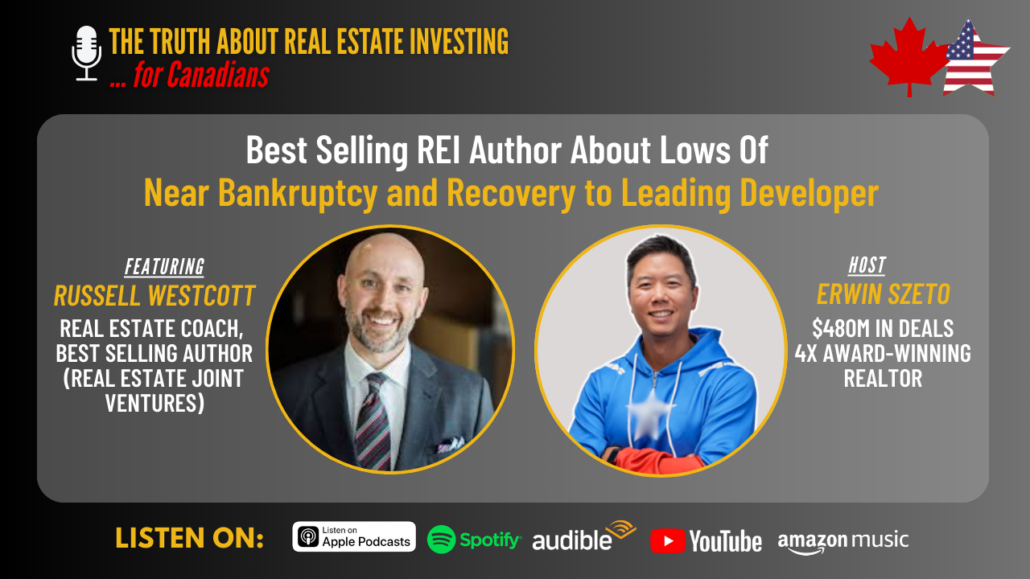
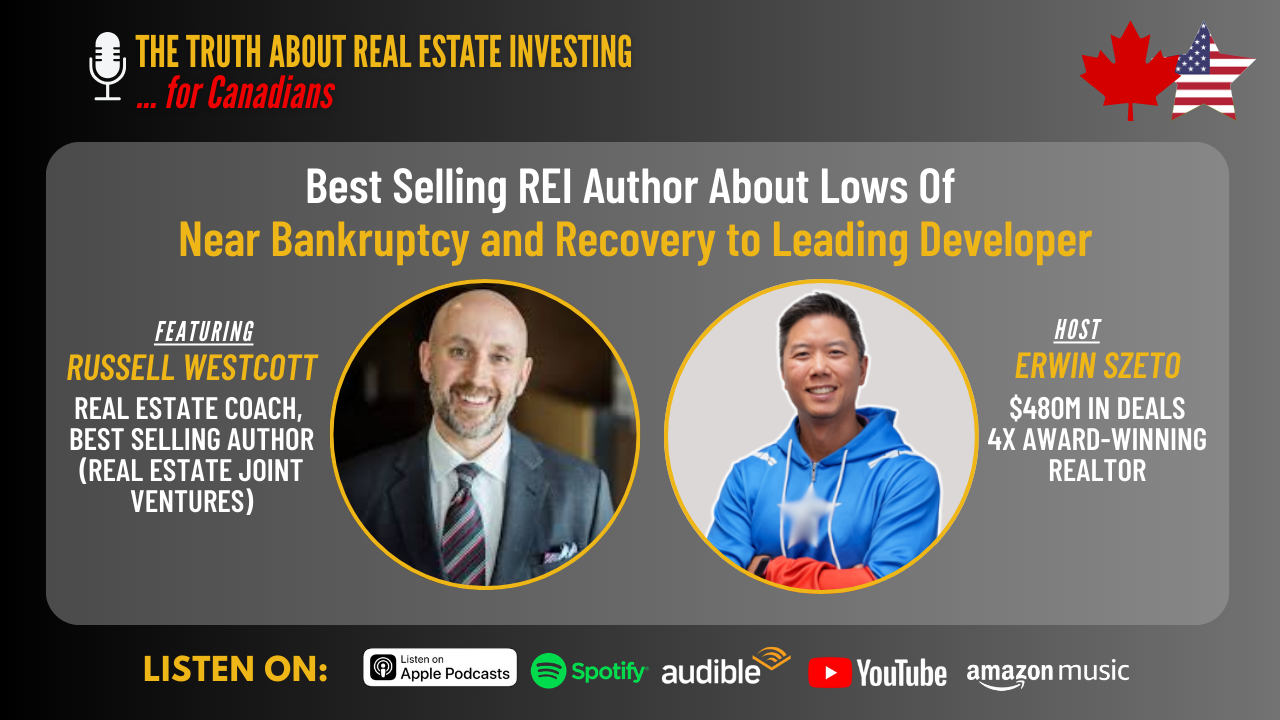
Guest: Russell Westcott
I often joke that it’s pretty funny I’m an Ontario Realtor who actively tells people not to buy investment properties here. But anyone who has followed me or Cherry knows we only care about the math and keeping things boring. We want cash flow, and we want to actually enjoy our lives without the Landlord and Tenant Board giving us early gray hairs.
This week on the show, we have an absolute legend and a good friend, Russell Westcott. Russell is the bestselling co-author of Real Estate Joint Ventures, a veteran with over 26 years in the game, and one of the very few coaches in Canada I actually recommend.
Russell has survived multiple market cycles, but recently, he survived something much scarier. We get raw and real in this episode about market corrections, the “B-word” (bankruptcy), and why he has pivoted entirely to developing multi-family properties in Edmonton.
Here is what you need to know to protect yourself in 2026.
The Physical Cost of Real Estate Stress
Before we discussed the market, Russell shared a terrifying wake-up call. He started experiencing severe calf pain and shortness of breath, which he initially tried to just “tough out”. Thankfully, his wife forced him to go to urgent care, where they discovered he had blood clots in his lungs—a pulmonary embolism.
It is a stark reminder: the stress of carrying heavy debt and dealing with tenant issues can take a massive physical toll. No amount of portfolio scale is worth dying for. If your investments are destroying your peace of mind and physical health, it is time to re-evaluate your strategy.
The Survival Spectrum: Pruning vs. Bankruptcy
If you are currently bleeding cash every month, Russell lays out a survival spectrum.
On one end, you can hunker down, tighten your belt, drastically cut your expenses, and work a separate job just to put groceries on the table while you ride out the market for the next decade.
On the other end of the spectrum, sometimes you simply need to rip the plaster off and consider declaring corporate or personal bankruptcy. There is a lot of social judgment around bankruptcy, but if market conditions have drastically changed and you are drowning, it is a legal business tool to wipe the slate clean and start over.
For most people, the solution lies somewhere in the middle: pruning your portfolio. Russell recommends ruthlessly ranking your properties into the “good, the bad, and the ugly”. Sometimes, you have to make the painful decision to sell a good, liquid property just to free up the capital necessary to dump the ugly ones that are dragging you down.
The Pre-Con Market: The Python and the Pig
If you are looking at the condo markets in BC or Ontario right now, be warned. Russell compares the current pre-construction condo crisis to a “python devouring a pig”.
Investors bought boxes in the sky for $1.2 million, banking on short-term rentals to make the numbers work. Then, municipalities pulled the rug out and banned short-term rentals, forcing investors to rent them out long-term for $4,500 a month, leaving them massively cash-flow negative. The market python has to slowly digest all of this overpriced inventory before things stabilize.
The Edmonton Comeback and the “Lazy” Investor
Russell isn’t out of the game; he just pivoted to where the fundamentals make sense. He is currently executing a “hybrid model” in Edmonton, Alberta, building 6-to-25 unit infill developments. He finds the land, underwrites the deal, and raises the capital, but he partners with a 4th-generation home builder on a cost-plus basis to handle the physical construction. This keeps him lean and protects him from the liability of managing trades directly.
But what if you don’t want to develop? What is left for the everyday, “lazy” investor who works a 9-to-5? Russell outlines three passive options:
- The Joint Venture: Find an operator you trust with a proven track record, provide the capital, and let them do the heavy lifting.
- Hire a “Sherpa”: Pay a consultant to guide you through a development build, then hand the keys to a property manager.
- The Boring Play: Buy a simple side-by-side duplex or townhouse in a landlord-friendly market, hand it to a competent property manager, and just review your statements once a month.
🎙️ Listen to the full episode to hear the rest of our conversation
To connect with Russell or inquire about his consulting services, visit [russellwestcott.com].
10 Questions Answered on Real Estate Market Downturns, Bankruptcy, and Passive Investing
1. What happens if my investment properties are losing money every month?
Investors have a spectrum of choices. You can “hunker down” by drastically cutting your personal expenses and working a day job to subsidize the negative cash flow. Alternatively, you can restructure, sell performing assets to cover the losses of bad ones, or even consider bankruptcy to wipe the slate clean and start over.
2. Is declaring bankruptcy an option for real estate investors?
Yes. While there is a lot of social judgment surrounding it, bankruptcy is a legal business tool. If market conditions have changed drastically and the debt burden is unmanageable, filing for corporate or personal bankruptcy might be the most logical way to stop the bleeding and restart your financial life.
3. How do you decide which investment properties to sell in a bad market?
Russell Westcott recommends categorising your entire portfolio into the “good, the bad, and the ugly.” Sometimes, you must sell a “good,” highly liquid property to free up the cash required to cover the losses of the “ugly” properties, allowing you to prune your portfolio and survive the downturn.
4. What is the “Python and the Pig” analogy in the real estate market?
Russell uses the analogy of a “python devouring a pig” to describe the current pre-construction condo market. A massive amount of overpriced inventory (the pig) was swallowed by the market, and it will take a long time for the system to fully digest it before prices and demand can stabilize.
5. Why are pre-construction condo investors losing money?
Many investors purchased expensive condos (e.g., $1.2 million) with the intention of operating them as highly lucrative short-term rentals. However, massive regulatory changes banned short-term rentals in many areas, forcing investors to rent them out long-term at rates that do not cover their massive mortgages.
6. How does stress from real estate investing affect your health?
The stress of scaling a portfolio, managing bad debt, and dealing with negative cash flow can take a severe physical toll. Russell Westcott experienced a major health scare with blood clots in his lungs (a pulmonary embolism), emphasizing that no amount of real estate wealth matters if you ignore your physical health to build it.
7. What is a “0%-down real estate” alternative for passive investors?
Many investors are moving toward properly leveraged stock market investments (like segregated or index funds). This mimics the leverage used in real estate investing, where returns can exceed the cost of borrowing (e.g., a 5.2% tax-deductible interest rate), but it completely eliminates the operational headaches of tenants, toilets, and appliance repairs.
8. What is the “hybrid model” for real estate development?
Instead of hiring trades and managing construction directly, the hybrid model involves the investor finding the land, underwriting the business case, and raising the capital. They then partner with an established, multi-generational local home builder on a “cost-plus” basis to physically construct the building, significantly reducing the investor’s operational risk.
9. What does a “Sherpa” do in real estate investing?
A real estate “Sherpa” acts as a consultant and guide for passive investors who want to execute complex projects, like small-tier multi-family developments. They help you structure the deal and build the asset, which you can then hand over to a property manager to operate.
10. What is the best strategy for a passive or “lazy” real estate investor today?
If you do not want to develop or manage properties, the ultimate passive strategy is to buy a simple side-by-side duplex or a townhouse in a landlord-friendly market, hand the keys to a highly trusted property manager, and simply review your statements once a month.
To Listen:
YouTube: https://youtu.be/T4BPVqWzREI
You’ve Built Wealth. Now It’s Time to Understand It.
You’ve Built Wealth. Now It’s Time to Understand It.
After dozens of consultations, I’ve noticed the same pattern again and again: most investors have built real wealth, but they’re not confident they can retire from it. They’re sitting on $2M–$5M in property but feel cash-flow poor. They’re paying more tax than they should because everything is held in personal names. They have no liquidity, no insurance strategy, and no clear plan for what happens if something happens to them. And almost every single client tells me the same thing: “I don’t actually know what retirement looks like for us.”
Real estate builds equity, but it doesn’t automatically build freedom. Without a coordinated plan for taxes, income, protection, and exit strategy, investors often end up working harder in retirement than they did in their 30s. That’s why I created the Wealth Freedom Blueprint – a simple, practical guide to help you understand where you stand today, what gaps are costing you money, and how to turn the wealth you’ve built into a life you can actually live.
Download your free Wealth Freedom Blueprint
Final Thoughts
Whether you’re building wealth, protecting it, or preparing to transition it, you deserve a clear, tax-smart strategy that works in real life.
That’s what iWIN Wealth Planning is here for.
This is how we’re creating predictable, stress-free wealth for Canadian families…
so you can enjoy the life you’re building.
Book your Wealth Planning Call
Sponsored by… Me!
This episode isn’t sponsored—except by my wife Cherry and me. Real estate investing is our life. It’s helped us build wealth and achieve peace of mind about retirement and our children’s future.
Till next time—just do it. I believe in you.
Erwin Szeto
W: erwinszeto.com
FB: facebook.com/erwin.szeto
IG: @erwinszeto
Disclaimer
As a committed advocate for transparent and responsible investing, I want to disclose that I am an Advisor to SHARE SFR (Single Family Rental). I hold equity in the company and earn referral commissions from clients I refer.
My endorsement of their model—focusing on positive cash flow and direct ownership—is based on personal experience and belief. Still, every investor should do their own due diligence.

Leave a Reply
Want to join the discussion?Feel free to contribute!