
Ontario Landlord Survival Guide: Tenant Screening, LTB Delays, Fraud and Protecting Your Time
By Erwin Szeto | Co-Founder, iWIN Wealth Planning
Recorded: October 2026
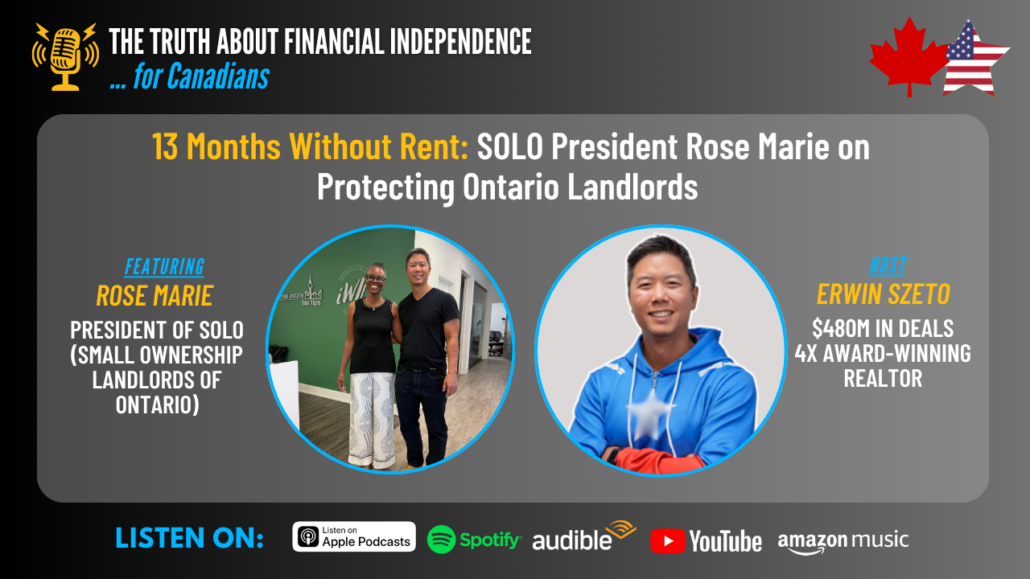
Host: Erwin Szeto, The Truth About Financial Independence for Canadians
Guest: Rose Marie, President of SOLO, Small Ownership Landlords of Ontario
Ontario rental property can still be a powerful wealth-building asset, but the operating risk has changed. For Canadian real estate investors, especially small landlords in Ontario, success increasingly depends on legal knowledge, tenant screening, documentation, liquidity, and the quality of the professional team standing behind the investment.
That lesson is personal. One of my Ontario rental properties has gone 13 months without rent. During that time, I’ve gathered evidence, managed paperwork, worked with my paralegal, and waited for a Landlord and Tenant Board hearing. I have also learned that rooms inside the apartment are being rented to other occupants.
The situation is almost impressive in its creativity. The tenant isn’t paying rent or hydro, yet money is reportedly being collected from other people living in the unit. It is the ultimate rental arbitrage, except the landlord is financing the business model.
My experience is one reason this conversation with Rose Marie, President of SOLO, matters right now. SOLO, the Small Ownership Landlords of Ontario, began as a grassroots support effort during the pandemic. It has grown into a not-for-profit organization and a vetted community of approximately 8,500 housing providers.
Rose Marie’s central message is simple: protect yourself from the beginning
Better Tenant Screening Is the First Line of Defence
Ontario tenant screening should never depend on one document or one conversation. A thorough process may include written consent, identification, a credit report, employment verification, references, landlord references, income review, and searches of available tribunal or landlord databases.
The goal is not to guarantee that nothing will go wrong. No screening system can do that. The goal is to identify inconsistencies, verify the application, document the decision, and reduce avoidable risk.
Landlords should also understand that newly released tribunal orders may not appear immediately in every database. That makes direct verification and reference checking especially important.
Prepare for Arrears Before Rent Is Missed
A landlord should know what to do on the first day of a problem, not the hundredth. That means keeping accurate ledgers, preserving written communication, understanding the required notices, and knowing which paralegal or lawyer to call.
Rose Marie discusses SOLO resources designed to help landlords communicate clearly when rent arrears begin. Early communication may resolve some situations, but documentation remains essential if the matter proceeds to the LTB.
An LTB Order May Not Be the Finish Line
Winning an order does not necessarily put money back in the landlord’s account. Collection can require locating the former tenant, identifying employment or assets, using a collection agency, arranging lawful service, or pursuing garnishment.
A private investigator or skip tracer can sometimes help locate information required for service or enforcement. Bankruptcy can introduce another layer of complexity because the treatment of rental debt depends on the facts and applicable law.
The practical lesson is to build the team early. Keep contact information for a qualified landlord-tenant paralegal, lawyer, investigator, process server, collection specialist, property manager, accountant, and insurance professional.
Preserve Evidence When Fraud May Be Involved
Most rent disputes are civil matters. A missed payment does not automatically become a criminal case. However, Rose Marie says SOLO-supported landlords have helped secure six tenant convictions by learning how to organize evidence and communicate potential fraud allegations to police.
Landlords should avoid making unsupported accusations. Instead, preserve applications, identification, leases, payment records, messages, timelines, tribunal orders, and any documents that may show a deliberate misrepresentation. Then obtain qualified legal advice.
Platform Risk Is Still Investment Risk
Rose Marie and her husband have owned a handful of rental properties for approximately 14 years. As Ontario’s long-term rental environment became less predictable, they experimented with furnished rentals and Airbnb.
They eventually moved away from Airbnb and began self-managing furnished rentals marketed through Facebook Marketplace. Their concern was control. A platform can change its rules, suspend listings, affect rankings, or separate a business from the reviews that created its goodwill.
Real estate investors often study property risk and tenant risk but underestimate platform risk. If one company controls access to the customer, the business remains exposed to decisions the owner cannot control.
Real Estate, Stocks and the Value of Time
This episode is not an argument against owning real estate. Real estate has been very good to me, and it remains part of my portfolio. But every investment should be measured against its return, risk, liquidity, leverage, and demand on the investor’s time.
Real estate investors accept putting 20% or 25% down because they understand leverage. That raises an interesting question: why not consider using 25% down for appropriately structured stock market or segregated fund investing?
Public markets have their own risks, and leveraged investing can magnify losses as well as gains. However, stocks do not create maintenance calls, contractor disputes, tenant applications, surprise repairs, or LTB hearings. For investors who have already built substantial real estate exposure, diversification may protect both capital and time.
I remain interested in companies benefiting from artificial intelligence because AI is becoming part of how businesses operate, communicate, analyze information, and produce content. But every financial strategy should be reviewed regularly and matched to the investor’s objectives, risk tolerance, cash flow, and professional advice.
The Bottom Line for Ontario Landlords
The most expensive landlord mistakes often begin before the tenancy starts. Weak screening, incomplete documentation, inadequate reserves, and the absence of a professional team can turn a manageable problem into a financial crisis.
Ontario landlords should educate themselves continuously, verify every application carefully, preserve evidence, maintain liquidity, and understand the process that may follow an LTB order. Real estate investing can help create financial freedom, but protecting your time is part of protecting your wealth.
SOLO’s landlord conference is scheduled for October 24, 2026, at Humber College. At the time of recording, tickets were $199 and the code ERWIN10 provided a 10% discount. Confirm current details at solo.ca. Digital landlord guides discussed in the interview are available through store.solo.ca.
Ontario Landlord Protection: 10 Questions for Rental Property Investors
What is the best way to screen a tenant in Ontario?
Use written consent, identity verification, a credit report, employment and income checks, references, and available landlord or tribunal databases. No single document is enough, so verify details across multiple sources.
How long does an Ontario LTB hearing take?
Wait times vary by application type and current tribunal capacity. Landlords should check current LTB service standards and file complete, well-documented applications as early as legally permitted.
What should an Ontario landlord do when rent is not paid?
Document the arrears, communicate in writing, serve the correct legal notice, and contact an experienced landlord-tenant paralegal promptly. Do not improvise notices or self-help remedies.
Can a landlord collect unpaid rent after an LTB order?
Yes, but an order does not guarantee payment. Collection may require locating income or assets, using a collection agency, or pursuing garnishment with professional guidance.
Why would a landlord hire a private investigator in Ontario?
A licensed investigator or skip tracer may help locate a former tenant, identify lawful service information, or support judgment enforcement. Their work must comply with privacy and legal requirements.
Can tenant fraud become a criminal matter in Ontario?
Some deliberate misrepresentations may support a fraud investigation, but most rent disputes remain civil matters. Preserve the evidence and obtain legal advice before making allegations.
Are furnished rentals better than long-term rentals in Ontario?
Furnished rentals may offer flexibility, but they also create vacancy, management, platform, and regulatory risks. Investors must confirm whether the Residential Tenancies Act applies to the specific arrangement.
What professionals should an Ontario landlord have on their team?
A landlord’s contact list may include a paralegal, lawyer, accountant, insurance broker, property manager, investigator, process server, and collection specialist. Build these relationships before an emergency occurs.
How many rental properties does SOLO President Rose Marie own?
Rose Marie says she and her husband own a handful of rental properties and have invested for approximately 14 years. The interview does not provide an exact property or unit count.
Is Ontario rental property still a good investment in 2026?
It can be, but investors must price in financing, vacancies, taxes, insurance, repairs, legal delays, and their own time. Diversification across real estate and financial markets may reduce concentration risk for some Canadian investors.
To Listen
Register for the Next Zero Down Wealth Strategy Events
If you’re looking for ways to build wealth more intentionally, create more passive income, and explore strategies beyond buying another rental property, join us at the next Zero Down Wealth Strategy event.
We’re hosting two upcoming sessions:
- Tuesday, October 27th– 8:00pm ET.
- Saturday November 7th, Hybrid (Oakville + Zoom) — 9:00am ET, hard stop 10:30am. In-person seats are capped at 40 and they always go. If you want to be in the room, register today.
We’ll walk through how investment loans, segregated funds, and proper planning can help qualified investors use leverage more strategically while keeping their long-term goals in focus.
You’ve Built Wealth. Now It’s Time to Understand It.
After dozens of consultations, I’ve noticed the same pattern again and again: most investors have built real wealth, but they’re not confident they can retire from it. They’re sitting on $2M–$5M in property but feel cash-flow poor. They’re paying more tax than they should because everything is held in personal names. They have no liquidity, no insurance strategy, and no clear plan for what happens if something happens to them. And almost every single client tells me the same thing: “I don’t actually know what retirement looks like for us.”
Real estate builds equity, but it doesn’t automatically build freedom. Without a coordinated plan for taxes, income, protection, and exit strategy, investors often end up working harder in retirement than they did in their 30s. That’s why I created the Wealth Freedom Blueprint – a simple, practical guide to help you understand where you stand today, what gaps are costing you money, and how to turn the wealth you’ve built into a life you can actually live.
Download your free Wealth Freedom Blueprint
Disclaimer:
As a committed advocate for transparent and responsible investing, I disclose that I am an Advisor to SHARE SFR (Single Family Rental). I hold equity in the company and earn referral commissions from clients I refer. I am also a licensed insurance agent with Open Concept Financial Group. The investment loan strategies referenced in this post are for educational purposes only and are not a guarantee of approval or performance. Suitability depends on individual income, cash flow, risk tolerance, and goals. Past performance is not indicative of future results. Every investor should do their own due diligence.
Sponsored by… Me!
This episode isn’t sponsored—except by my wife Cherry and me. Real estate investing is our life. It’s helped us build wealth and achieve peace of mind about retirement and our children’s future.
Till next time—just do it. I believe in you.
Erwin Szeto
W: erwinszeto.com
FB: facebook.com/erwin.szeto
IG: @erwinszeto
Disclaimer
As a committed advocate for transparent and responsible investing, I want to disclose that I am an Advisor to SHARE SFR (Single Family Rental). I hold equity in the company and earn referral commissions from clients I refer.
My endorsement of their model—focusing on positive cash flow and direct ownership—is based on personal experience and belief. Still, every investor should do their own due diligence.

Leave a Reply
Want to join the discussion?Feel free to contribute!