Two Things Drive Real Estate Prices: How is Canada Doing?
Recorded: April 2026
Host: Erwin Szeto, The Truth About Real Estate Investing for Canadians Podcast
I read the news every day. Not because I enjoy it — because I have to. Wayne Gretzky said it best: skate to where the puck is going, not where it has been. If I do not understand what is happening in the world, I cannot make good decisions for my portfolio or my clients.
This past weekend I presented at the iWIN Wealth Summit — a client-only event — and shared the research I have been tracking closely. This is my full breakdown, updated for the podcast.
The short version: Canada is facing real economic headwinds. The data is not great. But the investors who understand where things are going — not where they were — are already positioning themselves. Here is what I am watching and what I am doing.
First Question to Ask Yourself Right Now
Before anything else: how busy do you want to be?
In my experience working with Ontario real estate investors over many years, the majority are overworked. Very few active landlords are genuinely enjoying the experience. Life is short. My investing philosophy — and what I advise my clients on — is to own real estate as passively as possible so that you can spend more time with the people who matter most to you.
That principle shapes everything that follows.
What Actually Drives Real Estate Prices
Two things: a growing population with rising incomes, and a growing economy. They are connected — a strong economy attracts more people, more people compete for the same properties, and prices rise.
Real estate is also what I call a hard investment. Hard means hard to reproduce. Gold is rising in value for the same reason — you cannot manufacture more of it. Land works the same way. Nobody is creating more of it. That is why I have always preferred land-based properties for myself and my clients over condominiums, where there is essentially unlimited sky to keep building.
So the question becomes: where are we seeing population growth and rising incomes? Because that is where prices will go.
Canada: The Data Is Not Good
Canada’s population declined by approximately 102,000 people in calendar year 2025. That is the first significant quarterly population decline on record since 1946. That is not a blip.
Economic growth projections for Canada in 2026 were already modest — 1.1 to 1.7 percent — and that was before the Iran war and the latest round of tariff uncertainty. TD Economics and Desjardins have both warned that inflation could climb back to 3 percent or higher due to rising oil prices triggered by the conflict.
Scotiabank is now predicting three Bank of Canada rate increases in 2026 if the war persists. The five-year Canadian bond yield — which drives five-year fixed mortgage rates — has been climbing since the war began at the end of February. The five-year fixed rate has already moved from approximately 3.79 percent to around 4.09 percent.
My wife and I saw this coming. We had two mortgage renewals and locked both in — one at 3.75 percent and one at 3.85 percent, both three-year fixed. We still carry variable rate mortgages on other properties, but for the ones we have no plans to sell, locking in made sense. Based on our current variable rate, just two Bank of Canada increases would put us behind on those properties.
The Canadian Job Market: A Structural Shift
Canada lost 84,000 jobs in February. That number alone is alarming. But the composition of those losses matters even more than the total.
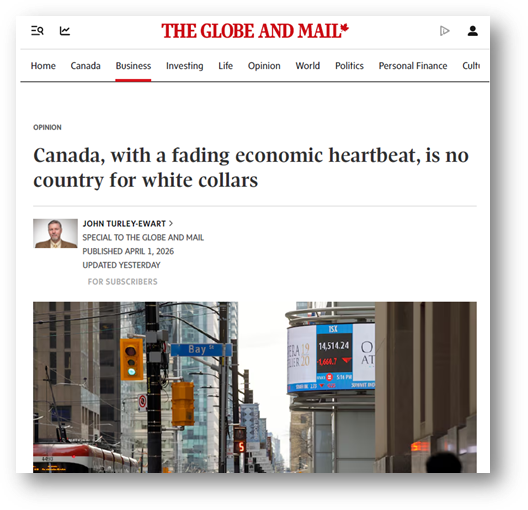
The losses are concentrated in full-time, private-sector, white-collar work:
- Software jobs: down approximately 18%
- Finance and accounting: down approximately 18%
- HR and business services: down approximately 13%
Where is the job growth happening? Retail. Food services. Manual and blue-collar roles.
This is a structural shift, not a temporary dip. Business investment is weak. The tax and regulatory environment is pushing entrepreneurs to the United States and Europe. Skilled immigrants — the people Canada has spent years attracting — are leaving. We are moving from high-productivity, high-income work toward lower-wage service employment.
What does this mean for real estate investors? Lower incomes compress housing prices. Fewer people will own. More will rent. For landlords, that stabilizes and eventually raises rents. But it also means we cannot count on appreciation to carry our returns — we need stronger cash flow from day one for an investment to make sense.
US Midterms: Why Canadian Investors Should Be Paying Attention
The 2026 US midterm elections are this November. They will determine who controls Congress. And right now, the betting markets — I track Polymarket, not polls — are showing a clear trend: the Republican Party’s odds of holding the Senate have been declining steadily.
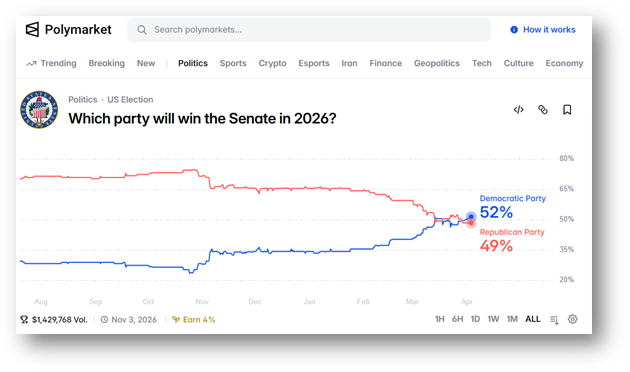
If the Democrats win and Trump’s party loses control of Congress, two things become likely: first, the Democrats would push hard for full tariff exemptions on Canadian goods, though Trump retains presidential veto power. Second, they would likely restrict funding for the Iran war, which could ease oil prices and reduce inflation pressure.
Reduced tariffs and lower inflation would be a meaningful win for both the US and Canadian economies. Our economy needs all the help it can get.
Where I Am Putting My Own Money: Texas
I already have an investment property in Texas. And the more I research, the more convinced I am that this is where the puck is going.
When the situation in Venezuela escalated and the US moved to restrict Venezuelan oil, I started tracing who benefits from that supply disruption. The answer: Texas Gulf Coast refineries. They are uniquely engineered to process Venezuelan heavy crude. Texas is energy-friendly, it is coastal, and it is positioned to capture more of that supply.
Then Elon Musk announced a $25 billion TeraFab investment in Texas — one of the largest private investments in the state’s history. The facility will build critical AI and aerospace supply chains domestically for Tesla and SpaceX, both headquartered in Texas. New manufacturing draws feeder companies and material suppliers. The ripple effects across the local economy are significant.
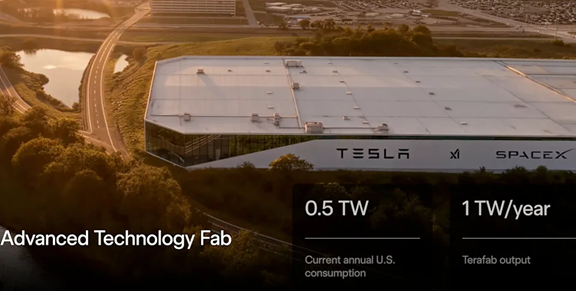
The direct job creation: approximately 10,000 high-paying positions for AI researchers, semiconductor engineers, lithography specialists, and fab operators. These are exactly the kinds of workers who drive demand for housing. Growing population. Rising incomes. Growing economy. That is the formula.
“I skate to where the puck is going to be, not where it has been. “
Wayne Gretzky
Canada is not producing those conditions right now. Texas is. That is not a political statement — it is a math statement. And I invest accordingly.
What This Means for Your Portfolio
None of this means Canadian real estate is over. Land-based properties in solid Ontario markets still have long-term merit and strong rental demand from people who cannot afford to buy. But the easy appreciation years are behind us for now, and the investors still waiting for 2021 to come back are going to keep waiting.
The investors I see doing well right now are the ones asking the right question: given the environment, how do I build real cash flow, stay as passive as possible, and position for where the economy is actually going?
That is the conversation I want to be having. If you want to go deeper on any of this — the Texas opportunity, the Canadian macro picture, or building a more passive portfolio — reply to this email or book a call with the iWIN team. My DMs are open.
Want to stay ahead of what’s happening in real estate and the economy?
Subscribe free at www.truthaboutrealestateinvesting.ca — get new episodes delivered straight to your inbox.
Thinking about your next move as a real estate investor?
Book a free strategy call with the iWIN team: Apply here
Subscribe to The Truth About Real Estate Investing for Canadians — ranked #81 business podcast on iTunes.
To Listen:
Audible: https://www.audible.ca/pd/B0GWMXM94V?source_code=ASSGB149080119000H&share_location=pdp
YouTube: https://youtu.be/2GiABPa9vo8
You’ve Built Wealth. Now It’s Time to Understand It.
You’ve Built Wealth. Now It’s Time to Understand It.
After dozens of consultations, I’ve noticed the same pattern again and again: most investors have built real wealth, but they’re not confident they can retire from it. They’re sitting on $2M–$5M in property but feel cash-flow poor. They’re paying more tax than they should because everything is held in personal names. They have no liquidity, no insurance strategy, and no clear plan for what happens if something happens to them. And almost every single client tells me the same thing: “I don’t actually know what retirement looks like for us.”
Real estate builds equity, but it doesn’t automatically build freedom. Without a coordinated plan for taxes, income, protection, and exit strategy, investors often end up working harder in retirement than they did in their 30s. That’s why I created the Wealth Freedom Blueprint – a simple, practical guide to help you understand where you stand today, what gaps are costing you money, and how to turn the wealth you’ve built into a life you can actually live.
Download your free Wealth Freedom Blueprint
Final Thoughts
Whether you’re building wealth, protecting it, or preparing to transition it, you deserve a clear, tax-smart strategy that works in real life.
That’s what iWIN Wealth Planning is here for.
This is how we’re creating predictable, stress-free wealth for Canadian families…
so you can enjoy the life you’re building.
Book your Wealth Planning Call
Sponsored by… Me!
This episode isn’t sponsored—except by my wife Cherry and me. Real estate investing is our life. It’s helped us build wealth and achieve peace of mind about retirement and our children’s future.
Till next time—just do it. I believe in you.
Erwin Szeto
W: erwinszeto.com
FB: facebook.com/erwin.szeto
IG: @erwinszeto
Disclaimer
As a committed advocate for transparent and responsible investing, I want to disclose that I am an Advisor to SHARE SFR (Single Family Rental). I hold equity in the company and earn referral commissions from clients I refer.
My endorsement of their model—focusing on positive cash flow and direct ownership—is based on personal experience and belief. Still, every investor should do their own due diligence.

Leave a Reply
Want to join the discussion?Feel free to contribute!