
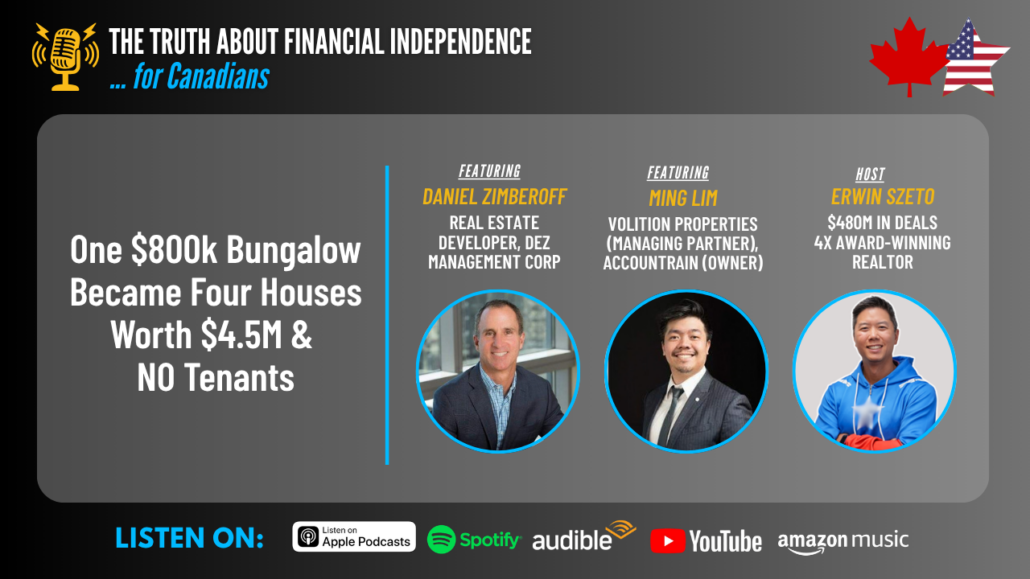
Toronto’s Missing-Middle Opportunity: How One Bungalow Became Four Homes
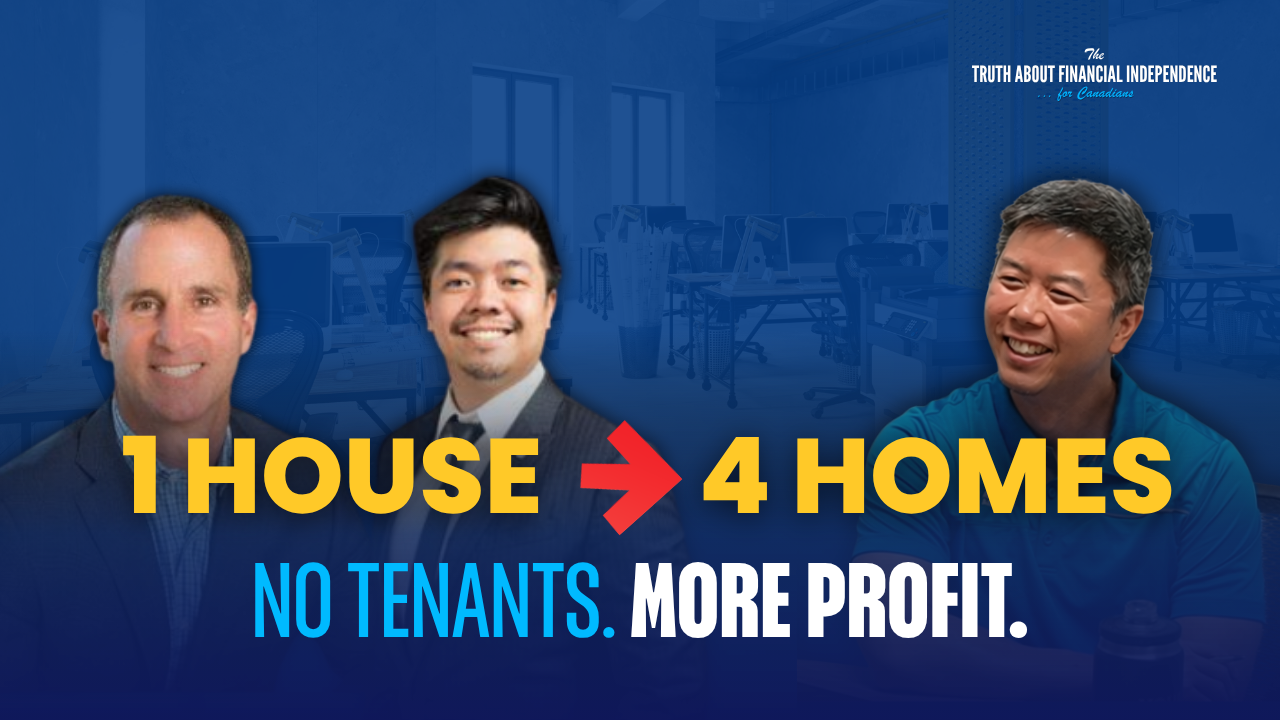
By Erwin Szeto | Co-Founder, iWIN Wealth Planning
Recorded: September 2026
Host: Erwin Szeto, The Truth About Financial Independence for Canadians
Guests: Daniel Zimberoff, founder of DEZ Management Corp and Ming Lim, managing partner of Volition Properties
Toronto’s housing market has a problem.
For decades, buyers have been forced to choose between an increasingly expensive detached house and a small condominium unit in a high-rise tower.
But what if there was another option?
That is the question Daniel Zimberoff and Ming Lim explore through condominiumized missing-middle housing. Their Harvie Townhomes project transforms one Toronto bungalow lot into four separately titled, family-sized homes that can be sold or financed individually.
The Missing Middle Problem
Many housing experts describe Toronto’s shortage as a “missing middle” crisis.
The city has plenty of detached homes and plenty of condo towers.
What it lacks are housing options in between.
Families often want homes that offer:
- More living space
- Ground-level access
- Home offices
- Outdoor space
- Walkable neighbourhoods
- Transit access
Unfortunately, most newly built condominiums prioritize smaller high-rise units, often located on busy corridors, because they are easier for developers to zone, sell, and finance.
From One House to Four Homes
The Harvie Townhomes project began with a bungalow purchased for approximately $800,000. The property was redeveloped into three townhomes plus a garden suite, creating four ownership opportunities where one home previously existed.
The completed homes range from approximately 1,200 to 1,400 square feet and include features more commonly associated with custom homes than traditional condominiums.
Why Investors Are Paying Attention
For years, investors flocked to purpose-built rental developments.
Today, some investors are rethinking that strategy.
Rising complexity, rent regulation, tenant issues, and longer hold periods have encouraged many investors to explore alternatives. Condominiumized missing-middle housing offers a different model: build the homes, sell them individually, recycle the capital, and move on to the next project.
Quality Matters
One key theme throughout the discussion was construction quality.
The project uses design choices intended to reduce noise transfer between units, create warmer basements with insulated concrete forms, and deliver a living experience that feels closer to a single-family home than a traditional condominium.
The Bottom Line
Harvie Townhomes may represent more than a single development.
It demonstrates how missing-middle housing can create attainable ownership opportunities while giving investors a viable alternative to traditional rental housing strategies.
If Toronto hopes to improve housing affordability while supporting more family-friendly ownership options, projects like these may become increasingly important over the next decade.
To learn more about the Harvie Townhomes project and the emerging opportunity in condominiumized missing-middle housing, listen to the full episode.
Toronto Missing Middle Housing FAQ
1. What is missing middle housing?
Missing middle housing refers to housing types between detached homes and high-rise condos, including duplexes, triplexes, fourplexes, and townhomes.
2. What is condominiumization?
Condominiumization is the process of creating separately owned units within a multi-unit property using a condominium ownership structure.
3. What is a walk-up condominium?
A walk-up condominium is a ground-oriented home with a private entrance that functions more like a townhouse than a traditional condo tower unit.
4. How many homes were created in the Harvie Townhomes project?
The project transformed one bungalow lot into four homes using a triplex plus garden suite design.
5. Why are investors interested in condominiumized multiplexes?
They provide a potential alternative to long-term landlording while creating multiple saleable homes from a single development.
6. How large are the Harvie Townhomes units?
The homes range from roughly 1,200 to 1,400 square feet.
7. What was the acquisition cost for the project?
The development site was acquired for approximately $800,000.
8. What was the construction budget?
The build budget was approximately $2 million.
9. Why are many buyers seeking alternatives to condo towers?
Many families want more space, private entrances, outdoor space, and a living environment that feels closer to a detached home.
10. Why could missing middle housing become more common in Toronto?
Recent policy changes, affordability challenges, and growing demand for family-sized urban housing are encouraging more developers to explore these projects.
To Listen
Audible: https://www.audible.ca/pd/B0HLYBT3SM?source_code=ASSGB149080119000H&share_location=pdp
You’ve Built Wealth. Now It’s Time to Understand It.
After dozens of consultations, I’ve noticed the same pattern again and again: most investors have built real wealth, but they’re not confident they can retire from it. They’re sitting on $2M–$5M in property but feel cash-flow poor. They’re paying more tax than they should because everything is held in personal names. They have no liquidity, no insurance strategy, and no clear plan for what happens if something happens to them. And almost every single client tells me the same thing: “I don’t actually know what retirement looks like for us.”
Real estate builds equity, but it doesn’t automatically build freedom. Without a coordinated plan for taxes, income, protection, and exit strategy, investors often end up working harder in retirement than they did in their 30s. That’s why I created the Wealth Freedom Blueprint – a simple, practical guide to help you understand where you stand today, what gaps are costing you money, and how to turn the wealth you’ve built into a life you can actually live.
Download your free Wealth Freedom Blueprint
Disclaimer:
As a committed advocate for transparent and responsible investing, I disclose that I am an Advisor to SHARE SFR (Single Family Rental). I hold equity in the company and earn referral commissions from clients I refer. I am also a licensed insurance agent with Open Concept Financial Group. The investment loan strategies referenced in this post are for educational purposes only and are not a guarantee of approval or performance. Suitability depends on individual income, cash flow, risk tolerance, and goals. Past performance is not indicative of future results. Every investor should do their own due diligence.
Sponsored by… Me!
This episode isn’t sponsored—except by my wife Cherry and me. Real estate investing is our life. It’s helped us build wealth and achieve peace of mind about retirement and our children’s future.
Till next time—just do it. I believe in you.
Erwin Szeto
W: erwinszeto.com
FB: facebook.com/erwin.szeto
IG: @erwinszeto
Disclaimer
As a committed advocate for transparent and responsible investing, I want to disclose that I am an Advisor to SHARE SFR (Single Family Rental). I hold equity in the company and earn referral commissions from clients I refer.
My endorsement of their model—focusing on positive cash flow and direct ownership—is based on personal experience and belief. Still, every investor should do their own due diligence.

Leave a Reply
Want to join the discussion?Feel free to contribute!